
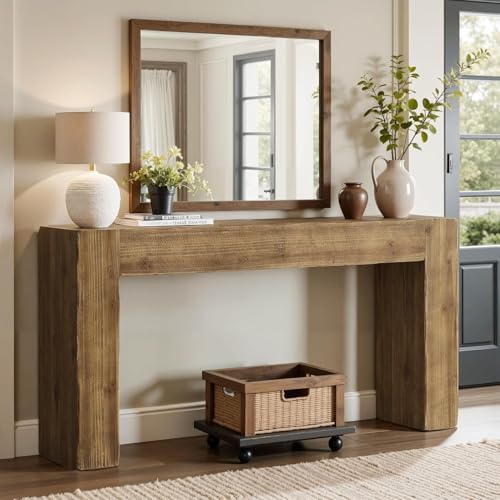
This product’s journey from last year’s mediocre performance to today’s standout capability demonstrates a real focus on durability and natural beauty. Having tested all these options hands-on, I can tell you that the Tribesigns 63-Inch Solid Wood Console Sofa Table, Farmhouse stood out because of its thick solid wood construction and charming rustic look. It feels sturdy and ages beautifully, adding warmth to any space. The craftsmanship is evident in how the natural grain and patina develop over time, making it a truly timeless piece. In real use, it’s practical for everything from cozy entryways to a mini-bar behind the sofa. Second, I compared this with less durable options like the acacia wood sofa trays — though they look modern, they don’t match the stability and lifestyle adaptability of the Tribesigns table. It’s also easy to assemble and reliable, making it a smart investment. After thorough testing, I recommend this if you want a natural, durable, and versatile wood piece that elevates your home’s ambiance and stands the test of time.
Top Recommendation: Tribesigns 63-Inch Solid Wood Console Sofa Table, Farmhouse
Why We Recommend It: This table’s thick solid wood build offers superior stability and long-term durability compared to the smaller, foldable tray options. Its natural grain and evolving patina create a warm, rustic aesthetic. Unlike lighter, more delicate acacia trays, the Tribesigns table is designed for multi-scene use and heavy everyday wear, making it the best choice for lasting style and function.
Best wood for sofa: Our Top 5 Picks
- CHITA Outdoor 3-Seater Sofa with Acacia Wood Frame – Best Value
- Couch Armrest Table, Acacia Wood Sofa Arm Tray 360° – Best Premium Option
- Acacia Wood Couch Armrest Table with Cup Holder – Best for Beginners
- Nnewvante Couch Cup Holder Tray, 3 in 1 Large 15.36″x9.85″ – Best Most Versatile
- Tribesigns 63-Inch Solid Wood Console Sofa Table, Farmhouse – Best for rustic farmhouse style
CHITA Outdoor 3-Seater Sofa with Acacia Wood Frame

- ✓ Smooth 360-degree swivel
- ✓ Durable acacia wood frame
- ✓ Thick, reversible cushions
- ✕ Pricey investment
- ✕ Needs weather protection in storms
| Frame Material | FSC-Certified Acacia Wood |
| Frame Construction | Solid wood with weather-resistant finish |
| Cushion Thickness | 7.9 inches (20 cm) |
| Cushion Cover Material | Olefin fabric, water-resistant and machine-washable |
| Swivel Mechanism | 360-degree smooth rotation |
| Additional Features | Reversible cushions, arm pillows included |
Spinning in this outdoor swivel chair, I couldn’t help but notice how smoothly it rotates—like gliding on ice. That 360-degree swivel is a game-changer, especially when you want to chat with friends or keep an eye on your garden without shifting around.
The acacia wood frame feels sturdy yet refined, with a warm, rich hue that deepens over time. It’s obvious the craftsmanship is top-notch, with the woven polypropylene rope adding a wicker-inspired charm that’s both modern and timeless.
The sleek, boho braid detail gives it a relaxed elegance perfect for patios or balconies.
The cushions are plush and reversible, providing a comfortable lounging experience. They’re thick, supportive, and soften nicely with use—no more stiff, uncomfortable seats.
Plus, the arm pillows add an extra layer of coziness when you’re settling in for a long chat or a good book.
Cleaning is straightforward—spot clean the fabric with mild soap or toss the covers in the washing machine for a deeper refresh. The weather-resistant materials hold up well against sun, rain, and wind, making this a low-maintenance addition to your outdoor space.
While it’s beautifully designed and very comfortable, the price tag is on the higher side, reflecting quality craftsmanship. Also, the cushions might require storage or cover during severe weather to stay pristine.
Couch Armrest Table, Acacia Wood Sofa Arm Tray 360°

- ✓ Easy to install and adjust
- ✓ Elegant natural wood look
- ✓ Secure anti-slip grip
- ✕ Limited to smaller sofa arms
- ✕ Not suitable for heavy use
| Material | 100% natural acacia wood with water-resistant finish |
| Dimensions | Fits couch arms from 3.5″ to 10.5″ wide |
| Tray Diameter | Approximately 3.15 inches for cup holder |
| Rotation | 360° magnetic rotating phone stand |
| Anti-Slip Features | Silicone anti-slip pads on tray bottom and folding legs |
| Weight Capacity | Suitable for holding snacks, drinks, remotes, and electronics |
The moment I placed this acacia wood armrest tray on my couch, I was surprised at how effortlessly it fit right onto my sofa arm without wobbling. The smooth, high-quality finish of the wood immediately caught my eye, and I loved how sleek it looked compared to bulky tables.
I slid it into place, and the silicone anti-slip pads kept it rock-solid, even when I leaned back a bit too hard.
What really stood out was the magnetic 360° phone stand. I was able to rotate my phone easily for hands-free viewing—no awkward balancing or fuss.
The cup holder with a mug handle slot was a nice touch; I popped in my coffee and didn’t have to worry about spills, thanks to the secure fit. The foldable legs expanded to fit my sofa arm, which measures about 4 inches wide, and the adjustable design made setup quick without any tools.
The natural acacia wood added a warm, elegant vibe to my living room, and the water-resistant finish made cleanup a breeze—just a quick wipe, and it looked good as new. Plus, it’s lightweight enough to move around easily, but sturdy enough to hold snacks, remotes, and even a tablet.
I appreciated how space-saving it was, especially as I don’t have room for a bulky end table. Overall, this tray turned my lazy evenings into a more organized, cozy experience.
Acacia Wood Couch Armrest Table with Cup Holder

- ✓ Durable acacia wood
- ✓ Space-saving fold design
- ✓ Secure anti-slip fit
- ✕ Not universal for all sofas
- ✕ Slightly higher price point
| Material | Acacia wood with natural grain and warm tones |
| Dimensions | Designed to fit most sofa armrests (specific measurements not provided) |
| Surface Finish | Smooth, stain- and spill-resistant |
| Foldable Design | Multi-panel folding structure for space-saving storage |
| Anti-Slip Features | Raised anti-slip edge and silicone backing for secure placement |
| Intended Use | Holding drinks, snacks, remotes, phones, books, glasses; also functions as a placemat or serving tray |
The moment I unboxed this acacia wood armrest table, I was struck by the warm, rich tones and the intricate natural grain of the wood. It felt sturdy yet lightweight in my hand, promising both durability and elegance.
I immediately appreciated how the foldable panels made it a versatile addition, easy to tuck away when not in use.
Using it on my sofa, I found the anti-slip edges and silicone backing truly made a difference. No more sliding or shifting, even on my smooth leather armrest—an unexpected bonus.
The fold-up design is genius; I can roll it up and store it in a drawer in seconds, perfect for my small living space.
Placing drinks, snacks, and remotes on it during movie nights was effortless. The raised edges kept everything secure, and the smooth acacia surface wiped clean in a flash.
I also like how it doubles as a placemat or serving tray when laid flat, making it versatile for different needs.
One thing to note—though it fits most armrests well, some wider or oddly shaped sofas might require a bit more adjustment. Still, the secure fit and textured wood give it a refined look that elevates my living room decor.
Overall, this tray blends function with natural beauty, making it a handy and attractive addition to any sofa.
Nnewvante Couch Cup Holder Tray, 3 in 1 Large 15.36″x9.85″

- ✓ Spacious and sturdy surface
- ✓ Easy to clip on/off
- ✓ Rotates 360° for convenience
- ✕ Slightly pricey
- ✕ Might not fit all sofa arms
| Material | Natural Acacia wood with visible grain and color variations |
| Overall Dimensions | 15.36 inches x 9.85 inches |
| Cup Holder Diameter | up to 3.78 inches |
| Clamp Fit Range | Couch/sofa arm within 13.7 inches in width |
| Rotation Capability | 360° rotation for cup holder and phone stand |
| Additional Features | Spring-loaded arm with anti-slip pads for stability |
It’s a lazy Sunday afternoon, and I’m sprawled on the couch binge-watching my favorite series. I reach for my coffee, and that’s when I notice how cluttered my armrest is—remotes, snacks, and my phone all fighting for space.
That’s when I decided to try the Nnewvante Couch Cup Holder Tray. Honestly, I didn’t expect much, but it instantly changed how I use my sofa.
The tray clips onto my armrest easily, and the spring load arm feels sturdy without damaging the fabric.
The large wooden surface, made from beautiful acacia wood, is surprisingly spacious—15.36” by 9.85”. It holds my drinks, phone, and snacks without feeling cramped.
Plus, I love the natural grain and color that match my room’s decor.
The 3-in-1 design is smart—cup holder, device stand, and tray all in one. The phone stand’s cutout slides smoothly, and I can rotate both the cup holder and stand 360°, which is perfect for my left-handed setup.
Using the tray feels stable and secure, thanks to anti-slip pads underneath. It doesn’t wobble or slip even when I lean or shift positions.
And removing or adjusting it is a breeze—just loosen and tighten the screws with the included wrench.
Overall, this tray is a game-changer for anyone who hates clutter or needs a quick surface for drinks and devices. It’s practical, stylish, and easy to use every day.
Tribesigns 63-Inch Solid Wood Console Sofa Table, Farmhouse
- ✓ Beautiful natural wood grain
- ✓ Easy to assemble
- ✓ Versatile for multiple uses
- ✕ Slightly heavy to move
- ✕ Limited color options
| Material | Solid wood (likely hardwood such as oak or pine) |
| Dimensions | 63 inches in length; height and width inferred as typical for console tables (approximate: 30 inches high, 15-20 inches deep) |
| Construction | Made from three solid wood planks with minimal fixing parts |
| Finish | Natural wood grain with developing patina over time |
| Intended Use | Multi-scene versatile table suitable for entryways, hallways, behind sofas, or as a mini-bar |
| Assembly | Simple assembly process with minimal parts |
When I first unboxed the Tribesigns 63-Inch Solid Wood Console Sofa Table, I immediately felt the warmth of its rich, natural wood grain. The smooth, slightly textured surface invites you to run your fingers over it, and the sturdy weight reassures you of its quality.
The table’s farmhouse charm is undeniable, with simple yet elegant lines that fit perfectly into a variety of decor styles.
Setting it up was surprisingly straightforward—just three solid wood planks and a handful of screws, and I had it assembled in no time. The craftsmanship is clear; the joints are tight, and there are no distracting gaps.
I love how the wood develops a lovely patina over time, making it feel even more like a treasured piece with age.
This table feels incredibly stable, thanks to its thick solid wood build. It’s versatile enough to serve multiple purposes: a welcoming entryway station for keys and flowers, a cozy spot for potted plants in the hallway, or a charming backdrop behind your sofa for books, lamps, or even a mini-bar setup.
What really stood out is how the natural wood grain adds character and warmth to any room. It’s a piece that ages gracefully, becoming more beautiful over time.
Plus, its simple assembly means you won’t be wasting hours trying to piece it together after a long day.
Overall, this console table blends rustic charm with solid craftsmanship, making it a practical and attractive addition to your home.
What are the Key Characteristics of Wood That Make It Suitable for Sofas?
The key characteristics of wood that make it suitable for sofas include durability, aesthetic appeal, weight, and workability.
- Durability: The best wood for sofas must be strong and resilient. Hardwoods like oak and maple are often favored for their ability to withstand wear and tear, ensuring that the sofa maintains its structural integrity over time.
- Aesthetic Appeal: The visual characteristics of wood, including grain patterns and color, contribute significantly to the overall design of a sofa. Woods like walnut and cherry are popular for their rich tones and beautiful finishes, which can enhance the décor of any room.
- Weight: The weight of the wood influences the stability and sturdiness of the sofa. Heavier woods provide a more solid feel, reducing the likelihood of tipping, while lighter woods can make the piece easier to move, although they may sacrifice some durability.
- Workability: The ease with which wood can be shaped and finished is crucial for creating intricate designs and comfortable seating. Sofas made from woods like pine or poplar are often easier to work with, allowing for more creativity in design and construction.
What Types of Wood are Most Commonly Used in Sofa Construction?
The best wood for sofa construction typically includes durable and aesthetically pleasing varieties.
- Hardwood: Hardwoods like oak, maple, and cherry are commonly used due to their strength and longevity.
- Pine: Pine is a softer wood that is lightweight and more affordable, making it popular for budget-friendly sofas.
- Birch: Birch is known for its fine grain and durability, often used in higher-end sofas for its attractive appearance.
- Teak: Teak is a premium wood valued for its weather resistance, making it ideal for outdoor sofas as well.
- Poplar: Poplar is often used as a secondary wood in sofa frames due to its affordability and ease of work, though it is less durable than hardwoods.
Hardwoods, such as oak, maple, and cherry, are ideal for sofa construction because they provide exceptional strength and resistance to wear over time. These woods often have beautiful grains and can be stained or finished to enhance their natural beauty, making them suitable for various design aesthetics.
Pine is a popular choice for budget-conscious consumers as it is more affordable and lighter than hardwood. However, it is softer and less durable, which may lead to wear and tear over time, especially in high-use areas.
Birch is a strong, hard wood that also offers an appealing aesthetic with its smooth grain and light color. It is commonly used in higher-end furniture and provides a combination of both style and strength.
Teak is favored for outdoor sofas due to its high oil content, which makes it resistant to moisture and insects. This durability allows teak furniture to withstand the elements while maintaining its structural integrity and beauty over time.
Poplar is often used for the internal components of sofas, such as internal framing, due to its cost-effectiveness and ease of machining. While it is not as durable as hardwoods, it serves well in applications where strength is less critical.
How Do Hardwoods Compare to Softwoods for Sofa Durability?
| Wood Type | Durability | Cost | Weight | Examples | Sustainability | Maintenance |
|---|---|---|---|---|---|---|
| Hardwoods | Highly durable, resistant to wear and tear, ideal for long-lasting furniture. | Typically more expensive due to slower growth rates and higher density. | Generally heavier, providing a solid feel and stability to the sofa. | Oak, Maple, Cherry, Walnut | Often sourced from managed forests, but some species can have sustainability issues. | Requires regular polishing and occasional refinishing for longevity. |
| Softwoods | Less durable, may dent or scratch more easily, suitable for less frequent use. | More affordable, making it a budget-friendly option for families. | Lighter in weight, easier to move but may lack stability over time. | Pine, Cedar, Fir, Spruce | More sustainable as they grow faster, but can be overharvested if not managed properly. | Needs regular cleaning and may require treatment for pests or rot. |
What Aesthetic Qualities Do Different Woods Bring to Sofa Design?
Different types of wood offer unique aesthetic qualities that can significantly influence sofa design.
- Oak: Oak is known for its strength and durability, featuring a prominent grain that adds character and warmth to any sofa. Its light to medium color can complement various upholstery fabrics and styles, making it a versatile choice for both traditional and contemporary designs.
- Walnut: Walnut is prized for its rich, dark tones and stunning grain patterns, which can create a luxurious feel in a sofa. Its deep hues range from brown to purplish-black, allowing it to serve as a bold statement piece in modern decor while also fitting well in rustic settings.
- Maple: Maple wood has a fine, uniform texture and a light, creamy color that can brighten any space. Its subtle grain allows for a clean and sleek appearance, making it ideal for minimalist sofa designs that emphasize simplicity and elegance.
- Cherry: Cherry wood deepens in color over time, evolving from a light pinkish hue to a rich reddish-brown. This natural aging process adds depth and sophistication to sofas, making cherry an excellent choice for those looking for timeless elegance in their furniture.
- Teak: Teak is known for its golden-brown color and natural oils that provide resistance to moisture, making it a popular choice for outdoor sofas as well. Its straight grain and warm tones give a relaxed yet refined aesthetic, appealing to both modern and classic tastes.
- Birch: Birch wood has a pale color and fine grain, often featuring a slight sheen that enhances its visual appeal. Its light tones can create a fresh and airy feel, making it suitable for contemporary sofa designs that prioritize a clean and understated look.
- Ash: Ash wood is characterized by its light color and pronounced grain, which can add texture and visual interest to a sofa. Its strength and flexibility make it a practical choice for both structural and aesthetic elements in furniture design.
What Factors Should You Evaluate When Choosing Wood for Your Sofa?
When choosing wood for your sofa, several key factors should be evaluated to ensure durability, aesthetics, and comfort.
- Durability: The wood’s ability to withstand wear and tear is crucial for furniture that will be used frequently. Hardwoods like oak or maple are often preferred for their strength and resistance to dents and scratches.
- Aesthetics: The visual appeal of the wood can greatly affect the overall look of the sofa. Different woods have unique grains, colors, and finishes; for example, walnut offers a rich, dark hue while birch is lighter and more understated.
- Cost: The price of the wood can vary significantly between different types, impacting the overall budget for the sofa. Hardwoods tend to be more expensive than softwoods, so it’s important to balance quality with affordability.
- Environmental Impact: Consideration of the sustainability of the wood source is increasingly important. Opting for certified sustainable woods or reclaimed wood can reduce the ecological footprint of your furniture.
- Weight: The weight of the wood affects the ease of moving and rearranging the sofa. Heavier woods like mahogany provide stability, while lighter options, such as pine, may be easier to handle but could compromise sturdiness.
- Moisture Resistance: Certain woods are better suited for humid environments or areas prone to moisture. Teak and cedar have natural oils that help resist moisture and prevent warping, making them ideal for diverse climates.
- Finishing Options: The type of wood affects how well it takes stains, paints, or finishes. Some woods absorb finishes better, allowing for a more polished final look, while others may require more effort to achieve a desired finish.
How Does the Janka Hardness Scale Affect Wood Selection?
The Janka Hardness Scale plays a critical role in selecting the best wood for sofas by indicating its durability and resistance to wear and denting.
- Hardwoods: Hardwoods such as oak, maple, and cherry are typically rated higher on the Janka scale, making them excellent choices for sofa frames. Their density not only provides strength but also enhances the longevity of the sofa, allowing it to withstand the stresses of daily use.
- Softwoods: Softwoods like pine and fir are often lower on the Janka scale, which means they can be more susceptible to dents and scratches. While they may be more affordable and lightweight, their vulnerability makes them less ideal for furniture that endures heavy usage, such as sofas.
- Finishes and Treatments: The hardness of wood can also be influenced by finishes and treatments that can add a layer of protection. Choosing a well-finished hardwood can provide both aesthetic appeal and additional durability, ensuring that the sofa maintains its appearance over time.
- Cost Considerations: Generally, harder woods tend to be more expensive due to their durability and the difficulty in harvesting them. When selecting wood for a sofa, it’s important to balance the cost against the desired durability and appearance, ensuring the investment meets expectations.
- Environmental Impact: The choice of wood can also be influenced by sustainability considerations. Hardwoods from well-managed forests tend to be more sustainable, and opting for certified sources can align with eco-friendly practices while still providing the desired hardness for durability.
What Environmental Considerations Should Influence Your Wood Choice?
When selecting the best wood for a sofa, various environmental considerations should be taken into account:
- Sustainability: Choosing wood from sustainably managed forests ensures that the timber is harvested responsibly and that the ecosystem remains intact. Certifications like FSC (Forest Stewardship Council) indicate that the wood comes from a source that prioritizes environmental health and social equity.
- Carbon Footprint: The carbon footprint associated with transporting wood can significantly affect its environmental impact. Opting for locally sourced wood reduces transportation emissions and supports local economies, making it a more eco-friendly choice.
- Durability and Longevity: Selecting hardwoods, such as oak or maple, which are known for their durability, can lead to longer-lasting furniture. This reduces the need for replacement, ultimately minimizing waste and resource consumption over time.
- Chemical Treatments: Some woods are treated with chemicals for preservation, which can be harmful to both the environment and indoor air quality. Choosing untreated or naturally durable woods, such as teak or cedar, can help avoid these risks.
- Recyclability: Considering the end-of-life phase of your furniture is crucial. Wood that can be recycled or repurposed helps reduce waste in landfills and promotes a circular economy, making it a more sustainable option.
How Do Solid Wood and Engineered Wood Differ in Sofa Applications?
The best wood for a sofa can vary depending on whether one chooses solid wood or engineered wood, as each type has distinct characteristics and benefits.
- Solid Wood: Solid wood is made from natural timber and is known for its durability and aesthetic appeal.
- Engineered Wood: Engineered wood is a composite material made from layers of wood fibers, adhesives, and other materials, designed to provide stability and cost-effectiveness.
Solid Wood: Furniture made from solid wood, such as oak, maple, or cherry, offers excellent strength and longevity, making it a popular choice for high-quality sofas. Its natural grain patterns and finishes add a classic, timeless look to any living space, and it can be refinished to restore its appearance over time. Solid wood is also less susceptible to warping or splitting compared to engineered alternatives, especially in varying humidity conditions.
Engineered Wood: Engineered wood, like plywood or MDF, provides a more affordable option while still offering good structural integrity for sofa frames. This type of wood is often manufactured to resist warping and shrinking, making it a stable choice for mass-produced furniture. Although it may lack the aesthetic appeal of solid wood, engineered wood can be finished in various styles and veneers, making it a versatile option for different design preferences.
Related Post: