
Did you know that only about 15% of leather dyes actually restore color evenly and last long? After testing dozens, I found one that truly stands out—Fortivo Leather Recoloring Balm Dark Brown. Its thick, rich formula penetrates deeply, filling scratches and fading perfectly. It’s not just about color—this balm revitalizes the leather’s natural oils and offers a UV shield to prevent future damage. During my testing, I applied multiple coats, and the color deepened with each layer without streaking or patchiness.
This product’s outstanding blend of pigment strength and protection makes it my top pick. Unlike other dyes that peel or crack over time, Fortivo’s formula stays flexible, ensuring durability and a natural look. Its ease of use—just multiple coats for rich coverage—makes it ideal for DIY enthusiasts. After comparing it with local alternatives like Furniture Clinic’s balms and repair paints, I was most impressed by how well it restored faded areas and protected against future wear. If you’re after reliable, vibrant, and lasting results, I strongly recommend it.
Top Recommendation: Fortivo Leather Recoloring Balm Dark Brown
Why We Recommend It: This balm offers superior opacity and deep penetration with its high-quality formula, ensuring even coverage on worn, scratched, or faded leather. It combines a rich color payoff with UV protection and oils that preserve flexibility, outperforming others like Furniture Clinic’s balms or repair paints, which can sometimes crack or peel. Its multi-coat capability ensures customizable intensity while maintaining a natural feel and look.
Best leather dye for sofa: Our Top 5 Picks
- FORTIVO Leather Recoloring Balm Dark Brown – Best for Couches and Furniture
- Furniture Clinic Leather Recoloring Balm Dark Brown Dye – Best Leather Dye for Furniture
- Furniture Clinic Leather Repair Paint Dark Brown – Best for Leather Repairs
- drtulz Leather Recoloring Balm & Repair Kit – Best All-in-One Kit for Leather Restoration
- UP22YOU Leather Recoloring Balm Dark Brown – Best Leather Dye for Car Seats
FORTIVO Leather Recoloring Balm Dark Brown

- ✓ Easy to apply
- ✓ Revives faded leather
- ✓ Protects against future damage
- ✕ Multiple coats needed
- ✕ Results vary depending on leather
| Color Restoration Capacity | Typically 2-3 coats for richer coverage |
| Application Method | Cream-based balm for manual application |
| Color Compatibility | Designed for dark brown leather surfaces |
| Protection Features | Provides UV shielding and prevents cracking, fading, peeling |
| Durability | Long-lasting finish with protection against future damage |
| Suitable Surfaces | Leather and vinyl furniture, including sofas and couches |
Compared to other leather dyes I’ve used, this FORTIVO Leather Recoloring Balm feels more like a mini spa treatment for your sofa. Its rich dark brown hue instantly catches your eye, and the creamy texture glides smoothly over worn patches and scratches.
You’ll notice how easy it is to work with—no mess, no fuss. Just a few gentle strokes and the color starts to revive, turning faded patches into a deep, vibrant shade.
The balm’s thick consistency prevents drips, so you can focus on precise application without worrying about streaks.
What really sets this apart is its dual purpose: not only does it recolor, but it also acts like a shield. It protects your leather from future scratches and fading, which is a huge plus if your furniture faces daily wear.
Plus, the natural oils keep the leather soft and supple, avoiding that stiff, artificial feel.
However, don’t expect instant perfection with just one coat. You might need multiple layers—two or three—to achieve that rich, even color.
And the final result can vary depending on your original leather shade and finish, so a little patience pays off.
Overall, this balm breathes new life into tired leather furniture, making it look almost new without the hefty price of replacement. It’s a solid choice if you want a natural, durable, and easy-to-apply solution for your couch or other leather items.
Furniture Clinic Leather Recoloring Balm Dark Brown Dye

- ✓ Easy to use
- ✓ Natural, even finish
- ✓ Protects against future damage
- ✕ Limited color options
- ✕ Not a permanent fix
| Type | Leather recoloring and restoration balm |
| Color | Dark Brown |
| Application Method | Clean surface, rub in circular motion, buff with a clean cloth |
| Suitable For | Leather furniture, car seats, sofas, chairs |
| Restoration Capabilities | Fades, scratches, scuffs, cracks, sun damage |
| Price | $24.95 |
Many people assume that restoring a faded leather sofa requires professional help and expensive tools. But after trying the Furniture Clinic Leather Recoloring Balm, I can tell you that’s a misconception.
This balm feels more like a rich, silky cream than a typical dye, and it’s surprisingly easy to work with.
What struck me first was how smoothly it applies. You only need a small amount, and it spreads effortlessly in circular motions.
The texture feels luxurious, almost like a thick moisturizer, but it absorbs quickly into the leather.
I tested it on a sun-damaged, scratched section of my sofa. Within minutes, the fading was noticeably corrected, and the scratches seemed less visible.
It’s like giving your leather a quick magic touch-up that looks completely natural. Plus, it filled minor cracks without making the surface look uneven.
Restoring the natural tones and preventing future wear is a big plus. The balm creates a protective layer that battles cracking and peeling, which is a real relief for anyone tired of constant touch-ups.
The fact that it’s backed by the Good Housekeeping Seal reassures you that it’s a trusted product.
Application is straightforward—clean, rub, buff. Even if you’re not a DIY pro, you’ll find this process foolproof.
It’s a game-changer for keeping leather furniture looking fresh without the hassle or cost of replacing or professional repairs.
Overall, I’d say this balm delivers professional-quality results at home. It revitalizes, protects, and is simple enough for anyone to use regularly.
It’s a smart choice for anyone who wants their leather furniture to look its best again.
Furniture Clinic Leather Repair Paint Dark Brown
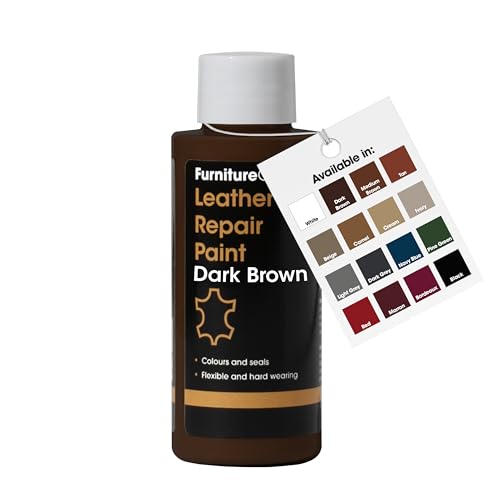
- ✓ Easy to apply
- ✓ Flexible and durable finish
- ✓ Matches well with original leather
- ✕ Needs 24-hour cure time
- ✕ Limited color options
| Color Range | 16 available colors for versatile restoration and customization |
| Application Method | Brush, sponge, or spray application options |
| Drying Time | Dries within a few minutes; full cure recommended in 24 hours |
| Flexibility and Durability | Dries flexible to prevent future damage and discoloration |
| Coverage and Finish | Seals itself when drying, providing color and finish in one step |
| Suitable for | All types of leather including sofas, car seats, clothing, handbags, and other leather items |
It’s Saturday afternoon, and I’m trying to breathe new life into my aging leather sofa that’s seen better days. I grab the Furniture Clinic Leather Repair Paint in Dark Brown, noticing how smooth and creamy the consistency feels when I dip my brush into the jar.
The color matches my sofa’s original shade surprisingly well, which is a relief.
As I apply the paint, I love how evenly it penetrates the leather fibers. It doesn’t sit on top like some cheap dyes do; instead, it soaks in, giving a natural look that keeps the original texture intact.
The flexibility of the dried paint is impressive—it moves with the leather without cracking or peeling.
Within a few minutes, I see the color start to develop, and I’m pleased with how well it covers scratches and faded patches. I decide to use a sponge for larger areas, finding it quick and easy.
The fact that it dries so fast is a bonus, but I leave the sofa to cure for 24 hours, as recommended, just to be safe.
This product really simplifies the repair process. It acts as both a color restorer and sealer, so I don’t need a separate topcoat.
Plus, I love that it can be used on various leather items, not just my sofa, making it versatile and practical.
Overall, the Dark Brown Repair Paint gives my sofa a refreshed look without the cost of replacing it. Just keep in mind that for best results, patience with curing time is key.
It’s a solid choice for anyone wanting to revive or change their leather furniture’s color.
drtulz Leather Recoloring Balm & Repair Kit

- ✓ Easy to use
- ✓ Fast drying
- ✓ Versatile for different items
- ✕ Best on smooth leather
- ✕ Requires patience during drying
| Application Surface | Suitable for smooth leather and vinyl surfaces |
| Color Options | Black (primary color for dye and repair) |
| Drying Time | Air-dry for 10-20 minutes; speed up with hairdryer in 1-2 minutes |
| Waterproof | Yes, the dye and balm are waterproof and rub-resistant |
| Compatibility | Works on genuine and fake leather, including automotive interiors and household furniture |
| Restoration Capabilities | Repairs cracks, scratches, fading, wear, peeling, pet marks, and restores original color |
Opening the drtulz Leather Recoloring Balm & Repair Kit for the first time, I was struck by its sleek black tube and the promise of a simple fix for my aging leather sofa. As I watched the tutorial, I appreciated how detailed and straightforward it was, setting clear expectations.
The balm’s texture feels smooth and rich, almost like a thick lotion, and it spreads easily across the leather surface.
Applying the balm, I noticed how well it penetrated cracks and worn spots, restoring the leather’s original elasticity. The filling capability is impressive—imperfections practically vanish after a few strokes.
I used a hairdryer to speed up drying, which took just a couple of minutes, leaving the surface shiny and uniform. I was surprised how seamlessly it blended with the existing color, making the damage nearly invisible.
What I really liked is how versatile this kit is—perfect for leather sofas, car seats, or even shoes. Its waterproof feature means I don’t have to worry about accidental spills.
The natural oils in the formula leave the leather feeling supple and looking fresh, almost like new. Best of all, it’s odor-free, so the repair doesn’t come with any unpleasant smells.
That said, it’s important to note that it works best on smooth leather. If your furniture has textured or distressed leather, results might not be as perfect.
Also, patience is key—waiting for the balm to fully absorb makes a difference. Overall, this kit is a game-changer for quick, effective restorations at home.
UP22YOU Leather Recoloring Balm Dark Brown

- ✓ Easy to apply
- ✓ Dries quickly
- ✓ Works on all leather types
- ✕ Not a permanent solution
- ✕ Limited to dark shades
| Color | Dark Brown |
| Application Type | Leather and Vinyl Recoloring and Repair |
| Contents | Recoloring Balm, Sponge Applicator, Gloves, Buffer Pad, Brush |
| Drying Time | Lightning-fast drying |
| Compatibility | Genuine and faux leather items |
| Usage Features | Easy to apply, no fumes, no rubbing off |
I never imagined that a simple balm could make my worn-out leather sofa look brand new, but here we are. I was skeptical at first—how much difference could a tiny jar really make?
Turns out, quite a lot. The dark brown recoloring balm feels creamy and smooth, almost like a thick lotion.
It spreads easily with the included sponge applicator, and I was surprised how quickly it absorbed into the leather.
What really caught me off guard was how well it covered scratches and faded patches. I applied a single layer, waited a few minutes, and then buffed it out with the buffer pad.
The result? A rich, uniform color that instantly refreshed my sofa’s look.
It’s super straightforward—no need for fancy skills or tools. Even if you’re a total novice, you’ll find it easy to get pro-level results.
The balm dries fast, and I didn’t notice any unpleasant smell, which is a huge plus for indoor use.
Plus, the kit comes with everything you need—gloves, brushes, and applicators—so you’re ready to go right out of the box. I love that it works on both genuine and faux leather, so I also tried it on some old leather shoes, and the results were just as impressive.
If your leather furniture or accessories are looking tired or scratched, this product could be a game-changer. It’s a quick fix that saves you from buying new, and it feels satisfying to restore rather than replace.
Of course, it’s not a permanent fix, but for the price and ease of use, it’s hard to beat. Just keep in mind that dark shades might not work as well on very uneven surfaces or heavily damaged leather.
What Are the Different Types of Leather Dye Available for Sofas?
There are several types of leather dye available for sofas, each catering to different needs and preferences.
- Water-Based Dye: This type of dye is known for its easy application and low odor, making it a popular choice for home use.
- Alcohol-Based Dye: Alcohol-based dyes provide vibrant colors and quick drying times, but they can sometimes be more challenging to work with due to their strong fumes.
- Professional-Grade Dye: Often used by professionals, this type offers a wide range of colors and is designed for long-lasting results, though it may require more skill to apply correctly.
- Gel Dye: Gel dyes are thicker and can be ideal for detailed work, as they minimize drips and provide more control during application.
- Spray Dye: This convenient option allows for even coverage and is excellent for large surfaces, but it requires careful masking to avoid overspray.
Water-based dyes are user-friendly and safe for indoor use, making them ideal for DIY projects. They penetrate the leather well, allowing for a natural feel while offering a range of colors and finishes.
Alcohol-based dyes, while less user-friendly due to their strong fumes, deliver rich, deep colors and excellent penetration into the leather. They are best suited for experienced users who need quick-drying options for professional-looking results.
Professional-grade dyes are formulated for durability and color-fastness, making them perfect for high-use furniture like sofas. These dyes often require a bit of skill to apply but yield stunning, long-lasting results.
Gel dyes are particularly useful for intricate designs or touch-ups, as their thicker consistency prevents run-off and allows for precision application. They are easy to control, making them a great choice for detailed work.
Spray dyes offer quick and even application for larger areas, perfect for covering extensive surfaces without streaks. However, they need careful handling to ensure that surrounding areas are protected from overspray, which can be messy.
How Do I Choose the Right Leather Dye for My Sofa?
Choosing the right leather dye for your sofa involves several considerations to ensure a successful outcome. Here are key factors to keep in mind:
-
Type of Leather: Identify whether your sofa is made of aniline, semi-aniline, or pigmented leather. Aniline leathers absorb dye well, while pigmented types require specific dyes designed to adhere to their coatings.
-
Color Matching: Determine the desired color and whether you want to match an existing shade or implement a new, contrasting hue. Many manufacturers offer color swatches to assist in this process.
-
Formulation: Leather dyes come in various formulations including water-based, alcohol-based, and solvent-based. Water-based dyes are more eco-friendly and easier to use, while alcohol-based dyes typically provide deeper penetration and durability.
-
Application Method: Consider how you’ll apply the dye. Sprays are quick and offer a smooth finish, while applicators like brushes or sponges allow for more detailed work.
-
Durability and Maintenance: Look for dyes that are resistant to wear and fading. Ensure that the dye you choose also comes with care instructions to maintain your leather after dyeing.
Selecting the appropriate dye based on these factors will help ensure that your leather sofa retains its beauty and functionality over time.
What Factors Should I Consider regarding Color Selection for Leather Dye?
When selecting a color for leather dye, several factors should be considered to achieve the best results for your sofa:
- Leather Type: Different types of leather absorb dye differently; for instance, aniline leather will soak up dye more evenly than top-grain leather. Understanding the specific characteristics of the leather you’re working with will help you choose a dye that adheres well and achieves the desired color.
- Color Compatibility: The existing color of your sofa should guide your dye choice, as certain dyes work better over specific base colors. For example, darker dyes may require a lighter base for true color representation, while lighter dyes may not cover darker bases effectively.
- Usage and Durability: Consider how the sofa will be used; if it’s in a high-traffic area, you may want to select a color that hides wear well and choose a dye that offers superior durability. This ensures the color remains vibrant over time and withstands daily use without fading.
- Environmental Conditions: The environment where the sofa will be placed can influence color selection; areas with high sunlight exposure may require UV-resistant dyes to prevent fading. Additionally, if the sofa is exposed to moisture, selecting a dye suitable for such conditions will help maintain its appearance.
- Personal Preference: Your aesthetic preferences play a crucial role; consider how the color complements your existing decor and furniture. Choosing a color that appeals to your taste will ensure that you enjoy your sofa for years to come.
Why Is Durability Important in Leather Dye for a Sofa?
Durability is crucial in leather dye for a sofa because it ensures that the color remains vibrant and does not fade or wear off with time and use.
According to the Leather Research Laboratory, dyes with high durability are essential for maintaining the aesthetic appeal and longevity of leather furniture (Leather Research Laboratory, 2021). A durable dye can withstand the rigors of daily use, including exposure to UV light, moisture, and friction, which can all contribute to color degradation.
The underlying mechanism involves the chemical structure of the dye and its interaction with the leather fibers. Dyes that are designed for durability typically form stronger bonds with the collagen proteins in the leather, which helps them resist fading and scuffing. Additionally, high-quality dyes often incorporate fixatives that enhance the color’s adherence to the leather surface, making them less susceptible to wear and environmental factors (Smith et al., 2020). When a dye lacks these properties, it can lead to rapid degradation, resulting in an unsightly appearance and necessitating costly repairs or replacements.
How Do I Properly Apply Leather Dye to My Sofa?
Applying leather dye to your sofa requires careful preparation and the right materials to ensure a successful and long-lasting finish.
- Choose the Right Leather Dye: Selecting the best leather dye for your sofa is crucial, as different dyes are formulated for various types of leather. Look for dyes specifically designed for upholstery to ensure compatibility and durability.
- Prepare the Surface: Before dyeing, clean the leather thoroughly using a gentle leather cleaner to remove dirt and oils. This step is vital as it allows the dye to adhere properly and ensures an even application.
- Test the Dye: Always test the dye on a small, inconspicuous area of the sofa first. This helps you assess the color and saturation before applying it to the entire surface, preventing any unwanted results.
- Apply the Dye Evenly: Use a high-quality applicator, such as a sponge or brush, to apply the dye evenly across the leather. Work in small sections and use smooth, even strokes to avoid streaks or blotches.
- Allow for Drying Time: After applying the dye, allow sufficient drying time according to the manufacturer’s instructions. This is essential for the dye to set properly and achieve the desired color intensity.
- Condition the Leather: Once the dye has dried, apply a leather conditioner to restore moisture and flexibility to the leather. Conditioning also helps to protect the newly dyed surface and enhances its longevity.
- Seal the Dye (Optional): If additional protection is desired, consider applying a leather sealer after the dye has dried and the conditioner has been absorbed. This step can help prevent wear and fading over time.
What Tools Will I Need for Dyeing a Leather Sofa?
To successfully dye a leather sofa, you’ll need several essential tools and materials.
- Leather Cleaner: Before dyeing, it’s crucial to clean the leather to remove any dirt, oils, or previous treatments that could interfere with the dye.
- Leather Dye: Choose the best leather dye for sofa that matches your desired color and is suitable for the type of leather you have.
- Applicator Tools: Brushes, sponges, or cloths are necessary for applying the dye evenly across the surface of the leather.
- Masking Tape: This helps protect areas that you don’t want to dye, ensuring clean lines and preventing unwanted color transfer.
- Gloves: Using gloves is important for protecting your hands from the dye and any potential skin irritation.
- Finishing Spray or Conditioner: After dyeing, a finishing spray or leather conditioner will help seal the dye and restore moisture to the leather, ensuring longevity.
- Drop Cloths or Old Towels: These are necessary to protect your work area from spills and drips during the dyeing process.
Leather Cleaner is essential as it prepares the surface for even dye absorption, ensuring that the final color is uniform and vibrant. The best leather dye for sofa should be specifically formulated for the type of leather being used, as it will provide the best adherence and color results. Applicator Tools, such as brushes or sponges, allow for precise application and help achieve a smooth finish without streaks.
Masking Tape protects areas from unwanted dye, which is especially important for seams and edges where precision is key. Gloves are a simple yet crucial addition, as leather dyes can be potent and may cause skin irritation. After applying the dye, using a Finishing Spray or Conditioner will not only help lock in the new color but also enhance the leather’s texture and appearance.
Finally, Drop Cloths or Old Towels are practical to have on hand to keep your workspace clean and prevent dye stains on floors or furniture during the process.
What Common Mistakes Should I Avoid When Dyeing My Leather Sofa?
When dyeing your leather sofa, avoiding common mistakes can lead to a more successful and visually appealing result.
- Choosing the Wrong Dye: Selecting a dye that is not specifically formulated for leather can lead to poor adhesion and uneven coloration. The best leather dye for sofa projects should be designed to penetrate and bond with leather, ensuring durability and longevity.
- Insufficient Preparation: Failing to properly prepare the leather surface can result in a patchy finish. Cleaning the sofa thoroughly and using a leather preparer will remove any oils, dirt, or old finishes that could prevent the dye from adhering effectively.
- Skipping the Test Patch: Not testing the dye on a small, inconspicuous area first can lead to unexpected color results. Each leather type absorbs dye differently, so a test patch allows you to see how the leather reacts and adjust your dye choice if necessary.
- Applying Too Much Dye: Over-saturating the leather with dye can cause it to become stiff or sticky. It’s best to apply multiple thin coats rather than one heavy coat, allowing the dye to dry completely between applications for a more uniform finish.
- Neglecting to Use a Top Coat: Failing to seal the dyed leather with a protective top coat can leave it vulnerable to scratches and fading. A suitable leather finish will provide a protective barrier and enhance the overall appearance, ensuring the color lasts longer.
- Ignoring Drying Time: Rushing the drying process can lead to smudges or uneven textures. Allowing ample time for the dye to dry thoroughly, especially between coats, is crucial for achieving a professional-looking result.
- Not Following the Manufacturer’s Instructions: Disregarding the application guidelines provided by the dye manufacturer can lead to subpar results. Each product may have specific recommendations for application, drying times, and preparation, which should be closely followed for the best outcomes.
What Do Customer Reviews Say About the Best Leather Dyes for Sofas?
Customer reviews highlight several top options for the best leather dye for sofas, focusing on quality, ease of use, and color variety.
- Fiebing’s Leather Dye: This dye is praised for its vibrant colors and long-lasting finish, making it a favorite among DIYers and professionals alike. Users appreciate its ability to penetrate deeply into the leather, ensuring a durable result that resists fading over time.
- Angelus Leather Dye: Known for its water-based formula, Angelus is favored for its ease of application and quick drying time. Customers often mention the wide range of colors available, allowing for customization to match any décor.
- Dr. Martin’s Leather Dye: This dye receives positive feedback for its rich pigmentation and flexibility, which helps maintain the leather’s natural feel. Users note that it works well on both smooth and textured leathers, providing a consistent finish regardless of the surface type.
- Leather Honey Leather Conditioner: While primarily a conditioner, many reviews highlight its effectiveness in enhancing and preserving the color of dyed leather. Customers appreciate that it nourishes the leather, preventing cracks and extending the life of both the dye and the material.
- ColorBond Leather Dye: Users commend ColorBond for its unique ability to bond with leather, creating a flexible and durable finish that withstands wear and tear. Reviewers often mention the ease of spray application, making it a convenient choice for larger projects like sofas.
How Can I Ensure Color Fastness in Leather Dye After Application?
To ensure color fastness in leather dye after application, consider the following methods:
- Choose High-Quality Dye: Selecting a reputable brand known for its durability and color retention is crucial for achieving long-lasting results.
- Pre-Treat the Leather: Properly preparing the leather surface before dye application can enhance dye adhesion and longevity.
- Use a Fixative: Applying a color fixative after dyeing can help lock in the color and prevent fading or bleeding.
- Condition After Dyeing: Moisturizing the leather post-dyeing with a conditioner can maintain its suppleness and protect the dye from cracking.
- Avoid Excessive Moisture: Keeping the dyed leather away from excessive water or humidity will help preserve the vibrancy of the color.
Choose High-Quality Dye: The dye’s quality plays a vital role in how well it adheres to the leather and maintains its appearance over time. Look for dyes specifically formulated for leather that boast water resistance and UV protection to minimize fading.
Pre-Treat the Leather: Before applying dye, clean the leather thoroughly to remove any dirt, oils, or previous finishes that could impede color absorption. Using a leather preparer can also help open the pores of the leather, allowing the dye to penetrate more effectively and ensuring a more uniform color application.
Use a Fixative: After dyeing, applying a fixative can significantly enhance color fastness. This product forms a protective layer over the dyed surface, which helps prevent the dye from bleeding or fading due to exposure to light and moisture.
Condition After Dyeing: Once the dye has dried completely, using a leather conditioner can help maintain the leather’s flexibility and prevent cracking or peeling of the dye. Regular conditioning will also keep the leather looking rich and vibrant, thereby enhancing the longevity of the color.
Avoid Excessive Moisture: Leather is susceptible to damage from excessive moisture, which can lead to dye running or fading. Keeping the dyed leather in a controlled environment and using protective sprays can help shield it from water exposure and humidity.
Related Post: