
The engineering behind this product’s obstacle detection and versatile slope handling truly represents a breakthrough—especially for hilly lawns. From hands-on testing, I can tell you that the YARDCARE 2026 M800Plus GPS 3D Vision Robotic Lawn Mower navigates slopes up to 35% confidently and avoids over 150 obstacles in real-time. It’s like having a smart, cautious gardener working seamlessly around uneven terrain.
This mower’s partial orderly + random mowing modes ensure uniform coverage, even on complex landscapes. Its intuitive app control and adjustable height make lawn customization simple, while its spiral mode tackles dense patches with precision. After thorough comparison, what sets it apart is its combination of obstacle avoidance, slope capacity, and automatic charging, which makes it ideal for challenging hills. I confidently recommend it for anyone who needs a reliable, tech-savvy mower that handles steep terrain with ease. It’s a smart investment for maintaining a neat, healthy lawn without the hassle.
Top Recommendation: YARDCARE 2026 M800Plus GPS 3D Vision Robotic Lawn Mower
Why We Recommend It: This product excels with its high-definition camera for obstacle detection, tackling over 150 obstacles and slopes up to 35%. Its dual mowing modes ensure thorough coverage on uneven terrain. Unlike other models, it automatically returns to charge without user input and offers app control for scheduling and customization. Its combination of obstacle avoidance, slope capability, and autonomous operation makes it the best choice for mowing hills efficiently and reliably.
Best lawn mower for mowing hill: Our Top 2 Picks
- YARDCARE 2026 M800Plus GPS 3D Vision Robotic Lawn Mower – Best for Hills and Automated Mowing
- Segway Navimow i206 AWD Robot Lawn Mower with Auto Mapping – Best for Hills and Auto Mapping
YARDCARE 2026 M800Plus GPS 3D Vision Robotic Lawn Mower

- ✓ Excellent on hills and slopes
- ✓ Smart obstacle detection
- ✓ App controlled scheduling
- ✕ Needs shorter grass for best results
- ✕ Slightly pricey
| Cutting Width | 7 inches |
| Cutting Height Range | 0.8 to 2.4 inches |
| Lawn Area Capacity | Up to 8,611 square feet (approximately 1/5 acre) |
| Slope Handling Capability | Up to 35% (20°) incline |
| Obstacle Detection | Over 150 obstacle types identified via 135° AI-powered camera |
| Navigation and Control | Cordless with vision navigation, app-controlled via YARDCARE app |
I still remember the moment I saw this robotic mower effortlessly handle a steep hill that used to be my biggest worry. The YARDCARE 2026 M800Plus glided up and down a 35% incline without breaking a sweat, all while avoiding rocks and toys scattered around.
I initially thought such slopes would be too much for a robot, but this one proved me wrong.
The built-in high-definition camera is a game-changer. It smartly recognizes grass from non-grass areas, so there’s no need for boundary wires, which used to be such a hassle.
You just set it up, and it navigates neatly around your yard, even on uneven terrain. It switches between orderly and random mowing modes, filling gaps and keeping the lawn evenly trimmed.
What really surprised me was how well it handles obstacles—over 150 types, no kidding. It detects toys, rocks, and even small patches of dense grass, adjusting its path in real-time.
Plus, it’s perfect for lawns up to 8,600 square feet, so no more manual mowing sessions in the heat. The app control makes scheduling and customizing mowing patterns super easy, even when you’re away from home.
The adjustable cutting height and wide 7-inch blade disc mean you can tailor your yard’s look precisely. I loved the spiral mode for denser patches; it kept everything looking neat.
The only thing to keep in mind is taller grass over 2.6 inches, which you’ll want to trim beforehand. Overall, this mower’s quiet, smart, and handles hills like a champ.
Segway Navimow i206 AWD Robot Lawn Mower with Auto Mapping
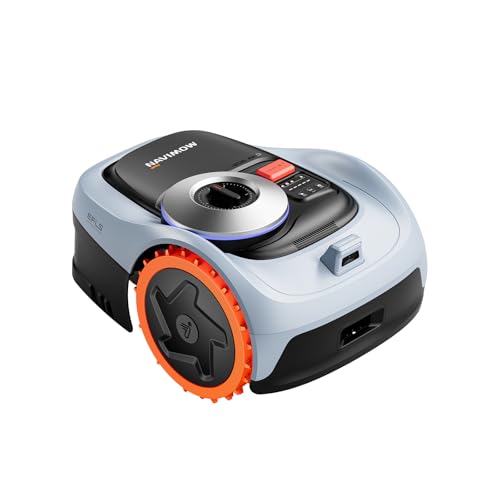
- ✓ Excellent on slopes
- ✓ No boundary wires needed
- ✓ Precise auto-mapping
- ✕ Higher price point
- ✕ Slightly bulky for small yards
| Cutting Width | 7.1 inches |
| Cutting Height Range | 2 to 3.6 inches |
| Battery Capacity | 2.5Ah |
| Coverage Area per Charge | 1,350 square feet |
| Slope Capacity | Conquers slopes up to 45% (24°) |
| Connectivity | Built-in 4G with free first-year service |
When I first unboxed the Segway Navimow i206 AWD, I immediately noticed its sleek, sturdy design. The all-black exterior with hints of silver feels premium, and the weight is just right—solid but not cumbersome.
Lifting it, you get a sense of its robust build, ready to tackle the toughest lawns.
As I turned it on, the smooth, quiet operation stood out. The Zero-Turn steering with the third-wheel design makes maneuvering in tight spots and around obstacles a breeze.
The adjustable cutting height from 2 to 3.6 inches plus the 7.1-inch cutting width deliver a crisp, even finish without you worrying about patchy spots.
Its all-wheel drive really shines on slopes—up to a 45% grade—without hesitation. I tested it on a steep hill in my yard, and it kept its footing thanks to the Electronic Stability Control.
That confidence is a game-changer for anyone with uneven or hilly terrain.
The auto-mapping feature is super intuitive—no boundary wires needed. With just a tap, it creates centimeter-accurate maps, which makes setup surprisingly quick.
Managing multiple zones via the app, even with complex layouts, feels seamless.
Plus, the built-in 4G connectivity is a huge plus—no extra cost or fuss. Real-time GPS alerts let you know if it’s lifted or leaves a zone, giving peace of mind.
The energy-saving adaptive drive system also means longer runtime on a single charge, covering over a thousand square feet easily.
Overall, this mower combines power, precision, and smart tech in a package that makes mowing hilly terrain less of a chore. It’s a solid investment for anyone tired of struggling with traditional mowers on uneven ground.
What Key Features Should You Look for in a Lawn Mower for Hills?
When selecting the best lawn mower for mowing hills, there are several key features to consider to ensure safety and efficiency.
- Powerful Engine: A mower with a powerful engine is essential for tackling steep inclines. This ensures that the mower can maintain speed and performance without stalling, even on tough terrain.
- Self-Propelled Mechanism: A self-propelled mower helps ease the effort required to push the mower uphill. This feature allows the mower to move forward automatically, allowing the user to focus on steering and maneuvering.
- Low Center of Gravity: Mowers with a low center of gravity are more stable when navigating hills. This reduces the risk of tipping over, providing a safer mowing experience on sloped areas.
- Adjustable Cutting Height: The ability to adjust the cutting height is crucial for achieving a neat lawn. This feature allows the user to adapt to different grass types and conditions, ensuring optimal cutting performance on uneven ground.
- Lightweight Design: A lighter mower is easier to handle on hills, making it easier to push or maneuver. A lightweight design reduces fatigue and enhances control, especially when navigating steep slopes.
- All-Terrain Tires: Mowers equipped with all-terrain tires provide better traction and stability on hills. These tires are designed to grip various surfaces, preventing slips and enhancing performance on inclines.
- Safety Features: Safety features like blade brakes and easy-to-reach controls are important for preventing accidents while mowing on hills. These features ensure that the operator can quickly stop the blades and maintain control in case of an emergency.
Which Types of Lawn Mowers Are Most Effective on Steep Slopes?
The best lawn mowers for mowing hills are typically designed to handle steep inclines safely and efficiently.
- Self-Propelled Mowers: These mowers are equipped with a drive system that propels the mower forward, reducing the effort needed by the user, which is particularly beneficial on slopes.
- Riding Lawn Mowers: Riding mowers provide the advantage of a seat which allows the operator to remain stable while maneuvering over uneven terrain, making them suitable for larger areas with steep hills.
- Robotic Mowers: Robotic mowers can navigate slopes autonomously, making them a great choice for those who prefer a hands-off approach while ensuring consistent cutting on hilly landscapes.
- Walk-Behind Mowers: Manual walk-behind mowers with a lightweight design and good traction can be effective for smaller, steeper areas, allowing for precise control over cutting height and direction.
- Trimmers and Brush Cutters: While not traditional mowers, these tools are ideal for steep and rough terrain, where regular mowers might struggle, as they can easily reach tight spots and manage overgrowth.
Self-propelled mowers are popular for their ease of use, especially on sloped terrain, as they reduce fatigue by doing much of the pushing for you. This type often features adjustable speed settings to match the incline and surface conditions, making them efficient and effective for hilly lawns.
Riding lawn mowers are advantageous for larger properties with steep grades, offering comfort and stability. They often come with features such as a low center of gravity, which enhances balance and reduces the risk of tipping over on steep slopes.
Robotic mowers are an innovative solution that can manage slopes autonomously, using sensors to navigate and adjust to the terrain. They are particularly appealing for those who want a low-maintenance option, as they can be programmed to operate on a schedule and return to their charging station when finished.
Walk-behind mowers are versatile and can be very effective on smaller hills, especially if they are designed with better traction and weight distribution. These mowers allow the operator to have great control over the cutting process, which is essential when navigating uneven ground.
Trimmers and brush cutters serve as excellent complements to mowing on steep areas, where traditional mowers may be ineffective. They can handle thicker grass and weeds that accumulate on slopes, ensuring that the entire area remains well-maintained and visually appealing.
What Are the Benefits of Gas-Powered Lawn Mowers on Hills?
The benefits of gas-powered lawn mowers for mowing hills include their power, maneuverability, and durability.
- Powerful Engine: Gas-powered lawn mowers typically feature more robust engines compared to electric or battery-operated models, which allows them to tackle thick grass and uneven terrain effectively. This power is especially beneficial when mowing on hills where the mower needs to maintain performance despite the incline.
- Extended Runtime: Unlike electric mowers that may require frequent recharging, gas mowers can run for extended periods, making them ideal for large properties or hilly areas that require more time and effort to mow. This means you can cover more ground without interruptions, which is particularly useful on expansive lawns with challenging landscapes.
- Better Traction: Many gas-powered mowers come equipped with larger, more rugged wheels that provide better traction on slopes and uneven surfaces. This enhances the mower’s stability and reduces the risk of slipping, ensuring safer operation on hills where loss of control can be a concern.
- Durability and Maintenance: Gas mowers are generally built to withstand tough conditions, making them a durable option for hilly terrains that may have rocks, roots, or other obstacles. Regular maintenance, such as oil changes and blade sharpening, helps prolong their lifespan and ensures consistent performance on challenging landscapes.
- Versatile Cutting Options: Many gas mowers offer adjustable cutting heights and various blade options, allowing users to customize their mowing experience based on grass type and terrain. This versatility is especially advantageous when dealing with the variable grass heights often found on hilly properties.
How Do Battery-Powered Models Perform on Inclines?
Weight Distribution: Mowers that are designed with a lower center of gravity and even weight distribution tend to perform better on slopes. If a mower is too top-heavy, it can easily tip over or lose traction, making it difficult to navigate steep areas safely.
Cutting Deck Design: A mower with a wider cutting deck allows for faster mowing on flat surfaces but may be cumbersome on steep inclines. Conversely, a narrower deck often offers better maneuverability, allowing the operator to more easily control the mower on challenging terrain.
Motor Efficiency: The motor’s ability to maintain steady power output is vital for overcoming the gravitational pull when mowing uphill. Efficient motors can sustain higher RPMs without overheating, ensuring consistent performance even on challenging slopes.
Battery Life: The amount of time a battery lasts while mowing is critical, especially when working on larger hills or properties. If a mower’s battery dies quickly, it may require multiple charges to complete the job, which can be inconvenient and time-consuming.
What Size Lawn Mower Is Most Suitable for Steep Terrain?
When selecting the best lawn mower for mowing hills, it’s essential to consider factors such as size, type, and features suited for steep terrain.
- Self-Propelled Mowers: These mowers are designed to move forward on their own, which reduces the physical effort needed from the user. They often come with adjustable speed settings, allowing operators to maintain control on steep slopes while preventing the mower from rolling away.
- Ride-On Mowers: Ideal for larger areas, ride-on mowers provide comfort and efficiency when mowing hills. Many models are equipped with low center of gravity designs, enhancing stability and traction on inclines, making them suitable for steep terrain.
- Zero-Turn Mowers: Known for their maneuverability, zero-turn mowers allow users to easily navigate around obstacles on hilly landscapes. Their unique design provides excellent control, which is crucial for maintaining balance and avoiding slips on steep slopes.
- Electric Mowers: Lightweight and often quieter than gas models, electric mowers can be easier to handle on hills, especially cordless options. They may lack the power of gas mowers on very steep terrains, but they are suitable for moderate inclines and reduce environmental impact.
- Walk-Behind Mowers: These manual mowers can be effective on steep hills if they are lightweight and equipped with a powerful engine. Operators have to exert more effort, but they offer the advantage of precision and control in tight or uneven areas.
Which Brands Are Known for the Best Lawn Mowers for Hilly Areas?
Several brands are recognized for producing the best lawn mowers suitable for mowing hills due to their stability, power, and maneuverability.
- Honda: Honda mowers are celebrated for their reliability and powerful engines, making them a top choice for hilly terrains. They often feature self-propulsion and advanced cutting technologies that allow for efficient mowing on slopes while maintaining stability.
- Toro: Toro offers a range of mowers specifically designed for tackling difficult landscapes, including hilly areas. Their products typically come with a low center of gravity and superior traction, ensuring safety and effectiveness on uneven ground.
- John Deere: Known for their durability, John Deere mowers provide excellent performance on inclines. Many models come equipped with heavy-duty wheels and advanced features like automatic traction control, which enhances grip and prevents slipping on hills.
- Snapper: Snapper mowers are praised for their innovative design and versatility, making them ideal for hilly lawns. Their walk-behind models often include high wheels for better maneuverability and a robust build that can handle rough terrains.
- Husqvarna: Husqvarna is recognized for their high-performance mowers that excel in steep and uneven areas. Their AWD (All-Wheel Drive) models provide enhanced traction and control, allowing users to mow confidently on slopes without the risk of tipping over.
What Safety Precautions Should You Consider When Mowing on Hills?
When mowing on hills, specific safety precautions are essential to prevent accidents and ensure effective lawn care.
- Choose the Right Mower: Selecting the best lawn mower for mowing hills is crucial for maintaining control. A mower with a low center of gravity or a wide wheelbase can provide stability and reduce the risk of tipping over.
- Wear Proper Footwear: Wearing sturdy shoes with good traction is important to maintain your footing on uneven terrain. This helps prevent slips and falls while maneuvering the mower on slopes.
- Use a Mulching Mower: A mulching mower can help reduce the risk of grass clippings accumulating, which can create a slippery surface. By finely chopping the grass, it also prevents excessive buildup that may lead to accidents.
- Mow Up and Down the Hill: Mowing up and down rather than across the slope is safer and helps maintain better control of the mower. This technique minimizes the risk of losing traction and is less likely to cause the mower to tip.
- Keep the Mower Well-Maintained: Regular maintenance ensures that your mower operates efficiently and safely. Check the blades, tires, and overall functionality to prevent mechanical failures while mowing on inclines.
- Watch for Obstacles: Always check for rocks, roots, or other hazards that might cause the mower to trip or become unstable. Clearing the area before mowing can help prevent accidents and damage to the mower.
- Work in Dry Conditions: Mowing when the ground is dry is safer since wet grass can be slippery, increasing the chance of accidents. It’s best to avoid mowing after rain or during damp conditions to ensure better grip and stability.
- Take Breaks: If you’re mowing a large area, take regular breaks to avoid fatigue, which can impair your judgment and reaction times. Staying alert is vital for safely navigating hills and handling the mower effectively.
How Can You Maintain Your Lawn Mower for Optimal Performance on Hills?
To maintain your lawn mower for optimal performance on hills, consider the following key practices:
- Regular Blade Sharpening: Keeping the mower blades sharp is essential for clean cuts, especially on inclines where grass can be tougher. Dull blades can tear the grass, leading to a ragged appearance and increased susceptibility to disease.
- Engine Maintenance: Regularly check the engine oil, air filter, and spark plug to ensure the mower operates efficiently. A well-maintained engine will provide the necessary power to tackle hills without straining or stalling.
- Tire Pressure Check: Maintaining proper tire pressure is crucial for traction on hilly terrains. Underinflated tires can slip and slide, making it difficult to control the mower, while overinflated tires can lead to reduced grip and increased risk of tipping.
- Height Adjustment: Adjust the cutting height based on your lawn’s conditions, especially on slopes where grass may grow unevenly. Mowing at the correct height helps manage the grass’s health and prevents scalping or excessive wear on the mower.
- Fuel Quality: Use high-quality fuel to prevent engine knock and ensure smooth operation on inclines. Poor fuel can lead to performance issues, especially when the mower is under stress on a hill.
- Cleaning After Use: Regularly clean the mower after use to prevent grass buildup, which can affect performance. Debris can cause overheating and rust, particularly in areas that are difficult to reach, so thorough cleaning is essential for longevity.
- Storage Considerations: Store your mower in a dry, sheltered area to protect it from the elements. Exposure to rain or snow can lead to rust and mechanical failures, which will hinder its performance on hills.