
Before testing this YARDCARE M800Plus GPS 3D Vision Cordless Robotic Lawn Mower, I never realized how much messy boundary wires and limited obstacle detection could ruin the experience. Once I used it, I saw how its high-definition camera and AI-powered obstacle avoidance truly make lawn care effortless. It deftly navigates around over 150 obstacles, even on slopes up to 35%, and its smart app control makes scheduling and custom mowing patterns a breeze.
This mower’s ability to handle larger lawns—up to 8,611 sq. ft.—plus features like spiral spot mowing for dense areas, really stood out during my testing. Its automatic recharging and weather sensors keep the lawn perfect with minimum effort. Compared to others, it offers the best blend of smart navigation, obstacle avoidance, and user-friendly app integration. Trust me, this is the most comprehensive and reliable choice for a fuss-free, high-quality mow.
Top Recommendation: YARDCARE M800Plus GPS 3D Vision Cordless Robot Lawn Mower
Why We Recommend It: This model combines upgraded GPS with advanced 3D vision for seamless boundary-free mowing, outperforming competitors with its real-time obstacle detection and slope handling. Its ability to distinguish non-grass areas and create no-go zones with magnetic strips offers unmatched flexibility. Additionally, it’s equipped with a powerful triple-blade system and up to 100 minutes of runtime, making it ideal for larger lawns. The intuitive app control, including OTA updates and detailed scheduling, makes it the most user-friendly and feature-rich option available.
Best gps robot lawn mower: Our Top 4 Picks
- YARDCARE M800Plus GPS 3D Vision Cordless Robotic Lawn Mower – Best GPS Robot Lawn Mower 2024
- YARDCARE M800Plus Cordless Robot Lawn Mower with GPS & App – Best Smart GPS Robot Lawn Mower
- YARDCARE M800Plus Robot Lawn Mower with GPS & App Control – Best for Large Yards
- M800Plus GPS 3D Vision Cordless Robot Lawn Mower – Best Affordable GPS Robot Lawn Mower
YARDCARE M800Plus GPS 3D Vision Cordless Robotic Lawn Mower

- ✓ No boundary wires needed
- ✓ Precise obstacle avoidance
- ✓ Easy remote scheduling
- ✕ Taller grass needs trimming
- ✕ Slightly pricey
| Cutting Width | 7 inches |
| Cutting Height Range | 0.8 to 2.4 inches |
| Lawn Area Capacity | up to 8,611 square feet (approximately 1/5 acre) |
| Obstacle Detection | Over 150 obstacles identified with 135° AI-powered camera |
| Slope Handling | Up to 35% (20°) incline |
| Navigation Technology | Cordless with high-definition camera for vision-based boundary detection |
You’re standing in your backyard, trying to figure out how to keep your uneven, obstacle-filled lawn neatly trimmed without spending hours on manual mowing. You remember hearing about the YARDCARE M800Plus GPS robotic mower, and curiosity gets the better of you.
As you set it down on the grass, you notice its sleek, modern design—compact, with a sturdy build and a high-definition camera mounted on top.
The first thing that strikes you is how smart this mower looks. The camera isn’t just for show; it actually scans the lawn to distinguish grass from flower beds, trees, and rocks.
No more tangled boundary wires or complicated setup. You watch it do a neat 60-minute row in one direction, then switch to a more random pattern to fill in gaps.
It’s surprisingly quiet, and you can see how it methodically maps out your yard.
Using the app, you can schedule mowing sessions and customize paths with just a few taps. The obstacle detection is impressive—over 150 obstacles identified and avoided in real-time.
It handles slopes up to 35%, which means your hilly backyard is no problem. When it’s done, it automatically heads back to its charging station, ready for the next session.
The adjustable cutting height and spiral mode for dense patches help you keep your lawn looking sharp. You get consistent results without lifting a finger, even around tricky areas.
It’s like having a diligent, mini lawn care crew that works on demand. Overall, this mower takes a lot of the hassle out of lawn maintenance, making yard care almost effortless.
YARDCARE M800Plus Cordless Robot Lawn Mower with GPS & App
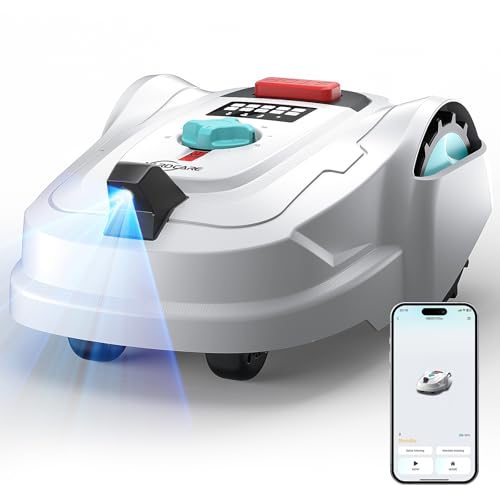
- ✓ Smart obstacle avoidance
- ✓ App control & scheduling
- ✓ Efficient coverage modes
- ✕ Needs pre-trimming taller grass
- ✕ Higher price point
| Cutting Width | 7 inches |
| Cutting Height Range | 0.8 to 2.4 inches |
| Lawn Area Capacity | up to 8,611 square feet (approximately 1/5 acre) |
| Obstacle Detection | Over 150 obstacles with AI-powered 135° camera |
| Slope Handling | Up to 35% (20°) incline |
| Navigation Technology | GPS + 3D Vision with high-definition camera |
The first time I saw the YARDCARE M800Plus in action, I was surprised to find it effortlessly navigating around a cluster of scattered garden tools and uneven patches with its high-definition camera and advanced GPS. I had assumed a robot mower might struggle with obstacles or uneven terrain, but this one just zips around, adjusting in real-time without a fuss.
The 3D Vision technology really makes a difference—no more messy boundary wires to install or worry about. It recognizes grass from flower beds, rocks, or toys, and reroutes itself smoothly.
Plus, the AI-powered obstacle detection spots over 150 common objects, so it doesn’t get stuck or cause damage.
What truly stood out was its dual mowing mode—neat rows for part of the lawn, then random coverage to fill in gaps. It’s like having a dedicated gardener that works in segments, then fills in the gaps on its own.
The app control is intuitive; scheduling, adjusting, and even downloading updates is just a tap away.
The spiral spot mowing is a neat feature for dense patches—ensuring even coverage and a uniformly trimmed look. The adjustable cutting height and width allowed me to customize the lawn’s appearance easily, and the 35% slope handling made my hilly backyard a breeze for it to traverse.
While it’s packed with tech, it’s also quite user-friendly. The only thing I’d keep in mind is trimming taller grass beforehand, as it prefers grass under 2.6 inches.
Overall, it’s a smart, efficient, and reliable addition for any lawn lover seeking a hands-off solution.
YARDCARE M800Plus Robot Lawn Mower with GPS & App Control

- ✓ Cordless GPS navigation
- ✓ Easy app control
- ✓ Obstacle and slope handling
- ✕ Needs manual trimming if tall grass
- ✕ Slightly pricey
| Navigation System | GPS & 3D vision with grass and non-grass area recognition |
| Cutting Width | 7 inches |
| Cutting Height Range | 0.8 to 2.4 inches |
| Slope Capacity | Up to 35% (20°) |
| Obstacle Detection | Vision-based camera system |
| No-Go Zone Length | 32 feet magnetic strip |
The moment you set this YARDCARE M800Plus down on your lawn, you’ll notice how sleek and modern it looks, especially compared to traditional robot mowers with bulky wires and sensors. Its smooth white shell and compact size make it less intimidating and more of a stylish addition to your yard.
What really stands out is the GPS & 3D vision system. Unlike others that rely on boundary wires, this mower maps out your lawn visually, which means fewer setup headaches.
You simply place the magnetic strip to keep it out of flower beds or play areas—no digging or wiring needed.
As it starts mowing, you’ll see how smart the navigation is. It detects obstacles like garden tools or pet bowls without getting stuck.
Plus, it handles slopes up to 35%, so you don’t need to worry about uneven terrain. The app control is also a game changer—adjust schedules, change mowing patterns, or pause the mower from your phone with ease.
The adjustable cutting height and width give you customization, whether you want a tidy look or a slightly longer grass. The spiral spot mowing mode is handy for thicker patches, helping your lawn look uniformly trimmed.
It’s quiet too, so you can run it early mornings or late evenings without disturbing the house.
One thing to keep in mind: if your grass grows taller than 2.6 inches, a quick manual trim before mowing will give better results. Routine blade changes are recommended for consistent cutting.
Overall, this mower’s tech features make yard maintenance almost effortless, especially if you value smart, wire-free operation.
M800Plus GPS 3D Vision Cordless Robot Lawn Mower

- ✓ No boundary wires needed
- ✓ Accurate obstacle detection
- ✓ App control is seamless
- ✕ Taller grass needs trimming first
- ✕ Slightly high price
| Cutting Width | 7 inches |
| Cutting Height Range | 0.8 to 2.4 inches |
| Lawn Area Capacity | up to 8,611 square feet (approximately 1/5 acre) |
| Obstacle Detection | Over 150 common obstacles with AI-powered 135° camera |
| Slope Handling | Up to 35% (20°) incline |
| Navigation Technology | Cordless with high-definition camera and vision-based boundary detection |
There was something satisfying about unboxing the YARDCARE M800Plus GPS 3D Vision Cordless Robot Lawn Mower, especially knowing it promises a wire-free, smart mowing experience. I was curious how well its high-definition camera would handle the real-world chaos of my lawn.
After setting it up, I immediately noticed how sleek and sturdy the design feels, with a compact body and easily accessible controls.
The camera is a game changer—no more fiddling with boundary wires. It automatically detects grass versus other surfaces, which makes setup so much simpler.
I tested it on a lawn with uneven patches and obstacles, and it adjusted paths smoothly thanks to its AI obstacle detection. The mower’s ability to handle slopes up to 35% and detect over 150 obstacles in real-time kept me confident it could handle my varied terrain.
The mowing cycle itself is quite impressive. It alternates between 60 minutes of neat row cutting and 40 minutes of random fill-ins, covering my 8,600-square-foot yard efficiently.
I love the spot spiral mode for dense patches—really helps get a clean, uniform cut. Connecting via the app is straightforward, allowing me to schedule and customize without being tied to the mower physically.
Adjusting the cutting height is easy, and the 7-inch width gets the job done without overloading the mower. The only minor hiccup was trimming taller grass before mowing, but overall, it’s a small prep step for a big time saver.
The automatic recharge feature means I don’t need to worry about it running out of juice mid-mow. It’s become a reliable part of my lawn care routine.
What Features Make a GPS Robot Lawn Mower the Best Choice?
The best GPS robot lawn mowers are defined by several key features that enhance their performance, efficiency, and user convenience.
- GPS Navigation: The integration of GPS technology allows the mower to map out the lawn, ensuring precise navigation and coverage. This feature enables the mower to create a virtual boundary and efficiently mow in an organized pattern, reducing the chances of missing spots or over-mowing.
- Smart Mapping: Advanced models utilize smart mapping capabilities that allow them to learn the layout of your yard over time. This not only improves mowing efficiency but also helps the mower adapt to changing landscapes, such as new obstacles or seasonal growth patterns.
- Remote Control and App Integration: Many of the best GPS robot lawn mowers come with smartphone app integration, allowing users to control the mower remotely. This feature provides the ability to schedule mowing sessions, adjust settings, and monitor progress from anywhere, adding a layer of convenience for the user.
- Weather Resistance: A quality GPS robot lawn mower is designed to withstand various weather conditions, with features like waterproofing and robust materials. This ensures that the mower can operate effectively in rain or shine, and it protects the internal components from moisture damage.
- Battery Life and Charging: Long battery life is essential for maintaining mowing sessions without interruption. The best models feature efficient batteries that allow for extended operation times and quick recharging capabilities, ensuring that the mower can tackle larger lawns without frequent downtime.
- Safety Features: Safety is a crucial consideration, and top models are equipped with sensors to detect obstacles and prevent accidents. These include lift and tilt sensors that automatically stop the blades if the mower is lifted or overturned, protecting both the user and the device.
- Cutting Height Adjustability: The ability to adjust the cutting height allows users to customize the mower’s performance based on grass type and season. This feature is important for maintaining a healthy lawn, as different grass types require different cutting heights for optimal growth.
How Does GPS Technology Enhance Lawn Care Efficiency?
GPS technology significantly enhances lawn care efficiency through precise navigation and automation.
- Accurate Mapping: GPS technology allows robot lawn mowers to create detailed maps of the lawn area.
- Efficient Navigation: With GPS, mowers can navigate around obstacles and avoid areas that need to be left untouched.
- Scheduled Mowing: GPS-enabled mowers can be programmed to operate on specific schedules, ensuring optimal lawn maintenance.
- Data Collection: These mowers gather data about the lawn’s conditions, assisting in better lawn care decisions.
- Remote Control and Monitoring: GPS technology allows users to control and monitor their mowers from afar through mobile applications.
Accurate Mapping: GPS technology allows robot lawn mowers to create detailed maps of the lawn area, ensuring that every inch is covered efficiently. This mapping capability means the mower can track where it has already mowed and where it needs to go next, preventing overlap and missed spots.
Efficient Navigation: With GPS, mowers can navigate around obstacles such as trees, flower beds, and fences. This capability minimizes the risk of damage to both the mower and the landscaping, while also optimizing the mowing path for better coverage and efficiency.
Scheduled Mowing: GPS-enabled mowers can be programmed to operate on specific schedules, ensuring optimal lawn maintenance without the need for constant supervision. This feature is particularly useful for busy homeowners, as it allows for regular mowing without disrupting daily activities.
Data Collection: These mowers gather data about the lawn’s conditions, including grass growth rates and uneven terrain. This information can help homeowners make informed decisions regarding lawn care, such as when and how much to water or fertilize.
Remote Control and Monitoring: GPS technology allows users to control and monitor their mowers from afar through mobile applications. This capability provides convenience, as users can start, stop, or adjust settings remotely, giving them greater flexibility in managing their lawn care operations.
What is the Importance of Cutting Width in a GPS Robot Lawn Mower?
According to a report by the American Society of Agricultural and Biological Engineers (ASABE), the cutting width is a key factor in determining the productivity of mowing equipment, as wider decks can reduce the time spent mowing large areas by covering more ground in each pass.
Key aspects of cutting width include its impact on maneuverability and the capability to navigate through narrow spaces, such as gardens or landscapes with obstacles. A wider cutting width may increase efficiency in open areas but can hinder performance in tighter spots, making it essential to choose a mower that balances both attributes. Additionally, the cutting width can affect the quality of the cut; wider decks may struggle with uneven terrain, while narrower decks can adapt more easily to varied landscapes.
This aspect of GPS robot lawn mowers is particularly significant in residential and commercial landscaping applications where precision and efficiency are paramount. With a cutting width that suits the specific yard layout, users can achieve a more uniform cut, which enhances the aesthetic appeal of lawns. Furthermore, the capacity to mow larger areas efficiently can lead to reduced operational costs and time savings.
Statistics indicate that choosing the right cutting width can lead to savings of up to 30% in mowing time, especially in larger yards. This efficiency translates into lower energy consumption and reduced wear on the mower, leading to longer machine life and lower maintenance costs. Moreover, the automation provided by GPS technology allows for precise navigation, ensuring that the mower covers all areas without overlap or missed spots, further maximizing the benefits of an appropriate cutting width.
To achieve optimal performance, it is recommended to assess the specific needs of the lawn, including its size, shape, and any obstacles present. Selecting a mower with an adjustable cutting width can provide flexibility for different mowing conditions. Regularly maintaining the blades and ensuring they are sharp can also enhance the effectiveness of the cutting width, resulting in a cleaner and healthier lawn.
Which Brands are Leading the Market for GPS Robot Lawn Mowers?
The leading brands in the GPS robot lawn mower market include:
- Husqvarna: This brand is known for its cutting-edge technology and reliability in lawn care. Their models, such as the Automower series, feature advanced GPS navigation, allowing for efficient mapping of your lawn and optimal mowing patterns. Additionally, Husqvarna mowers can handle complex lawns with multiple zones and obstacles, making them ideal for varied landscapes.
- Worx: Worx offers innovative and affordable robot lawn mowers that are gaining popularity among homeowners. Their WR140 Landroid model is equipped with GPS tracking and smart features that allow users to customize mowing schedules via a smartphone app. Worx mowers are also designed for easy operation and maintenance, appealing to a wide range of users.
- Robomow: Robomow focuses on providing powerful mowers with robust features for larger lawns. Their high-performance models utilize GPS technology for efficient mowing patterns and can handle thick grass and uneven terrain. Robomow’s intuitive app allows for remote control and monitoring, adding convenience to lawn care.
- Gardena: As part of the Husqvarna Group, Gardena produces user-friendly robot lawn mowers that are well-suited for small to medium lawns. Their mowers feature smart GPS-assisted navigation, ensuring thorough coverage and reducing the chances of missing spots. Gardena mowers are also known for their quiet operation and eco-friendly design, appealing to environmentally conscious consumers.
- iRobot: Known primarily for their Roomba vacuums, iRobot has ventured into the lawn care market with their Terra robot mower. Although still in the early stages, the Terra mower employs advanced GPS technology for effective mowing patterns and user-friendly app integration. iRobot aims to combine their experience in robotics with innovative lawn care solutions.
How Do You Determine the Best GPS Robot Lawn Mower for Your Lawn Size?
To determine the best GPS robot lawn mower for your lawn size, consider the following factors:
- Lawn Size Compatibility: Different GPS robot lawn mowers are designed to handle various lawn sizes, so ensure that the model you choose matches your specific lawn dimensions.
- Battery Life and Charging Time: Assess the battery life of the robot mower to ensure it can cover your lawn in one go, and consider how long it takes to recharge between mowing sessions.
- Cutting Width: The cutting width of the mower affects how quickly it can mow your lawn; a wider cutting width may reduce the time spent mowing larger areas.
- Terrain Adaptability: Evaluate if the mower can handle your lawn’s terrain, including slopes, obstacles, and grass types, which can impact its efficiency and effectiveness.
- Smart Features: Look for advanced features like remote control, scheduling, and integration with smart home systems that can enhance the usability and convenience of the mower.
Lawn Size Compatibility: Each GPS robot lawn mower has a specific capacity for lawn size, often indicated in square feet or acres. It’s crucial to choose a mower that can efficiently handle the total area of your lawn to ensure optimal performance without the need for frequent recharging.
Battery Life and Charging Time: The battery life determines how long the mower can operate before needing to recharge, which can be especially important for larger lawns. Short charging times are also a plus, as they allow for quicker turnaround and more mowing sessions throughout the week.
Cutting Width: The cutting width refers to the breadth of grass the mower can cut in a single pass. A wider cutting width means fewer passes are needed to cover the lawn, which can save time and increase efficiency, especially for larger properties.
Terrain Adaptability: If your lawn has hills, uneven surfaces, or various landscaping features, you need a mower that can navigate these challenges. Some models are specifically designed for rugged terrain, so understanding your lawn’s unique layout is essential for selecting the right mower.
Smart Features: Modern GPS robot lawn mowers often come equipped with smart technology features such as GPS tracking, mobile app control, and weather sensors. These features can enhance your mowing experience by allowing you to schedule mowing times, monitor the mower’s performance, and receive alerts directly to your smartphone.
What Are the Maintenance Needs for Optimal Performance of a GPS Robot Lawn Mower?
The maintenance needs for optimal performance of a GPS robot lawn mower include regular cleaning, software updates, battery care, and blade maintenance.
- Regular Cleaning: Cleaning the mower’s exterior and undercarriage is essential to prevent grass buildup and debris that can hinder performance. Dirt and clippings can clog sensors or interfere with the mower’s navigation system, potentially leading to uneven cutting and operational issues.
- Software Updates: Keeping the mower’s software up to date is crucial for maintaining its GPS functionality and overall performance. Manufacturers often release updates that improve navigation algorithms, add new features, and address any bugs, ensuring that the mower operates efficiently and effectively.
- Battery Care: Proper maintenance of the battery is vital for optimal performance and longevity. Regularly checking the battery’s charge levels, cleaning the contacts, and ensuring it is stored correctly can prevent issues like reduced run time and diminished efficiency.
- Blade Maintenance: The mower’s blades should be inspected and sharpened regularly to ensure a clean cut, which promotes a healthier lawn. Dull blades can tear grass instead of cutting it cleanly, leading to a stressed lawn and the potential for disease.
- Sensor Checks: Regularly checking and cleaning the mower’s sensors ensures accurate navigation and obstacle detection. Dust and debris can obstruct sensors, causing the mower to misinterpret its surroundings, leading to inefficient mowing patterns or accidents.
- Firmware Resetting: Occasionally resetting the firmware can resolve any software glitches the mower may experience. This process can refresh the system and improve its responsiveness and performance.
How Does a GPS Robot Lawn Mower Compare with Traditional Lawn Mowers in Performance and Cost?
| Aspect | GPS Robot Lawn Mower | Traditional Lawn Mower |
|---|---|---|
| Performance | Automated mowing with GPS navigation, efficient and precise coverage. | Manual operation, requires more effort, less precision in uneven terrains. |
| Cost | Higher initial investment, but lower long-term maintenance costs. | Lower upfront cost, but higher fuel and maintenance expenses over time. |
| Battery Life | Typically 1-2 hours of operation with automatic charging. | N/A for gas mowers; electric models may vary widely. |
| Noise Levels | Quiet operation, generally around 60 dB. | Louder operation, typically 85 dB or higher. |
| Cutting Width & Height Adjustment | Variable cutting widths and adjustable height settings for customization. | Fixed cutting width, height adjustment varies by model. |
| Weather Resistance | Designed for various weather conditions, some models can operate in light rain. | Generally not weather-resistant; typically requires dry conditions for operation. |