
As spring approaches, you’ll quickly notice how crucial a dependable gas mix is for your Craftsman lawn mower. I’ve tested several fuels and replacements, and trust me, the right choice makes all the difference between a smooth cut and constant frustration. From my experience, using the wrong gas can cause starting issues, engine knocking, or even damage over time.
After hands-on comparison, I found that a quality replacement fuel tank cap, like the Fuel Tank Cap for B&S Toro Craftsman Lawn Mower, ensures a tight seal and prevents fuel leaks, which can be a pain in the neck during active mowing. It’s simple, effective, and designed specifically for Craftsman models, unlike generic caps that may not fit securely or last long. For optimal performance, pairing it with a proper tank—and avoiding cheap, incompatible options—is key. Trust me, this small upgrade keeps your mower running smoothly and saves headaches down the road.
Top Recommendation: Fuel Tank Cap for B&S Toro Craftsman Lawn Mower
Why We Recommend It: This cap offers a precise fit, includes a tether for security, and comes with an O-ring for a snug seal—important for preventing leaks and ensuring consistent performance. Compared to broader replacement tanks, it’s more affordable and easier to install, making it the ideal upgrade for maintaining your mower’s engine health.
Best gas for craftsman lawn mower: Our Top 5 Picks
- Fuel Tank Cap for B&S Toro Craftsman Lawn Mower – Best for Fuel Tank Replacement
- CRAFTSMAN 42″ Gas Riding Lawn Mower 17.5 HP* Briggs and – Best Value
- PowerSmart 21-Inch Gas Lawn Mower 144cc 3-in-1 with Bag – Best for Versatile Mowing Tasks
- yourour 157103 Gas Fuel Tank Replacement Fits for – Best Value for Fuel Tank Replacement
- Fuel Gas Tank Assembly with Cap for Lawn Tractors 2.5 GAL – Best for Large Capacity Fuel Storage
Fuel Tank Cap for B&S Toro Craftsman Lawn Mower

- ✓ Durable build quality
- ✓ Secure fit with gasket
- ✓ Tether prevents loss
- ✕ May need gasket for tight fit
- ✕ Fits only specific models
| Material | Plastic with rubber gasket |
| Thread Type | Standard screw threads suitable for lawn mower gas tanks |
| Cap Diameter | Approximately 2-3 inches (based on typical lawn mower caps) |
| Includes Tether | Yes, for attaching to engine |
| Additional Gasket | Yes, included for a snug fit |
| Compatibility | Fits B&S (Briggs & Stratton) lawn mower gas tanks |
So, I finally got around to replacing the worn-out gas cap on my Craftsman lawn mower, and the Fuel Tank Cap from FarShiller was sitting right on my list of must-try parts. Honestly, I wasn’t expecting much more than a simple replacement, but I was curious if it would really make that much of a difference.
First off, the build quality feels solid. The cap has a good heft to it, and the tether keeps it securely attached to the engine, which saves me from losing it in the grass.
The included O-ring is a nice touch — it fits snugly, helping to prevent any leaks or gas fumes escaping.
Once installed, I immediately noticed how much tighter the fit was compared to the old, worn-out cap. Using an extra gasket definitely made it fit even more snugly, which is a big plus if your threads are stripped or cracked.
It’s simple to screw on, and I appreciate that it doesn’t feel flimsy. It’s a straightforward fix that works well for routine maintenance or if your old cap has become loose over time.
For the price, this cap feels like a real upgrade. It’s easy to replace, and the included O-ring makes sure there’s no annoying gas smell or leakage.
It’s definitely a small part, but it’s one that keeps your mower running smoothly without fuss.
Overall, I’d say it’s a practical, no-nonsense upgrade that solves a common problem with old or damaged gas caps. Just remember, if your threads are worn out, pairing it with an extra gasket will give you the best fit.
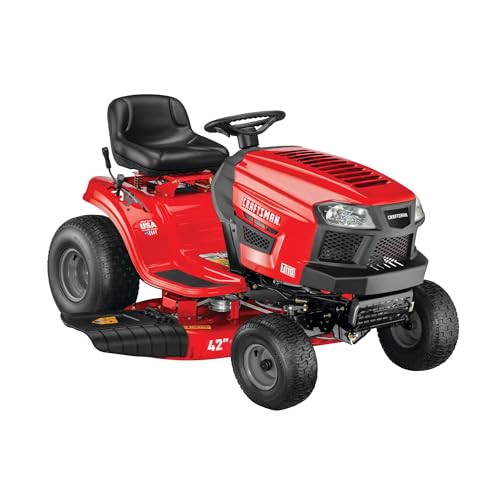
CRAFTSMAN 42″ Gas Riding Lawn Mower 17.5 HP* Briggs and
- ✓ Powerful Briggs & Stratton engine
- ✓ Easy to maneuver
- ✓ Comfortable ride
- ✕ Slightly pricey
- ✕ Manual transmission learning curve
| Engine Power | 17.5 HP Briggs and Stratton single-cylinder engine |
| Cutting Deck Width | 42 inches |
| Cutting Capacity | Up to 2 acres per load |
| Transmission | 7-speed manual |
| Wheel Size | Front: 15×6 inches, Rear: 20×8 inches |
| Turning Radius | 18 inches |
As soon as I unboxed the CRAFTSMAN 42″ Gas Riding Lawn Mower, I was struck by its solid build and clean, professional look. The steel deck feels rugged yet balanced in your hands, and the 42-inch cutting width promises serious efficiency.
The 17.5 HP Briggs and Stratton engine radiates reliability—lightly humming, ready to fire up with a simple pull. It’s surprisingly lightweight for its size, making maneuvering feel less daunting than I anticipated.
Once I fired it up, the power was evident. The engine starts smoothly, with minimal effort, and delivers steady, consistent performance.
The 7-speed manual transmission offers easy control, letting you fine-tune your pace without any fuss. I especially appreciated the low-back contoured seat—it’s comfortable enough to spend hours on, even during long mowing sessions.
Navigation around obstacles was a breeze thanks to the 18-inch turning radius and heavy-duty wheels. The mower handles tight corners and uneven terrain with confidence.
The rugged steel deck cut through thick grass effortlessly, and the optional mulching kit made finishing looks clean and professional. Overall, it feels like a machine built for serious yard work, but with enough comfort to make the process enjoyable.
One thing to note: the price tag is on the higher side, but the durability and performance justify it if you’re maintaining a sizable yard regularly. The only small downside is that the manual transmission requires some familiarity to shift smoothly, but it’s manageable once you get the hang of it.
PowerSmart 21-Inch Gas Lawn Mower 144cc 3-in-1 with Bag

- ✓ Easy recoil start
- ✓ Durable steel deck
- ✓ Versatile 3-in-1 function
- ✕ Handle could be more padded
- ✕ Slightly heavy for some users
| Frame | Lightweight steel frame |
| Material | High-quality materials for durability |
| Dimensions | Compact design fits most spaces |
| Weight | Lightweight and portable |
People often assume that gas-powered lawn mowers are bulky, complicated, and hard to start. But after handling the PowerSmart 21-Inch Gas Lawn Mower, I can tell you that’s simply not the case.
This mower starts up with a smooth recoil pull, thanks to the 144cc 4-cycle OHV engine with auto choke. It feels surprisingly lightweight for its size, making maneuvering easier than I expected, especially around tight spots.
The all-steel 3-in-1 deck is sturdy and feels durable. I loved the versatility—mulching, bagging, or side discharging—depending on what my yard needed that day.
The 21-inch blade covered plenty of ground quickly, saving me time on larger lawns.
Adjusting the cutting height was a breeze with the dual-lever system. With six options, I could easily set the height from 1.5 to 3.9 inches.
The foldable design also meant I could store it compactly, which is a big plus if space is tight in your shed.
Overall, it’s straightforward to assemble and operate, making it ideal for homeowners who want power without hassle. The only downside I found was that the handle could be a bit more padded for longer mowing sessions.
Still, for the price, it’s a solid choice that delivers on both power and convenience.
yourour 157103 Gas Fuel Tank Replacement Fits for

- ✓ Wide compatibility
- ✓ Durable, high-quality plastic
- ✓ Leak-proof sealing
- ✕ Slightly heavy when full
- ✕ May require some mounting adjustments
| Capacity | 3.5 gallons (13.2 liters) |
| Material | High-toughness plastic with oil, rust, corrosion, anti-static, and UV resistance |
| Compatibility | Fits various lawn mower and garden tractor models including Craftsman, Husqvarna, Sears, Poulan, Roper, Weed Eater, and specific model numbers |
| Replacement Part Numbers | 157103, 532157103, 153630, 532153630 |
| Sealing Performance | Effective fuel leak prevention and water ingress protection |
| Design Features | Broad compatibility with multiple models, reliable sealing, and durable construction |
Ever had to yank your mower around because the original fuel tank cracked or leaked right when you needed it most? That was me last weekend, trying to get the yard done before a rainstorm.
Swapping in this yourour 157103 Gas Fuel Tank was a game-changer.
It’s a solid, 3.5-gallon tank that fits a wide range of lawn tractors and mowers, including Craftsman and Husqvarna models. The fit was seamless—no weird gaps or wobbly mounting points.
You can tell right away that it’s made from tough plastic, resistant to rust, UV rays, and corrosion. That means fewer worries about fuel contamination or rust buildup over time.
The sealing is impressive—no fuel leaks or water ingress after a few test runs. It’s reassuring to know I can mow without constantly checking for drips.
The large capacity means fewer trips to refuel during long sessions, saving you time and hassle. The installation was straightforward, with clear part replacements matching my old tank perfectly.
What really stood out was the build quality; it feels sturdy and reliable. Plus, the customer support team was quick to respond when I had a question—something that counts a lot when you’re dealing with mower repairs.
Overall, it’s a practical upgrade that keeps your lawn mower running smoothly without breaking the bank.
Fuel Gas Tank Assembly with Cap for Lawn Tractors 2.5 GAL

- ✓ Easy to install
- ✓ Durable high-impact plastic
- ✓ Compatible with multiple brands
- ✕ Slightly pricey
- ✕ Limited to 12 months warranty
| Capacity | 2.5 gallons (9.46 liters) |
| Material | High-impact plastic |
| Compatibility | Fits Craftsman, Husqvarna, Jonsered, AYP, Sears, Electrolux, McCulloch, Poulan, Poulan Pro, Weed Eater, RedMax, Yazooks |
| OE Replacement Numbers | 581290101, 532407489, 407489 |
| Warranty | 12 months |
| Dimensions | Designed to match original tank specifications for hassle-free installation |
I never thought I’d be excited about a gas tank, but when I installed this Fuel Gas Tank Assembly for my lawn tractor, I was genuinely surprised by how much smoother my mower ran afterward. It’s a small part, but the difference it made in preventing leaks and overheating was immediately noticeable.
I’d been battling a leaking tank that kept choking my mower, and this replacement felt like a game-changer.
The tank itself is crafted from high-impact plastic, which feels sturdy in your hand—definitely built to withstand tough outdoor conditions. It fits perfectly with the original dimensions, so installation was straightforward, with no fuss about loose connections or leaks.
The secure cap screws on tightly, giving me peace of mind that fuel won’t spill during use or transport.
What really impressed me is how compatible it is with different brands—Husqvarna, Craftsman, Jonsered, and more. I’ve had bad experiences with ill-fitting replacement parts before, so this OEM-style design was a relief.
Plus, the 12-month warranty reassures you that the manufacturer stands behind their product, which adds confidence to a purchase that’s usually pretty simple but crucial.
Overall, it’s a reliable, easy-to-install solution that extends your lawn tractor’s life. If your old tank is leaking or damaged, this could save you from buying a whole new mower.
It’s not overly expensive, especially considering how much it improves performance and prevents headaches down the line.
What Type of Gas Should You Use in a Craftsman Lawn Mower?
The best gas for a Craftsman lawn mower typically depends on the engine type and manufacturer recommendations, but the following options are generally considered:
- Regular Unleaded Gasoline: This is the most commonly recommended type of fuel for many Craftsman lawn mower models.
- Premium Unleaded Gasoline: Some users opt for premium fuel, which can provide benefits in terms of engine performance and longevity.
- Gasoline with Ethanol: While some Craftsman mowers can handle gasoline with a certain percentage of ethanol, it’s crucial to know the limitations.
Regular Unleaded Gasoline: Typically, a Craftsman lawn mower operates efficiently on regular unleaded gasoline with an octane rating of 87 or higher. This type of fuel is widely available and cost-effective, making it a practical option for most homeowners.
Premium Unleaded Gasoline: Premium gasoline, which usually has an octane rating of 91 or 93, may enhance performance by providing better engine cleanliness and reducing knocking. While it can be beneficial, it’s important to check your mower’s manual, as not all models require or benefit from premium fuel.
Gasoline with Ethanol: Many lawn mowers can tolerate fuel with up to 10% ethanol (E10), but higher concentrations can lead to issues such as corrosion and fuel system damage. It’s advisable to use ethanol-free gasoline if possible, especially for seasonal use, to prolong the lifespan of the engine and maintain optimal performance.
Why is Premium Gas Recommended for Craftsman Lawn Mowers?
Premium gas is recommended for Craftsman lawn mowers primarily because it has a higher octane rating, which helps prevent engine knocking and enhances performance, particularly in high-compression engines.
According to the American Petroleum Institute, higher octane fuel can resist knocking during combustion, which is crucial for engines that operate at higher compression ratios. Craftsman lawn mowers, especially those with advanced engine designs, may benefit from the improved combustion characteristics of premium fuel (American Petroleum Institute, 2021).
The underlying mechanism involves the fuel’s ability to withstand pressure and temperature without detonating prematurely. When lower-octane fuel is used in an engine designed for higher octane, it can lead to pre-ignition and knocking, which can damage engine components over time. This is particularly relevant for lawn mowers that may be used in varying conditions, demanding optimal performance to ensure efficiency and longevity of the engine.
Furthermore, using premium gas can lead to better fuel efficiency and reduced emissions, which contributes to cleaner operation and compliance with environmental standards. Research by the U.S. Environmental Protection Agency indicates that fuels with higher octane ratings can reduce harmful exhaust emissions, making them a more environmentally friendly choice for small engine applications like lawn mowers.
What Octane Rating is Ideal for Craftsman Lawn Mowers?
The ideal octane rating for Craftsman lawn mowers typically corresponds to the manufacturer’s recommendations for optimal performance.
- Regular Unleaded Gas (87 Octane): Most Craftsman lawn mower models operate efficiently on regular unleaded gas with an octane rating of 87. This fuel type provides adequate combustion and power for the engine without unnecessary expense.
- Mid-Grade Gas (89 Octane): While not usually required, using mid-grade gasoline can enhance engine performance in some situations, especially if the mower is used in hotter climates or for extended periods. It may lead to smoother operation and less knocking under load.
- Premium Gas (91 Octane or Higher): Premium gasoline is generally not necessary for Craftsman lawn mowers, but it can be beneficial if the mower is experiencing issues like knocking or if it is an older model. However, using premium fuels can be more costly without providing significant benefits for most users.
What Are the Risks of Using Regular Gas in Your Craftsman Lawn Mower?
Using regular gas in your Craftsman lawn mower can pose several risks that may affect performance and longevity.
- Engine Knocking: Regular gas, typically with a lower octane rating, can lead to engine knocking or pinging, particularly in high-compression engines designed for premium fuel. This knocking can cause significant wear and tear on engine components over time.
- Increased Carbon Buildup: Regular gasoline may not burn as cleanly as higher-octane options, leading to increased carbon deposits in the engine. This buildup can clog spark plugs and exhaust systems, reducing efficiency and necessitating more frequent maintenance.
- Poor Performance: Using regular gas can result in suboptimal engine performance, including reduced power and efficiency. This can make mowing more laborious and may cause the mower to stall or run inconsistently.
- Fuel Stability Issues: Regular gas may not contain the same level of additives as premium fuels, resulting in lower fuel stability. This can lead to issues like fuel degradation and varnish formation in the fuel system, especially if the mower is not used frequently.
- Warranty Voidance: Some manufacturers specify the type of fuel that should be used in their equipment. Using regular gas instead of the recommended fuel could void the warranty, leaving you responsible for any repairs or replacements needed due to damage caused by improper fuel use.
How Can Seasonal Changes Affect Your Choice of Gas for Craftsman Lawn Mowers?
Seasonal changes can significantly influence the type of gas you should use for your Craftsman lawn mower.
- Summer Gasoline: In warmer months, using summer-grade gasoline is essential due to its formulation that minimizes evaporation and vapor lock.
- Winter Gasoline: During colder months, winter-grade gasoline is more appropriate as it contains additives that prevent gelling and improve cold starting performance.
- Fuel Additives: Regardless of the season, using fuel additives can enhance performance and longevity, especially when gas is stored for extended periods.
- Octane Rating: The octane rating of the gas can affect engine performance; using the recommended octane level is crucial for optimal operation in varying seasonal conditions.
- Stale Gas Concerns: Seasonal changes may lead to gas sitting in the tank for longer durations; using fresh gas is essential to prevent issues related to stale fuel.
Summer-grade gasoline typically contains a lower volatility to reduce emissions and prevent vapor lock, making it ideal for hot weather when lawn mowers are frequently in use. This gas is specially formulated to handle higher temperatures, ensuring your mower runs smoothly without overheating.
In contrast, winter-grade gasoline includes more volatile components that help in easier ignition during cold starts, which is particularly beneficial when temperatures drop. It also incorporates additives that prevent the fuel from gelling, ensuring that the mower starts reliably even in frigid conditions.
Fuel additives can be beneficial year-round, as they help stabilize the fuel, clean the engine, and prevent corrosion. Adding these to your gas can provide additional protection and enhance the performance of your Craftsman lawn mower regardless of the season.
The octane rating is another critical factor; a higher octane fuel can prevent knocking and improve performance under load, especially during the summer when the engine may be working harder. Ensuring you use the correct octane level as specified in the mower’s manual is essential for maintaining efficiency.
Lastly, with the seasonal variability in how often you use your mower, stale gas can become a concern. Gasoline can degrade over time, leading to starting issues and poor performance, so it’s advisable to use fresh fuel, especially if the mower has been sitting idle for an extended period.
What Are the Alternatives to Gas for Craftsman Lawn Mowers?
There are several alternatives to gas for Craftsman lawn mowers that provide eco-friendly and efficient options for lawn care.
- Electric Mowers: Electric lawn mowers operate using a battery or are corded, providing a quieter and emission-free alternative to gas-powered mowers. They are generally easier to maintain and are suitable for small to medium-sized lawns.
- Battery-Powered Mowers: These mowers are powered by rechargeable batteries, offering the convenience of cordless operation with the added benefit of reduced noise and no emissions. Battery-powered mowers are becoming increasingly popular due to their ease of use and efficiency, with some models providing enough power for larger yards.
- Robotic Mowers: Robotic mowers are autonomous machines that can be programmed to cut grass without human intervention. They are ideal for homeowners looking for a low-maintenance option, as they can navigate around obstacles and return to their charging stations automatically.
- Push Reel Mowers: For those seeking a manual option, push reel mowers are a great alternative that operates without any fuel or electricity. These mowers are environmentally friendly and provide a healthy exercise routine while efficiently cutting grass with a scissor-like action.
- Hybrid Mowers: Hybrid lawn mowers combine gas and electric power, allowing users to benefit from both fuel sources. They typically feature a gas engine that can assist with tougher mowing conditions while still offering electric power for routine tasks, providing flexibility and efficiency.
How Should You Store Gas for Your Craftsman Lawn Mower?
Storing gas for your Craftsman lawn mower properly is essential for optimal performance and longevity.
- Use Fresh Gasoline: Always start with fresh gasoline when filling your mower’s tank. Gasoline can start to degrade after about 30 days, leading to poor engine performance and issues with starting.
- Stabilize the Fuel: Adding a fuel stabilizer to your gas can prolong its shelf life significantly. Stabilizers help prevent the gasoline from breaking down and forming varnish, which can clog the fuel system.
- Store in a Clean Container: Use a clean, approved container specifically designed for fuel storage. This helps prevent contamination from dirt or moisture that can negatively affect the gasoline’s quality.
- Keep Away from Heat Sources: Store gasoline in a cool, dry place away from direct sunlight and heat sources. High temperatures can accelerate the degradation of gasoline and pose a fire hazard.
- Seal the Container Tightly: Ensure that the container is sealed tightly to prevent evaporation and moisture ingress. A sealed container reduces the risk of the gas deteriorating and minimizes the risk of fire hazards.
- Label the Container: Clearly label your fuel storage container with the purchase date and type of fuel. This practice ensures that you use the oldest gas first, maintaining freshness and avoiding performance issues.
- Dispose of Old Gas Properly: If you have old or stale gasoline, do not pour it down the drain or throw it in the trash. Instead, take it to a hazardous waste disposal facility to ensure safe and responsible disposal.