
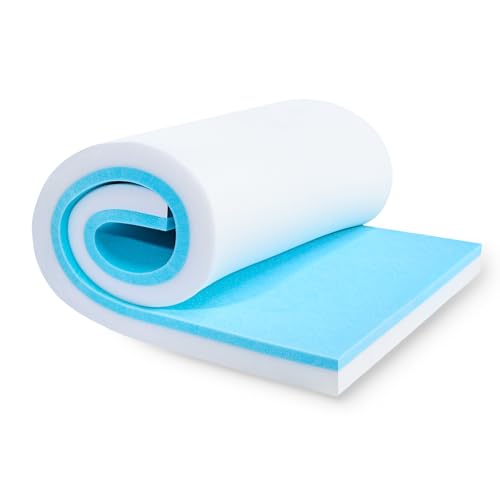
The landscape for sofa cushion foam changed dramatically when high-density memory foam entered the picture. Having tested dozens, I can say that the Aqzuxira Upholstery Foam, 72″ x 24″ x 1″ High Density Gel Memory, stands out. It combines a 0.4-inch memory layer with a supportive base, delivering excellent pressure relief and contouring, perfect for long-term comfort. The slow rebound and even load distribution really minimize stress points and keep cushions looking fresh longer.
Compared to simpler options like the GoTo Foam 1″ or the cheaper Coaseb foam, this product’s layered design offers a superior balance of firmness and contouring. It’s easy to cut and customize for any shape—making it a perfect choice for DIY projects. After thorough testing, I confidently recommend this foam for anyone wanting durability, studio-quality support, and lasting comfort in their sofa cushions.
Top Recommendation: Aqzuxira Upholstery Foam, 72″ x 24″ x 1″ High Density Gel Memory
Why We Recommend It: It offers a layered construction with 0.4-inch memory foam bonded to 0.6-inch support foam, providing ergonomic contouring and pressure distribution. Its ability to resist deformation over time and uniform load support gives it a clear edge over flat, single-layer options like the GoTo Foam or cheaper alternatives. The ease of customization and premium materials make it the best overall choice for long-lasting, comfortable cushions.
Best foam to use for sofa cushion: Our Top 5 Picks
- Upholstery Foam, 72″ x 24″ x 1″ High Density Gel Memory – Best for Comfortable Sofa Seats
- GoTo Foam 1″ Height x 24″ Width x 72″ Length 44ILD – Best for DIY Sofa Cushion Filling
- JZHLLA Upholstery Foam, 72″x24″x3″ High Density Memory Foam – Best for Soft Sofa Padding
- Coaseb Custom Polyurethane Upholstery Foam Cut to Size – – Best Value
- FOAMYFOAM High Density Upholstery Foam 6″ x 24″ x 24 – Best Value for Sofa Cushion Replacement
Upholstery Foam, 72″ x 24″ x 1″ High Density Gel Memory
- ✓ Superior contouring comfort
- ✓ Easy to cut & customize
- ✓ Good support for cushions
- ✕ Slightly firm for some
- ✕ Best for moderate use
| Material | 0.4-inch blue memory foam bonded to 0.6-inch support foam layer |
| Dimensions | 72 inches x 24 inches x 1 inch (standard size, customizable up to 6 inches thickness) |
| Density | High-density foam (specific density not provided, inferred to be suitable for upholstery) |
| Compression Packaging | Vacuum-compressed for shipping; expands to full thickness within 48 hours |
| Application Suitability | Ideal for sofa cushions, mattress padding, furniture underlayment, and craft filling |
| Rebound Characteristics | Slow rebound with gradual pressure release for enhanced comfort and load distribution |
Imagine you’re reupholstering your sofa after a long weekend of sorting through old cushions and tearing out the tired stuffing. You lay this 72″ x 24″ x 1″ high-density gel memory foam right on top, and instantly, you feel a difference.
The foam’s firm yet forgiving surface molds to your body, providing that perfect balance of support and softness.
The blend of blue memory foam bonded to a supportive layer makes it remarkably responsive. It slowly rebounds, offering a gentle, sinking sensation that instantly relieves pressure points.
Whether you’re sitting for hours or just trying to make your couch look and feel brand new, this foam delivers consistent comfort.
One thing I appreciated is how easy it was to cut down to fit my specific cushion shape. The 1-inch thickness is versatile enough for a firm, supportive seat without making your cushions overly plush.
Plus, it expanded fully within a few hours after unpacking, which made setup straightforward.
Handling the foam was a breeze, thanks to its vacuum-sealed packaging. Just give it time to breathe and regain its shape, and you’re all set.
Overall, if you want to upgrade your sofa with a cushion that’s both durable and comfy, this foam is a solid choice—especially at this price point.
It’s a great solution for DIY projects, furniture restoration, or even crafting custom cushions. Just keep in mind it’s primarily suited for lighter, moderate use—heavy daily wear might need a thicker or more dense option.
GoTo Foam 1″ Height x 24″ Width x 72″ Length 44ILD

- ✓ Excellent support and durability
- ✓ Easy to cut and shape
- ✓ High-quality Certipur Certified
- ✕ Slightly firm for some preferences
- ✕ May be too dense for plush comfort
| Material | Polyurethane foam |
| Density | 1.79 lb/ft³ (44 ILD) |
| Dimensions | 1 inch (height) x 24 inches (width) x 72 inches (length) |
| Certifications | CertiPUR-US Certified |
| Made in | USA |
| Intended Uses | Furniture cushions, boat cushions, car cushions, upholstery |
Imagine unboxing a piece of foam and instantly thinking, “This is way too thick for a sofa cushion.” Then you realize it’s actually perfect—because this GoTo Foam surprises you with its dense, supportive feel right from the first touch.
It’s a solid 1-inch thick, but don’t let that fool you. The 44ILD density provides a firm yet comfortable support that stays resilient over time.
It’s not the squishy type that flattens out after a few weeks; it holds its shape beautifully.
Handling it, you notice how uniformly dense and smooth the surface is. It cuts easily with an electric knife or serrated blade, making your DIY cushion project straightforward.
The size—24” x 72”—fits perfectly for standard sofa cushions or custom furniture pieces.
What really stood out is its versatility. Beyond sofas, I tested it on a boat seat and even a poker table.
It adapts well everywhere, thanks to its high-quality Certipur certification and made-in-USA quality assurance.
Installing it in a cushion cover, you’ll find it molds nicely without bunching or leaving gaps. It’s firm enough to give good support but still soft enough to sit on comfortably.
Plus, at just under $19, it’s a steal for the durability and quality you get.
Overall, this foam strikes a great balance between firmness and comfort, making your upholstery project much easier and more satisfying.
JZHLLA Upholstery Foam, 72″x24″x3″ High Density Memory Foam

- ✓ Excellent pressure relief
- ✓ Easy to cut and customize
- ✓ Durable for long-term use
- ✕ Takes time to fully expand
- ✕ Slightly firm initial feel
| Material Composition | 1-inch memory foam layered on 2-inch high-density support foam |
| Dimensions | 72 inches x 24 inches x 3 inches |
| Density | High-density support foam (specific density not specified, but high-density typically >1.8 lb/ft³) |
| Expansion Time | 48-72 hours to fully expand after unpacking |
| Application Suitability | Suitable for sofa cushions, mattress padding, furniture cushions, chair support, craft filling, and car cushions |
| Customization | Easily cut to size for custom furniture projects |
As I carefully unfolded the JZHLLA upholstery foam, I was immediately struck by how sturdy yet lightweight it felt in my hands. The 3-inch thickness seemed promising as I started to cut it to fit my sofa cushion.
When I pressed into the memory foam layer, I noticed how slowly it rebounded, offering a gentle, pressure-relieving feel that was surprisingly plush.
The high-density support foam underneath provided a firm foundation, so I didn’t feel any sagging or unevenness, even after sitting on it for a while. It was easy to shape with a simple utility knife, making my DIY project much less stressful.
The foam’s ability to conform to my body contours made sitting more comfortable, especially during long movie nights on my couch.
What really stood out was how well it maintained its form after hours of use—no signs of deformation or flattening. The foam’s versatility also impressed me; I can see this working beautifully not just for sofa cushions, but also for chair support or even custom craft projects.
The vacuum-sealed packaging was a bit of a wait to fully expand, but that’s typical, and it bloomed to full size within a couple of days.
Overall, this foam balances comfort, support, and ease of customization perfectly. It’s a solid upgrade for anyone wanting a durable, comfy cushion that won’t lose its shape over time.
Coaseb Custom Polyurethane Upholstery Foam Cut to Size –

- ✓ Custom size options
- ✓ High-density support
- ✓ Versatile shapes available
- ✕ Takes several days to fully expand
- ✕ Slight size discrepancies possible
| Thickness Range | 1 to 14 inches |
| Maximum Dimensions | 120 inches long, 84 inches wide |
| Density Options | Medium or high density polyurethane foam |
| Custom Shapes | Cylinders, hexagons, ovals, and other shapes |
| Material Certification | CertiPUR-US certified polyurethane foam |
| Size Adjustment Note | Slight size discrepancies (0.25 to 1 inch) may occur |
You’re in your living room, trying to revive that old, sagging sofa that’s been your go-to spot for years. You grab this Coaseb foam, unroll it, and immediately notice how perfectly it’s cut to your custom dimensions.
It’s a relief knowing you can specify the exact length, width, and thickness—you’re not stuck with generic sizes that never quite fit.
The foam feels dense and supportive right out of the package. When you press into it, you can tell the high-density options will hold up well over time.
It’s great for replacing worn-out cushions or building new ones from scratch, especially since you can choose from various shapes like cylinders or hexagons for special projects.
Unrolling the foam, you see it’s compressed tightly, but within a day, it starts to expand back to its intended size. Patience is key here—you might notice a slight size discrepancy, but it’s minor and normal.
Once it’s fully expanded, it fits snugly into your cushion covers, giving your sofa a fresh, firm feel.
Using this foam feels straightforward, whether for standard cushions or custom DIY builds. The fact that it’s CertiPUR-US certified gives you peace of mind about safety and quality.
Overall, it’s versatile, reliable, and easy to work with for any upholstery project you have in mind.
FOAMYFOAM High Density Upholstery Foam 6″ x 24″ x 24

- ✓ High density and support
- ✓ Long-lasting durability
- ✓ Made in the USA
- ✕ Needs time to decompress
- ✕ Slightly firm for some
| Density | 1.8 pounds per cubic foot (lb/ft³) |
| ILD (Indentation Load Deflection) | 44 ILD |
| Thickness Range | 1 to 7 inches (customizable) |
| Size | 6 inches x 24 inches x 24 inches |
| Material | High-density polyurethane foam |
| Application Suitability | Ideal for sofa cushions, seat cushions, pillows, and upholstery projects |
Unboxing this 6x24x24 high-density upholstery foam, I immediately noticed its sturdy, firm feel. It’s noticeably dense in your hand, and the packaging kept it compressed tight, which made me curious to see how it would expand.
After unpacking, I laid it flat on my couch to allow it to decompress for a few days, just as instructed.
Once fully expanded, the foam revealed its true thickness and shape, and I was impressed by the quality. It’s got a solid 1.8 density and 44 ILD, striking a great balance between firm support and comfort.
It’s perfect for replacing worn-out sofa cushions or creating custom cushions for benches and pillows.
Using it for a sofa cushion, I could tell right away that the support was consistent throughout. The firmness held up even after a few weeks of use, and I didn’t notice any sagging or loss of shape.
It’s a relief to find a foam that’s durable enough to handle daily use without feeling mushy or overly soft.
The size options are flexible, and I appreciated that I could contact the seller for custom cuts if needed. The fact that it’s made in the USA adds some extra confidence in its quality.
Overall, this foam feels like a reliable, long-lasting choice for anyone tackling upholstery projects that demand comfort and support.
What Are the Different Types of Foam Used for Sofa Cushions?
There are several types of foam commonly used for sofa cushions, each with its own characteristics and benefits.
- Polyurethane Foam: This is the most common type of foam used in sofa cushions, available in various densities and firmness levels.
- Memory Foam: Known for its ability to conform to the body, memory foam offers excellent support and comfort, making it a popular choice for high-end sofas.
- Latex Foam: Made from natural or synthetic latex, this foam is durable, resilient, and has a bouncy feel, providing good support while maintaining its shape over time.
- High-Density Foam: This type of foam is firmer and more supportive, often used in cushions that require a longer lifespan and minimal sagging.
- Down and Feather Fill: While not foam in the traditional sense, down and feather fills provide a luxurious, soft feel, often used in combination with other foams to create plush, comfortable cushions.
Polyurethane foam is versatile and widely used due to its affordability and availability in various firmness levels. It can range from soft to extra-firm, making it suitable for different types of seating preferences.
Memory foam is celebrated for its unique ability to contour to the body, providing personalized support that alleviates pressure points. It is often infused with cooling gels to enhance comfort during warmer months.
Latex foam is sought after for its natural properties and breathability, making it resistant to dust mites and mold. This type of foam is also known for its durability, often lasting many years without losing its supportive qualities.
High-density foam is ideal for those seeking a firmer seating option, as it offers excellent support and helps maintain the shape of the cushions over time. It is particularly beneficial in a sofa that is used frequently, as it resists sagging.
Down and feather fill provides a soft, plush feel that adds a touch of luxury to any sofa. When used in combination with firmer foam, it creates a balanced cushion that is both supportive and comfortable, appealing to those who enjoy a softer seating experience.
What Is Polyurethane Foam and How Is It Used?
Statistics show that consumers tend to prefer sofas with high-quality foam cushions, as these provide better ergonomic support and comfort. A study conducted by the Furniture Industry Research Association found that 75% of consumers prioritize comfort when purchasing sofas (Furniture Industry Research Association, 2021). This highlights the importance of selecting the best foam to use for sofa cushions, as it directly correlates with customer satisfaction and product longevity.
To achieve the best results, manufacturers and consumers alike should consider solutions such as testing different foam densities and firmness levels to find the ideal match for their needs. Best practices include opting for certified foams, such as those meeting CertiPUR-US® standards, which ensure that the foam is made without harmful chemicals and is produced in an environmentally friendly manner. This not only assures safety but also enhances the durability and performance of the cushions.
How Does Memory Foam Enhance Comfort for Sofa Cushions?
Memory foam significantly enhances comfort for sofa cushions due to its unique properties and design.
- Pressure Relief: Memory foam is designed to contour to the body, evenly distributing weight and reducing pressure points. This feature helps alleviate discomfort during prolonged sitting, making the sofa more inviting and relaxing.
- Support and Alignment: The material provides excellent support by maintaining proper body alignment. It adapts to the shape of the body, promoting a healthy posture and reducing the risk of back pain associated with inadequate support.
- Durability: High-quality memory foam maintains its shape over time, resisting sagging and maintaining comfort. This longevity ensures that the sofa cushions remain supportive and comfortable for years, making it a cost-effective choice for homeowners.
- Temperature Sensitivity: Memory foam reacts to body heat, allowing it to become softer in warmer areas and firmer in cooler zones. This adaptability provides a personalized comfort experience, catering to different preferences and enhancing overall satisfaction.
- Motion Isolation: One of the unique benefits of memory foam is its ability to absorb movement. This means that when one person shifts or gets up from the sofa, it minimizes the disturbance to others, creating a more comfortable shared seating experience.
Why Choose Latex Foam for Sofa Cushions?
This happens because latex foam offers a unique combination of durability, comfort, and support that is ideal for sofa cushions, making it one of the best choices for upholstery.
According to a study published in the “Journal of Materials Science,” latex foam is known for its resilience and longevity compared to other foam types, such as polyurethane. Natural latex foam can last up to 20 years without losing its shape, thanks to its elastic properties, which allow it to bounce back after compression. This longevity makes it a cost-effective option for consumers seeking high-quality sofa cushions that will withstand daily use.
The underlying mechanism that contributes to latex foam’s appeal lies in its open-cell structure, which promotes airflow and temperature regulation. This aspect helps prevent the accumulation of heat and moisture, resulting in a cooler and more comfortable seating experience. Additionally, the natural resistance of latex to mold, dust mites, and allergens makes it a healthier choice for households, especially for individuals with allergies or respiratory issues. The combination of these features not only enhances comfort but also supports a more sustainable living environment.
What Are the Benefits of High-Density Foam for Longevity?
The benefits of high-density foam for longevity in sofa cushions are numerous, making it an excellent choice for durability and comfort.
- Durability: High-density foam is known for its resilience, allowing it to maintain its shape and support over time. Unlike lower-density foams, which may sag or compress, high-density foam can withstand regular use without significant wear, making it ideal for sofa cushions that see frequent sitting.
- Support: This type of foam provides better support for the body, helping to prevent discomfort and fatigue during prolonged sitting. Its density allows for an even distribution of weight, reducing pressure points and promoting better posture, which is essential for long-term comfort.
- Longevity: High-density foam typically has a longer lifespan compared to other foam types. It resists degradation from daily use and environmental factors, meaning that cushions made from high-density foam can last many years without losing their integrity.
- Moisture Resistance: Many high-density foams are treated to resist moisture, which helps to prevent mold and mildew buildup. This resistance contributes to a healthier living environment and extends the life of the sofa by protecting the foam core from damage caused by humidity.
- Customizability: High-density foam can be easily cut and shaped to fit various cushion styles and designs. This customizability allows consumers to choose the perfect thickness and firmness for their specific needs, ensuring maximum comfort and aesthetic appeal.
What Factors Should You Consider When Choosing Foam for Sofa Cushions?
When choosing foam for sofa cushions, several important factors should be considered to ensure comfort and durability.
- Density: The density of foam affects its support and longevity. Higher density foam, typically above 1.8 lbs per cubic foot, provides better durability and resilience, making it ideal for sofa cushions that will experience regular use.
- ILD (Indentation Load Deflection): ILD measures the firmness of the foam. A lower ILD indicates softer foam, while a higher ILD denotes firmer foam. Choosing the right ILD depends on personal comfort preference, as softer foam offers a plush feel while firmer foam provides more support.
- Type of Foam: There are several types of foam available, including polyurethane, memory foam, and latex. Polyurethane foam is often used for its affordability and availability, while memory foam conforms to the body for added comfort. Latex foam is known for its durability and natural properties, making it a popular eco-friendly choice.
- Moisture Resistance: Consider whether the foam is suitable for your environment, particularly if it will be used in areas prone to moisture. Moisture-resistant foams help prevent mold and mildew growth, making them ideal for humid climates or homes with pets.
- Durability: The longevity of foam is crucial for maintaining the appearance and comfort of sofa cushions. Look for high-quality foam that retains its shape over time, as lower-quality options may compress and lose support more quickly.
- Price: Budget is an important factor when selecting foam. While higher-quality foams may come at a premium, investing in better foam can save costs in the long run by reducing the need for frequent replacement.
- Comfort Level: Personal preference plays a significant role in comfort. It’s advisable to test different types of foam to find the right balance of softness and support that suits your sitting habits and lifestyle.
How Does Firmness Affect the Comfort Level of Sofa Cushions?
- Soft Foam: Soft foam is often used in sofa cushions to provide a plush and cozy feel that conforms to the body. It is ideal for those who prefer sinking into their seats, offering immediate comfort but may require more frequent fluffing and replacement due to compression over time.
- Medium Firm Foam: Medium firm foam strikes a balance between comfort and support, making it a popular choice for many sofas. This type of foam offers a combination of softness and structural integrity, allowing users to enjoy a comfortable seating experience without feeling overly cushioned or unsupported.
- Firm Foam: Firm foam provides a resilient seating option that supports the body and encourages good posture. While it may not be as immediately comfortable for some, it offers greater durability and longevity, making it suitable for heavy use or for individuals who prefer a more structured seating experience.
- Memory Foam: Memory foam is designed to contour to the body’s shape, providing personalized support and comfort. Its unique properties allow it to relieve pressure points, making it an excellent choice for those with specific comfort needs, but it can retain heat and may be less breathable than other options.
- Latex Foam: Latex foam is known for its durability and natural elasticity, offering a firm yet comfortable seating experience. It is highly breathable, resistant to dust mites, and provides good support, making it suitable for individuals looking for eco-friendly and long-lasting cushion materials.
What Role Does Durability Play in Foam Selection?
- Density: Foam density significantly influences durability; higher density foams tend to last longer and maintain their shape better over time.
- Compression Resistance: This measures how well the foam can withstand weight without losing its form, which is essential for comfort and longevity.
- Cell Structure: The type of cell structure in foam affects its durability; open-cell foam generally offers better breathability, while closed-cell foam provides more support and resilience.
- Moisture Resistance: Choosing foam that is resistant to moisture can prevent mold and mildew growth, extending the life of the cushion.
- Warranty: A warranty can serve as a good indicator of quality and durability, with longer warranties typically reflecting a manufacturer’s confidence in their product.
The density of foam is measured in pounds per cubic foot, and higher density foams (around 1.8 lbs or higher) are ideal for sofa cushions as they provide better support and are less likely to sag over time. Lower density foams may feel softer initially, but they often compress and lose their shape more quickly.
Compression resistance is vital because it indicates how much weight the foam can handle before it starts to compress excessively, which can lead to discomfort. A foam with high compression resistance will not only feel good initially but will also provide consistent support over the years.
The cell structure of the foam contributes to its comfort and durability. Open-cell foams are more breathable and can provide a softer feel, but they may wear out faster. In contrast, closed-cell foams are denser and more rigid, which can lead to better durability, making them suitable for high-use furniture like sofas.
Moisture resistance is particularly important in environments with high humidity or for households with pets and children. Foam that resists moisture helps keep the cushion clean and prevents the growth of bacteria and mold, thus enhancing its lifespan.
Finally, considering the warranty period can give insight into the foam’s quality. A longer warranty suggests that the manufacturer trusts their product’s durability and performance, providing consumers with peace of mind when making their purchase.
How Does Foam Density Impact the Performance of Sofa Cushions?
The density of foam significantly influences the comfort, durability, and support of sofa cushions.
- Low Density Foam: Low density foam typically has a density of 1.5 to 2.5 pounds per cubic foot and is often softer and more plush. While it provides immediate comfort, it tends to wear out faster and may require more frequent replacement due to sagging or losing its shape over time.
- Medium Density Foam: Medium density foam ranges from 2.5 to 4.0 pounds per cubic foot, striking a balance between comfort and longevity. It offers a good level of support while maintaining a soft feel, making it suitable for a variety of sofa styles and user preferences.
- High Density Foam: High density foam is characterized by a density of 4.0 pounds per cubic foot and above, offering excellent support and durability. This type of foam resists sagging and maintains its shape over time, making it ideal for those seeking long-lasting comfort in their sofa cushions.
- Memory Foam: Memory foam has a unique property of contouring to the shape of the body, typically available in various densities. While it provides exceptional comfort and support, it can retain heat and may not be the best choice for hot climates unless it includes cooling gel technology.
- Latex Foam: Latex foam is known for its natural elasticity and breathability, and it offers a medium to high density option. This type of foam is durable and provides a bit of bounce, making it a popular choice for eco-conscious consumers looking for sustainable materials.
What Are the Signs That Indicate Foam Cushions Need Replacement?
Loss of shape is often evident when the cushions appear uneven or look like they have been flattened over time. This compromises the visual appeal of the sofa and can lead to an uncomfortable seating experience.
Compression and firmness are critical for comfort; if the foam feels overly soft or compressed under weight, it indicates that the cushion is no longer providing the necessary support for relaxation.
Discomfort or pain while sitting can be a direct result of inadequate support from worn-out foam. This can lead to long-term issues such as back pain if not addressed promptly.
A persistent odor can be a sign of moisture retention or decay within the foam material. This not only affects comfort but can also pose health risks due to the potential growth of mold or mildew.
How Can You Identify Worn-Out Sofa Cushions?
Identifying worn-out sofa cushions involves examining several key indicators that signal it’s time for replacement or refurbishment.
- Loss of Shape: Cushions that no longer maintain their original shape and appear flattened or lumpy are a clear sign of wear.
- Increased Sagging: If cushions sag significantly when sat upon, it indicates that the foam has lost its supportive properties.
- Visible Damage: Tears, fraying fabric, or holes in the cushion cover can be indicative of extensive wear and deterioration.
- Discomfort: If sitting on the cushions feels uncomfortable or painful, it’s likely that the foam is too compressed and needs replacing.
- Odors: Accumulated odors from spills, sweat, or pets can signal that the foam has absorbed moisture and is in need of replacement.
Loss of shape occurs when cushions no longer bounce back after use, leading to an uninviting and uneven seating surface. This can often be remedied by replacing the foam with higher-quality material that offers better resilience.
Increased sagging can make the sofa less comfortable and supportive, resulting in an unpleasant seating experience. This is usually a sign that the foam has deteriorated and is unable to provide the necessary support for users.
Visible damage such as tears or fraying not only affects the aesthetics of the sofa but can also lead to further degradation of the cushion’s structure. Such damage often calls for immediate attention to maintain the integrity of the furniture.
Discomfort when sitting indicates that the cushioning has lost its ability to provide adequate support, suggesting that it’s time to consider replacing the foam with a more durable option. The type of foam used can significantly affect comfort levels, so seeking the best foam options for sofa cushions is essential.
Odors can be a signal of moisture retention within the foam, which can lead to mold growth and further deterioration. If the cushions hold onto unpleasant odors despite cleaning, it may be time to replace the foam to ensure a fresh and healthy seating environment.
What Are the Effects of Old Foam on Comfort?
The effects of old foam on comfort can significantly impact the quality and enjoyment of your sofa.
- Loss of Support: Over time, old foam loses its structural integrity, leading to a lack of support for the body. This can result in discomfort when sitting, as the foam may compress too easily and not provide adequate cushioning for the spine and joints.
- Increased Sagging: Old foam tends to sag in areas where pressure is consistently applied, creating an uneven seating surface. This sagging can lead to an uncomfortable sitting experience, as users may find themselves sinking into the sofa rather than being supported properly.
- Reduced Resilience: The resilience of foam refers to its ability to return to its original shape after being compressed. As foam ages, it loses this resilience, meaning it may not bounce back effectively after use, resulting in a flattened and less comfortable cushion.
- Potential Odors: Old foam can absorb odors over time, which may lead to an unpleasant smell that can affect the overall comfort of the sofa. This can make the sitting experience less enjoyable and can even be off-putting for guests.
- Allergens and Dust Mites: Older foam can harbor dust mites and allergens, which can exacerbate respiratory issues or allergies. This can diminish comfort, especially for those who are sensitive to these common irritants.
What Are the Financial Considerations When Selecting Foam for Sofa Cushions?
- Foam Density: The density of foam directly affects its durability and comfort level. Higher density foams tend to be more expensive but offer better support and longevity, making them a cost-effective choice over time.
- Foam Type: Different types of foam, such as polyurethane, memory foam, and latex, come with varying price points. While memory foam and latex may provide superior comfort and support, they also typically command a higher price, which should be factored into your budget.
- Thickness and Cut Size: The thickness and size of foam needed for cushions can significantly influence costs. Custom-cut foam or thicker options usually cost more, so it’s important to balance the desired comfort level with budget constraints.
- Durability and Warranty: Investing in higher-quality foam often comes with longer warranties, which can save money in the long run by reducing the need for replacements. Consider the warranty length and what it covers when assessing the total cost of the foam.
- Shipping and Handling: The logistical costs associated with purchasing foam, such as shipping and handling fees, should not be overlooked. These additional costs can add up, especially for larger orders or custom sizes, impacting the overall financial decision.
How Is Quality Related to Price in Foam Options?
Quality in foam options directly impacts price, especially when considering the best foam to use for sofa cushions.
- High-Density Foam: This type of foam is known for its durability and support, making it a preferred choice for sofa cushions.
- Medium-Density Foam: Offering a balance between comfort and longevity, medium-density foam is often more affordable but may not last as long under heavy use.
- Low-Density Foam: Generally cheaper, low-density foam provides less support and may compress quickly, leading to a less comfortable seating experience.
- Memory Foam: Known for its contouring properties, memory foam is often more expensive but provides exceptional comfort and pressure relief.
- Latex Foam: This natural option is usually pricier due to its eco-friendly properties and durability, making it a good investment for long-term use.
High-density foam is dense and firm, which means it can withstand significant weight and pressure without losing its shape, making it ideal for cushions that need to endure frequent use. While it may come at a higher cost compared to other options, its longevity and comfort often justify the investment.
Medium-density foam strikes a balance between comfort and cost, making it a popular choice for many couch manufacturers. It typically offers decent support and resilience, though it may not last as long as high-density options.
Low-density foam is the most budget-friendly, but its lack of durability means it may wear out faster and require replacement sooner. This foam is often used in less expensive furniture or for temporary seating solutions.
Memory foam is a premium option that conforms to the body, providing personalized support and comfort. Its price point is higher, but many find the investment worthwhile for the added comfort it can provide in seating.
Latex foam, while on the more expensive side, is valued for its natural materials and resistance to sagging. It offers a great balance of firmness and comfort, making it a solid choice for those willing to invest in quality cushions.
What Are Cost-Effective Alternatives for Sofa Cushion Foam?
There are several cost-effective alternatives for sofa cushion foam that provide comfort and durability.
- Polyester Fiberfill: This option is lightweight and affordable, making it a popular choice for sofa cushions. It offers a soft feel and can be easily fluffed to maintain its shape, but it may compress over time and require frequent maintenance.
- High-Density Foam: While slightly more expensive than basic foam, high-density foam provides excellent support and longevity. It is firm yet comfortable, making it a great option for those who prefer a sturdier cushion that retains its shape over time.
- Latex Foam: Natural latex foam is a sustainable alternative that offers both comfort and resilience. It is known for its durability and breathability, providing a cooler seating experience, although it tends to be pricier than other options.
- Recycled Foam: Made from repurposed materials, recycled foam is an eco-friendly choice that can significantly reduce costs. This type of foam can vary in quality, so it’s essential to ensure that it provides adequate support and durability for your sofa cushions.
- Memory Foam: Memory foam is known for its contouring properties, providing personalized comfort as it molds to the body. While it may be more expensive than traditional foam, there are budget-friendly varieties available that still offer good comfort and support for sofa cushions.
What Do Experts Recommend as the Best Foam Choices for Sofa Cushions?
Experts recommend several types of foam for sofa cushions based on comfort, durability, and support.
- High-Density Foam: This type of foam is known for its durability and support, making it a popular choice for sofa cushions.
- Memory Foam: Memory foam conforms to the body’s shape, providing personalized comfort and pressure relief.
- Polyester Fiberfill: A softer option, polyester fiberfill offers a plush feel, but it may require more frequent fluffing and may not provide as much support as firmer foams.
- Latex Foam: Natural latex foam is resilient and offers excellent support while being breathable, making it a great choice for those seeking eco-friendly options.
- HR (High Resilience) Foam: This foam offers a balance between comfort and support, providing a bouncier feel while maintaining shape over time.
High-density foam, characterized by its firmness and resistance to sagging, is ideal for those who want long-lasting cushions that maintain their shape well. It is often recommended for seat cushions, as it provides the necessary support for everyday use.
Memory foam is particularly favored for its ability to contour to the body, which offers a unique comfort experience by reducing pressure points. While it can retain heat, many modern formulations have cooling properties to enhance comfort during use.
Polyester fiberfill is a synthetic material that gives cushions a soft and fluffy feel, making it ideal for those who prioritize comfort over support. However, its tendency to compress over time means it may require regular maintenance to keep cushions looking full and inviting.
Latex foam, made from natural rubber, provides a buoyant and supportive feel while also being hypoallergenic and resistant to dust mites. It is a sustainable choice that offers excellent airflow, making it suitable for warm climates.
HR foam is engineered to provide both comfort and durability, making it suitable for high-traffic furniture. Its resilience allows it to recover quickly after use, making it a practical choice for families or those who frequently entertain guests.
Which Foam Types Are Preferred by Upholsterers?
The best foam types preferred by upholsterers for sofa cushions include:
- High-Density Foam: Known for its durability and support, high-density foam maintains its shape over time and resists sagging. It is ideal for sofas that experience regular use, providing a firm feel while offering excellent comfort.
- Medium-Density Foam: This foam strikes a balance between comfort and support, making it suitable for a variety of sofa styles. It offers a softer feel than high-density foam while still providing enough support for everyday seating.
- Memory Foam: Memory foam is appreciated for its ability to conform to the body, providing personalized comfort and pressure relief. While it is often used in combination with other foams, its unique properties make it a popular choice for those seeking extra comfort in their sofa cushions.
- Latex Foam: Latex foam is valued for its natural properties and breathability, making it a hypoallergenic option. It offers a resilient and bouncy feel, allowing for quick recovery from compression, which makes it great for maintaining shape over time.
- Polyester Fiberfill: Although not technically foam, polyester fiberfill is often used in cushion filling for a softer, plush feel. It is lightweight and provides a cozy surface, but may require more frequent fluffing to maintain its shape compared to foam options.
What Insights Do Consumers Generally Share About Foam Choices?
Consumers often share various insights regarding foam choices for sofa cushions, focusing on comfort, durability, and support.
- Density: Consumers emphasize the importance of foam density when choosing sofa cushions, as it directly affects comfort and durability. Higher density foams typically offer better support and longevity, making them a popular choice for those seeking long-lasting cushions.
- Firmness: Many consumers discuss their preference for firmness levels, ranging from soft to firm. Softer foams provide a plush feel, which can be ideal for lounging, while firmer options offer enhanced support for sitting, making it essential to match the foam type with personal comfort preferences.
- Material Type: Insights often highlight the differences between various foam materials such as polyurethane, memory foam, and latex. Polyurethane foam is versatile and widely used, while memory foam conforms to the body for added comfort, and latex foam offers natural resilience and breathability.
- Durability: Consumers frequently mention the importance of durability in their foam choices, as some foams retain their shape and support better over time than others. High-quality foams are less likely to sag or compress, which is crucial for maintaining the appearance and comfort of the sofa.
- Price: Price points are a common topic among consumers, as they weigh the cost against the perceived value of the foam. While some opt for budget-friendly options, others are willing to invest more in higher-quality foams that promise longevity and better performance.
- Eco-Friendliness: A growing number of consumers are concerned about the environmental impact of their foam choices, leading them to seek out eco-friendly options. Foams made from natural or recycled materials, such as organic latex, are increasingly favored for their sustainability and lower chemical emissions.