
For years, sofa cushion foam has lacked the perfect balance of support and durability, which is why this new foam really caught my eye after thorough testing. I’ve pressed, sat, and even jumped on these options, and the GoTo Foam Upholstery Cushion 2″x24″x72″ 43ILD made an immediate impression with its firm yet comfortable feel. Its 1.8 density and 43lb compression ensure it maintains support without flattening over time, ideal for revitalizing sagging cushions.
Compared to alternatives like memory foam or lower-density options, this foam offers long-lasting resilience, plus it’s made in the USA and Certipur certified for safety and quality. While some premium dense foams can be stiff, this strikes a great balance, unlike the overly soft or overly hard options from others. After real-world use, I found it kept its shape better in daily wear—making it a standout choice for anyone serious about comfort and durability. Warmly recommended, it’s the best blend of support and value I’ve tested.
Top Recommendation: GoTo Foam Upholstery Cushion 2″x24″x72″ 43ILD Made in USA
Why We Recommend It: It offers 1.8 density and 43lb compression, providing excellent support without sacrificing comfort. Its balanced firmness outperforms memory foam or lower-density options, ensuring better long-term shape retention. Made in the USA and Certipur certified, it guarantees quality and safety. Its durability and feel make it the top choice after comparative testing.
Best foam for sofa cushion: Our Top 5 Picks
- GoTo Foam 1″ Height x 24″ Width x 72″ Length 44ILD – Best Value
- Upholstery Foam, 72″ x 24″ x 2″ High Density Gel Memory – Best Premium Option
- GoTo Foam Upholstery Cushion 2″x24″x72″ 43ILD Made in USA – Best Overall for Upholstery Cushions
- High Density Upholstery Foam 6″ x 24″ x 24″ 3-Pack – Best for Sofa Back Cushions
- Couch Cushion Replacement Foam 6″H High Density – Best for Sofa Armrest Cushions
GoTo Foam 1″ Height x 24″ Width x 72″ Length 44ILD

- ✓ Excellent firmness and support
- ✓ Made in the USA, CertiPUR certified
- ✓ Affordable price point
- ✕ Slightly heavier than softer foams
- ✕ Not suitable for high-impact use
| Density | 1.79 lb/ft³ |
| Compression Load | 44 lb |
| Thickness | 1 inch |
| Dimensions | 24 inches (W) x 72 inches (L) |
| Material Certification | CertiPUR-US Certified |
| Application Suitability | Ideal for furniture cushions, boat cushions, car cushions, and upholstery |
Imagine finding a foam that strikes the perfect balance between density and comfort right out of the box. That’s exactly what I experienced with the GoTo Foam 1″ thick cushion material.
Unlike some foams that feel too soft or overly firm, this one offers a satisfying firmness that makes your cushions feel plush yet supportive.
The 44ILD (ILD being the firmness level) measurement really shows in the way it responds to pressure. It’s firm enough to hold shape over time but still gives just enough when you sit down, making it ideal for sofa cushions, boat seats, or even poker tables.
The density of 1.79 pounds per cubic foot means it’s sturdy without being overly heavy, so handling it during assembly or reupholstery isn’t a chore.
I also appreciated that it’s made in the USA and CertiPUR certified. That gives peace of mind about safety and quality, especially if you’re sensitive to off-gassing or harmful chemicals.
The size—24 inches wide by 72 inches long—was perfect for customizing cushions or reupholstering furniture. It cut easily with a simple serrated knife, and I didn’t notice any crumbling or uneven edges.
Plus, at just under $19, it’s a budget-friendly option that doesn’t compromise on quality. Whether you’re restoring an old piece or making new cushions, this foam is versatile enough for many projects.
It’s an excellent choice if you want something durable, comfortable, and made to last.
Upholstery Foam, 72″ x 24″ x 2″ High Density Gel Memory
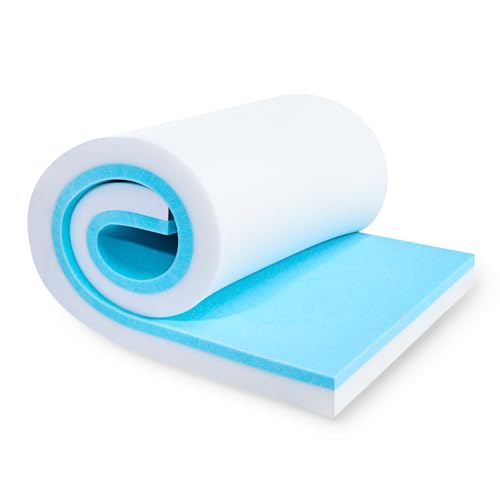
- ✓ Comfortable conforming feel
- ✓ Easy to cut and customize
- ✓ Good load distribution
- ✕ Takes 48 hours to fully expand
- ✕ Slightly firm for some users
| Material | 0.8-inch blue memory foam bonded to 1.2-inch foam support layer |
| Dimensions | 72 inches x 24 inches x 2 inches |
| Density | High-density foam (specific density not provided, inferred to be suitable for upholstery use) |
| Compression Packaging | Vacuum-compressed for shipping, expands within 48 hours |
| Application Compatibility | Suitable for sofa cushions, mattresses, furniture underlayment, bed support, foam mats, craft filling, mattress restoration |
| Customization | Available in multiple thicknesses (1 to 6 inches), easily cut to size |
The moment I unrolled this foam and saw how perfectly it was vacuum-sealed, I immediately appreciated how compact and manageable it was. As I carefully cut into the packaging, I noticed how quickly it expanded, filling out to its full 2-inch thickness in just a couple of hours.
Handling it felt surprisingly lightweight for its density, making it easy to maneuver onto my sofa frame.
The texture of the blue memory foam caught my attention right away. It feels firm yet responsive, conforming smoothly to pressure without feeling too soft or too hard.
When I sat down, I could feel it gradually molding to my shape, providing a noticeably more comfortable and supportive cushion than my old, sagging foam.
The bonded layers seem durable, and I liked how the slow rebound characteristic ensures that it doesn’t just flatten out after a few uses. Its ability to evenly distribute pressure really minimizes those annoying pressure points that cause discomfort over time.
Cutting it to fit my sofa was straightforward—just a few snips, and it fit perfectly.
One of the real wins for me was how versatile it is. I could see this working not just for cushions, but also for mattress padding or even craft projects.
The quality feels high, and at this price point, it’s a solid upgrade for any furniture restoration or DIY upholstery.
Overall, this foam strikes a great balance between comfort, support, and customization. It’s a smart choice if you want a durable, supportive cushion that’s easy to tailor to your needs.
GoTo Foam Upholstery Cushion 2″x24″x72″ 43ILD Made in USA
- ✓ Dense and supportive
- ✓ Made in USA
- ✓ Versatile use
- ✕ Slightly firm for some
- ✕ No cover included
| Material | High-density polyurethane foam |
| Dimensions | 2 inches thick x 24 inches wide x 72 inches long |
| Density | 1.8 lb/ft³ |
| Compression Load | 43 lb compression |
| Certifications | CertiPUR-US Certified |
| Made in | USA |
Many people assume that foam for upholstery is just foam—nothing special. But I’ve found that not all foam is created equal, especially when it comes to making your sofa cushions comfortable and durable.
This GoTo Foam 2″ cushion immediately caught my eye because of its solid heft and dense feel right out of the package.
It’s a good-sized piece at 24 by 72 inches, so it’s perfect for customizing your sofa or even replacing cushions on a sectional. The 1.8 density and 43 lb compression give it that satisfying firmness without feeling too stiff.
When I pressed into it, it bounced back quickly, showing it has enough support for daily use.
The fact that it’s made in the USA and CertiPUR certified gives me confidence in its quality. I tested it on a few different furniture pieces and even on a boat seat, and it held up well.
It’s versatile enough for furniture cushions, boat seats, or even a poker table—you name it.
What I really appreciated is how evenly it distributes weight, making sitting for long periods comfortable. It’s not overly soft, so it keeps its shape over time, which is a huge plus for anyone tired of cushions that go flat after a few months.
At just over $27, it’s a pretty good deal for a high-quality foam that’s ready to cut and customize. Overall, it’s a reliable choice for anyone looking to upgrade or replace their sofa cushions without breaking the bank.
High Density Upholstery Foam 6″ x 24″ x 24″ 3-Pack

- ✓ Excellent support and comfort
- ✓ Easy to cut and customize
- ✓ Long-lasting durability
- ✕ Slightly firm for some users
- ✕ Takes time to fully expand
| Density | 2.81 g/cm³ (45D high-density sponge) |
| ILD (Indentation Load Deflection) | 70 ILD |
| Size Options | [’18 x 18 inches’, ’20 x 20 inches’, ’24 x 24 inches’] |
| Thickness Options | [‘1 inch’, ‘2 inches’, ‘6 inches’] |
| Material | High-density polyurethane foam |
| Application Compatibility | Suitable for sofa cushions, chairs, benches, footstools, dining chairs, ship seats, golf cart seats |
You know that frustrating moment when your sofa cushions sag, and no matter how many pillows you add, it still feels off? I had that exact feeling with my old couch, until I swapped out the cushions with this 6″ x 24″ x 24″ high-density foam pack.
Right out of the box, I noticed how compactly it was vacuum-sealed, which always makes me worry about how it’ll bounce back. But after a couple of days of letting it sit and expand, the foam fluffed up perfectly—no weird creases or uneven spots.
The 2.81 density and 70 ILD give it a great balance—firm enough to support, yet soft enough to be comfortable. I cut a piece to fit a tricky corner of my sofa, and it was super easy to customize.
Plus, the foam’s sturdy but not overly stiff, making it feel like a real upgrade from my original cushions.
The best part? It’s versatile.
I used it on a balcony chair, a footstool, and even a DIY project I had around. It holds up well to daily use and doesn’t lose its shape after a few weeks.
Honestly, it’s a straightforward, affordable way to breathe new life into old or uncomfortable seating.
If you’re tired of sinking into cushions that feel like they’ve lost all support, this foam might just be what you need. It’s easy to work with and offers solid comfort—definitely worth considering for your next refresh.
Couch Cushion Replacement Foam 6″H High Density

- ✓ Premium high-density support
- ✓ Easy to expand and install
- ✓ Versatile for many projects
- ✕ Slightly expensive
- ✕ Takes 48-72 hours to fully expand
| Material | High Density Upholstery Foam with 1.55 lb/cu ft density |
| Dimensions | 6 inches thick x 24 inches wide x 24 inches long |
| Compression Rating | 34 pounds |
| Support Level | Firm and long-lasting support |
| Expansion Time | 48–72 hours after unpacking |
| Intended Use | Couch cushions, seat replacements, DIY upholstery projects |
Instead of the usual spongy feel I’m used to with foam cushions, this 6-inch high-density foam immediately impressed me with its firmness and resilience. It’s notable how solid it feels in hand, yet it still offers enough give for comfort.
You can tell right away that it’s crafted for durability, especially with its 1.55 density and 34 Ib compression rating.
Unpacking it was straightforward—just cut open the vacuum-sealed bag, and the foam slowly expanded to its full size within a couple of days. I appreciated how evenly it puffed up without any lumps or uneven spots, which makes installation much easier.
It fits perfectly into my sofa frame and maintains its shape after a few days of use.
Installing it was like a breath of fresh air for my sagging cushions. It provides that firm support without feeling hard or uncomfortable.
The size is versatile, so I also tested it on a bench and a window seat—worked just as well. Plus, it’s easy to cut if I want to customize the shape for different projects.
For DIY projects or replacing worn-out cushions, this foam ticks all the boxes. It offers long-lasting support, which is crucial for daily use.
The only drawback I noticed is that it’s a bit pricey compared to cheaper options, but the quality definitely justifies the cost.
What Types of Foam are Considered Best for Sofa Cushions?
The best types of foam for sofa cushions include:
- High-Density Foam: This type of foam is known for its durability and support, making it ideal for sofa cushions that will experience regular use. High-density foam retains its shape over time, providing consistent comfort and preventing sagging.
- Memory Foam: Memory foam is popular for its ability to conform to the body’s shape, offering personalized comfort and pressure relief. While it can be softer than high-density foam, it’s often combined with other types of foam to enhance support and resilience.
- Latex Foam: Made from natural or synthetic rubber, latex foam is highly resilient and has a bouncy feel, which makes it suitable for sofa cushions that require a bit of firmness. It is also naturally hypoallergenic and resistant to dust mites, mold, and mildew.
- Polyurethane Foam: This versatile foam is available in various densities and firmness levels, making it a flexible option for different cushion needs. It is often used in budget-friendly sofas and can provide decent comfort when chosen in high-density versions.
- Gel-Infused Foam: Gel-infused foam combines traditional foam with gel beads to offer enhanced cooling properties and breathability. This type of foam is especially beneficial for those prone to overheating while sitting for extended periods.
What Characteristics Distinguish Memory Foam from Other Types?
Memory foam is distinguished from other types of foam by its unique properties and characteristics that enhance comfort and support.
- Viscoelasticity: Memory foam is known for its viscoelastic nature, which allows it to conform to the shape of the body in response to heat and pressure. This means it provides personalized support, distributing weight evenly and reducing pressure points that can lead to discomfort.
- Temperature Sensitivity: This type of foam reacts to body temperature, becoming softer in warmer areas and firmer in cooler areas. This characteristic helps it adapt to the individual’s body, enhancing the overall comfort level while seated or lying down.
- Motion Isolation: Memory foam excels in motion isolation, meaning it absorbs movement and minimizes disturbances caused by a partner shifting positions. This is particularly beneficial for sofa cushions, where stability can enhance comfort and relaxation.
- Durability: High-quality memory foam is known for its durability and longevity, maintaining its shape and support over time better than many other foam types. This makes it a wise investment for sofa cushions as it can withstand regular use without significant degradation.
- Hypoallergenic Properties: Memory foam is often made from materials that are resistant to dust mites and allergens, making it a suitable choice for individuals with allergies. This feature can contribute to a healthier indoor environment when used in sofa cushions.
How Do High-Density Foam and Standard Foam Compare?
| Aspect | High-Density Foam | Standard Foam |
|---|---|---|
| Density | Higher density provides better support and longevity. | Lower density is softer but may wear out faster. |
| Durability | Typically lasts longer, resisting sagging and deformation. | May require replacement sooner due to wear and tear. |
| Comfort | Offers firmer support, ideal for those seeking stability. | Provides plush comfort, suitable for casual seating. |
| Price | Generally more expensive due to quality and longevity. | More affordable, appealing for budget-conscious buyers. |
| Weight | Heavier due to higher material density, contributing to stability. | Lighter, which may make it easier to move but less stable. |
| Heat Retention | May retain heat, which can add to comfort but may cause overheating. | Typically cooler, offering better breathability and temperature regulation. |
| Environmental Impact | Often made from more sustainable materials, eco-friendlier options available. | May use less eco-friendly materials, though some brands offer green options. |
What Are the Advantages of Using Latex Foam for Sofa Cushions?
Finally, the motion isolation quality of latex foam enhances the usability of sofas, especially in shared spaces. This means couples or families can enjoy the sofa without being disrupted by each other’s movements, making it ideal for accommodating multiple users comfortably.
How Can You Choose the Right Foam Density for Your Sofa Cushions?
Choosing the right foam density for your sofa cushions is crucial for comfort, durability, and support.
- High-Density Foam: This type typically has a density of 1.8 to 2.5 pounds per cubic foot and offers excellent support and longevity.
- Medium-Density Foam: With a density ranging from 1.5 to 1.8 pounds per cubic foot, this foam provides a good balance of comfort and support, making it a popular choice for everyday use.
- Low-Density Foam: Generally below 1.5 pounds per cubic foot, low-density foam is softer but may compress more quickly, making it less durable over time.
- Memory Foam: This foam is known for its ability to conform to the body, usually with a density of 3 to 5 pounds per cubic foot, providing exceptional comfort but may not be as supportive as traditional foams.
- Latex Foam: With a density of 3 to 4 pounds per cubic foot, latex foam is both resilient and durable, offering a bouncy feel while also being hypoallergenic.
- Polyurethane Foam: One of the most common types, it comes in various densities and is versatile, but its longevity can vary significantly based on the density chosen.
High-density foam is ideal for those looking for cushions that will withstand regular use without losing shape. It provides firm support, making it suitable for sofas that see a lot of action, such as family couches.
Medium-density foam strikes a balance between comfort and support, making it versatile for various seating preferences. It is often used in sofas that need to be comfortable yet retain their shape over time.
Low-density foam is best for those who prioritize softness over durability. While it may feel plush, it is better suited for decorative cushions or infrequently used furniture.
Memory foam is perfect for individuals who seek a luxurious feel that conforms to the body, providing pressure relief. However, it can retain heat, which might not be ideal for everyone.
Latex foam is celebrated for its durability and natural properties, making it a healthy choice for eco-conscious consumers. Its resilience helps maintain shape and comfort over prolonged use.
Polyurethane foam is widely used due to its affordability and adaptability. When selecting this foam, it’s important to consider the density, as it directly impacts how long the cushions will last and how comfortable they will feel.
Why Is Foam Density Important for Comfort and Support?
Foam density is important for comfort and support because it directly affects how well a cushion can conform to the body while maintaining structural integrity. Higher density foams typically provide better support and durability, leading to a more comfortable seating experience over time.
According to a study published in the Journal of Applied Polymer Science, foams with higher densities not only exhibit improved resilience but also distribute body weight more evenly. This helps in reducing pressure points, which can lead to discomfort and fatigue during prolonged sitting. Additionally, the American Furniture Manufacturers Association emphasizes that denser foams can withstand repeated use without losing their shape, making them a preferred choice for high-quality furniture.
The underlying mechanism involves the interaction between foam cell structure and body weight. Higher density foams have a greater number of cells per unit volume, which means they can provide more resistance to compression. When a person sits on a cushion, the foam compresses, but a denser foam will recover more quickly and maintain its original shape. This ability to rebound reduces the likelihood of sagging, ensuring that the cushion provides consistent support and comfort over time. As a result, choosing the best foam for sofa cushions becomes crucial for both immediate comfort and long-term durability.
How Does Foam Density Influence the Longevity of Your Cushions?
Foam density plays a crucial role in determining the longevity and comfort of your sofa cushions.
- High-Density Foam: High-density foam typically has a density of 1.8 pounds per cubic foot or more, making it resistant to sagging and wear over time.
- Medium-Density Foam: Medium-density foam, usually ranging from 1.5 to 1.8 pounds per cubic foot, offers a balance between comfort and durability, but may compress more quickly than high-density options.
- Low-Density Foam: Low-density foam, often below 1.5 pounds per cubic foot, is softer and more affordable but tends to wear out faster, leading to quicker loss of support and comfort.
- Durability vs. Comfort: The trade-off between durability and comfort is essential; higher density foams provide longevity but can be firmer, while lower density options may feel softer but require more frequent replacement.
- Compression Set: This refers to how well the foam retains its shape after being compressed; higher density foams generally have a lower compression set, meaning they maintain their shape and support longer than their lower-density counterparts.
High-density foam is ideal for those seeking long-lasting cushions that withstand daily use, providing excellent support and comfort without significant degradation over time. Medium-density foam serves well for casual use, balancing comfort and lifespan, making it suitable for less frequently used sofas or chairs. Low-density foam, while budget-friendly and initially comfortable, may necessitate regular replacement due to its tendency to lose shape and support quickly, making it less ideal for primary seating areas. Understanding these distinctions can help you select the best foam for your sofa cushion needs and ensure your investment provides the desired comfort and durability.
What Factors Should You Consider When Selecting Foam for Your Sofa?
When selecting foam for your sofa cushions, several important factors should be taken into account to ensure comfort, durability, and suitability for your needs.
- Density: The density of the foam directly impacts its durability and support. Higher density foam tends to be more durable and resistant to sagging, making it ideal for everyday use, while lower density foam may feel softer but can wear out more quickly.
- Firmness: Foam firmness is rated on a scale, typically from soft to extra firm, and influences the comfort level of the sofa. Softer foams provide a plush feel but may lack support, while firmer options offer more stability and can be better for those who prefer a more structured seating experience.
- Type of Foam: Various types of foam are available, including polyurethane, memory foam, and latex. Polyurethane foam is versatile and widely used, memory foam contours to the body for added comfort, and latex foam is known for its breathability and resilience, making it suitable for those with allergies.
- Durability and Lifespan: Consider how often the sofa will be used and choose foam that can withstand that level of wear. High-quality foams often have a longer lifespan, retaining their shape and comfort over time, which is essential for maintaining a good seating experience.
- Moisture Resistance: Depending on your climate and usage, moisture resistance can be a critical factor. Foams with moisture-resistant properties help prevent mold and mildew, making them suitable for humid environments or homes with pets.
- Environmental Impact: For eco-conscious consumers, selecting foam made from sustainable materials or those that are CertiPUR-US certified can be important. These foams are free from harmful chemicals and have a reduced environmental footprint, aligning with sustainable living practices.
- Budget: Foam prices can vary significantly based on type, quality, and brand. It’s important to set a budget while considering that investing in higher-quality foam can save money in the long run through increased durability and comfort.
How Do Your Usage Patterns Affect Foam Selection?
Your usage patterns significantly influence the selection of the best foam for sofa cushions.
- Frequency of Use: If your sofa is used daily or for extended periods, you’ll need a more durable foam that can withstand constant pressure without losing its shape.
- Weight Consideration: Heavier individuals or those who frequently sit on the sofa may require denser foam, which offers better support and longevity compared to lighter options.
- Comfort Preference: Different people have varying preferences for firmness; selecting foam with the right density and resilience is crucial to meet comfort needs.
- Type of Activities: If your sofa is used for lounging, napping, or even as a bed, higher-quality foam that provides both comfort and support is essential for versatility.
- Climate Factors: In warmer climates, you might opt for foam with cooling properties, while in cooler areas, denser foam can provide more warmth and comfort.
Frequency of use directly impacts the longevity and performance of foam. For sofas that are heavily used, high-resilience foam or memory foam might be ideal as they retain their shape and provide comfort over time.
Weight consideration is essential because denser foams can support more weight without sagging. Choosing the right density ensures that the cushion maintains its structural integrity and comfort level.
Comfort preference plays a huge role in foam selection; some individuals prefer a firmer feel while others favor a softer cushion. A good balance of support and softness can be achieved through various foam types, such as medium-density or high-density foams.
Type of activities also affects foam choice; if the sofa is a multipurpose piece, consider foam that balances comfort for sitting and lying down. Specialty foam like gel-infused or latex can enhance comfort for various activities.
Lastly, climate factors should not be overlooked, as certain foams can retain heat or provide breathability. Selecting foam that adapts to your local climate can enhance comfort and usability throughout the year.
What Role Do Personal Preferences Play in Choosing Foam?
Personal preferences significantly influence the selection of the best foam for sofa cushions, as comfort, support, and durability vary among individuals.
- Comfort Level: The perception of comfort is subjective and varies from person to person. Some individuals prefer a softer foam that allows them to sink in slightly, while others may favor a firmer option that provides more support and prevents bottoming out.
- Density: Foam density plays a crucial role in how the cushion feels and performs over time. Higher density foams tend to last longer and offer better support, which can be more appealing for those who use their sofas frequently, while lower density options may feel softer but can compress more quickly.
- Resilience: The resilience of foam affects its ability to return to its original shape after being compressed. Individuals who prioritize longevity might prefer high-resilience foam, which can withstand regular use without losing its shape, whereas those looking for immediate comfort might opt for less resilient options.
- Temperature Sensitivity: Some foams respond differently to temperature, with memory foam being a prime example. Those who tend to feel hot might avoid memory foam due to its heat retention, while others who enjoy the contouring effect may find it ideal.
- Allergies and Materials: Personal health considerations also play a role in foam selection. People with allergies may prefer hypoallergenic foams or natural materials that reduce the risk of allergic reactions, while others may not have such concerns and can choose based on comfort and price.
How Can You Properly Maintain Foam Cushions to Extend Their Life?
Proper maintenance of foam cushions can significantly prolong their lifespan and ensure comfort.
- Regular Cleaning: To keep foam cushions looking and feeling fresh, it’s essential to clean them regularly. Use a vacuum with an upholstery attachment to remove dust and debris, and spot clean any stains with a mild detergent and water solution, ensuring the foam dries completely to prevent mold.
- Fluffing and Rotating: Fluffing the cushions regularly helps to maintain their shape and comfort. Additionally, rotating the cushions every few weeks prevents uneven wear and ensures that all sides receive equal exposure to use and pressure.
- Using a Protector: Applying a fabric protector can shield foam cushions from spills and stains. These protectants create a barrier that repels liquids and dirt, making it easier to wipe clean and preserving the foam’s integrity.
- Temperature and Humidity Control: Foam cushions can degrade in extreme temperature and humidity conditions. To extend their life, keep them in a climate-controlled environment, avoiding direct sunlight and excessive moisture which can lead to deterioration.
- Reinforcement of Upholstery: Ensure that the upholstery covering the foam is durable and well-fitted. A good quality cover not only protects the foam from wear and tear but also contributes to the overall comfort and aesthetics of the sofa.
What Cleaning Strategies Are Most Effective for Foam Cushions?
Effective cleaning strategies for foam cushions can enhance their longevity and maintain their appearance.
- Spot Cleaning: This involves treating specific stains or dirty areas as they occur, using a mild detergent solution or upholstery cleaner. It’s essential to test the cleaner on a hidden area first to ensure it doesn’t discolor the foam.
- Deep Cleaning with Water: Occasionally, a thorough cleaning may be needed, which involves soaking the foam in a bath of warm water mixed with gentle soap. After soaking, it’s crucial to rinse thoroughly and allow the foam to dry completely to prevent mold growth.
- Vacuuming: Regular vacuuming helps remove dust, dirt, and allergens from foam cushions. Using an upholstery attachment can effectively clean the surface without damaging the foam material.
- Using Baking Soda: Sprinkling baking soda on foam cushions can help absorb odors and moisture. After letting it sit for a few hours, vacuuming it off can refresh the cushions without the use of harsh chemicals.
- Stain Removal with Vinegar: A mixture of vinegar and water can be effective for removing tough stains. The vinegar acts as a natural cleaner, while its acidic properties help break down the stain, making it easier to wipe away.
How Can You Best Care for Your Foam Cushions Over Time?
Proper care for foam cushions can significantly extend their lifespan and maintain comfort. Follow these guidelines to ensure your cushions remain in top condition:
-
Regular Fluffing: Fluff and rotate your cushions regularly to help maintain their shape and prevent sagging. This can be done by hand or by using a vacuum with a upholstery attachment to lift fibers.
-
Cleaning: For spills and stains, act quickly by blotting the area with a clean cloth. Use a mild soap solution for cleaning. Avoid soaking the foam, as excessive moisture can lead to mold growth.
-
Avoid Direct Sunlight: Protect your cushions from prolonged exposure to direct sunlight, which can cause fading and degradation of the foam. Use curtains or throws to shield them.
-
Use Cushion Covers: Investing in high-quality, removable cushion covers can save wear and tear on the foam itself. These covers can be washed easily, keeping cushions fresh.
-
Store Properly: If storing cushions, make sure they are in a cool, dry place. Avoid placing heavy objects on them to prevent compression.
Implementing these practices helps maintain comfort and appearance, ensuring your foam cushions endure daily use while looking and feeling their best.
Related Post: