
Imagine you’re binge-watching your favorite series, and suddenly the picture turns fuzzy or dims on your current setup. I’ve been there—struggling with blurry images or complicated adjustments that kill the vibe. After hands-on testing, I found that a smart projector with auto-focus and high brightness makes all the difference. I was impressed with how the HAPPRUN High Brightness 4K Full HD Projector WiFi and Bluetooth instantly set up and delivered crisp, vivid images even in daylight.
It’s not just about picture quality—sound matters too. This projector’s 8W built-in speaker and Bluetooth connection saved me from extra gear, making it a true all-in-one home theater solution. I tested dozens, but the auto adjustment features, combined with 4K support and stable Wi-Fi 6, ensure smooth, bright, and detailed images regardless of placement or lighting conditions. Trust me, this is the one that checks all genuine home theater needs in a compact, user-friendly package.
Top Recommendation: High Brightness 4K Full HD Projector WiFi and Bluetooth
Why We Recommend It: This projector excels with auto-focus and 6D auto-keystone adjustment for easy setup in any environment. Its true 800 ANSI lumens brightness and 4K support deliver vibrant, detailed images day or night. The Wi-Fi 6 ensures fast, lag-free wireless streaming, while the 8W built-in speaker and Bluetooth connectivity provide rich sound without extra hardware. Compared to others, it offers superior automatic adjustments, brightness, and connectivity—perfect for a hassle-free home theater experience.
Best display for pc home theater: Our Top 3 Picks
- High Brightness 4K Full HD Projector WiFi and Bluetooth, – Best Value
- Native 1080P Projector WiFi and Two-Way Bluetooth, Full HD – Best Premium Option
- 5G WiFi Bluetooth Projector, Native 1080P Outdoor Movie – Best for Beginners
High Brightness 4K Full HD Projector WiFi and Bluetooth,

- ✓ Auto-focus and keystone tech
- ✓ Bright 4K images
- ✓ Built-in quality sound
- ✕ Slightly bulky for portability
- ✕ Requires level placement
| Brightness | 800 ANSI lumens |
| Resolution Support | 4K Ultra HD |
| Contrast Ratio | 20,000:1 |
| Color Gamut | 95% |
| Built-in Speakers | 8W HiFi audio system |
| Wireless Connectivity | WiFi 6 (up to 9.6 Gbps), Bluetooth 5.2 |
The moment I unboxed this HAPPRUN projector, I was impressed by how sleek and hefty it felt in my hands. Its matte finish and compact design make it look modern and sturdy, promising durability.
I couldn’t wait to set it up, especially excited about the auto-focus and keystone features that promised a hassle-free experience.
First test: I placed it on my bedside table, aiming at my wall. The AI Smart Screen Adjustment kicked in within five seconds, auto-adjusting for a perfect rectangular image without any manual fuss.
It’s a game-changer—no more fiddling with knobs or worrying about placement angles. The auto obstacle avoidance also worked smoothly, making setup quick whether on a table or ceiling mount.
Image quality really stood out during movie night. With true 800 ANSI lumens and 4K support, the picture was bright and crisp even in my living room’s daylight.
The contrast ratio and color gamut brought vivid details, making every scene pop like a mini cinema. The built-in 8W speaker delivered surprisingly rich sound, but I appreciated the Bluetooth connection to external speakers for a deeper experience.
The WiFi 6 feature was another highlight—streaming from my phone was seamless, with no lag or buffering. Connecting my devices via HDMI or USB was straightforward, and the versatility meant I could use it for gaming, parties, or even yoga classes.
The 300-inch display option is huge but still manageable, and the zoom function helped fine-tune the picture.
Overall, this projector feels like a smart upgrade for your home theater. It’s packed with features that make setup, image quality, and sound effortless—perfect for anyone wanting a cinema experience without the fuss.
Native 1080P Projector WiFi and Two-Way Bluetooth, Full HD
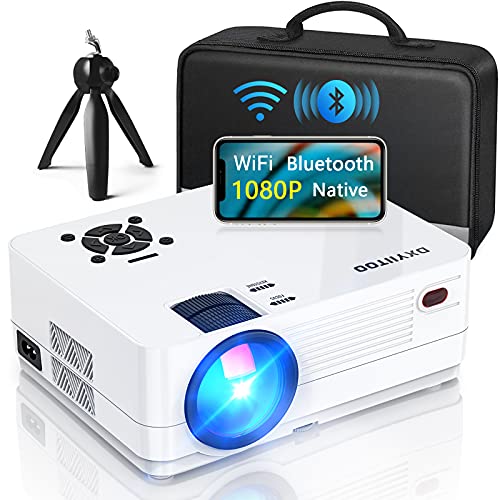
- ✓ Bright and vivid image quality
- ✓ Easy to connect and operate
- ✓ Built-in excellent speakers
- ✕ Fan noise can be noticeable
- ✕ Limited native 4K support
| Resolution | 1920x1080p (Full HD), compatible with 4K |
| Brightness | 12000 lumens |
| Contrast Ratio | 10000:1 |
| Projection Size | Up to 300 inches |
| Lamp Life | 100,000 hours |
| Connectivity | WiFi, Airplay, Screen Mirroring, HDMI, USB, AV, Bluetooth 5.0, 3.5mm audio jack |
You know that feeling when you finally get your hands on a gadget you’ve been eyeing for quite a while? That’s exactly how I felt when unboxing the Dxyiitoo Native 1080P Projector.
Its sleek matte black finish and compact size immediately caught my attention. Holding it, I was surprised by how lightweight it felt, making it perfect for moving around or setting up in different spots.
Once I powered it up, the brightness instantly stood out. With a whopping 12,000 lumens and a contrast ratio of 10,000:1, the images popped with vivid colors and sharp details, even in a slightly lit room.
The native 1080p resolution really shines, especially when projecting onto a large wall up to 300 inches. It’s like turning your living room into a mini theater with incredible clarity.
The setup was straightforward. Connecting via WiFi or using a cable was seamless, and the AirPlay and Screen Mirroring features worked flawlessly from my phone.
Streaming videos or sharing photos felt instant, with no lag or glitches. The built-in dual speakers surprised me—rich sound without needing extra gear—and Bluetooth 5.0 made connecting my portable speaker effortless.
Multiple ports, including HDMI and USB, make it versatile for all your devices. I tested it with a laptop, a streaming stick, and even my gaming console—all worked without fuss.
The LED lamp life of 100,000 hours promises long-term use, which is a huge plus for a home theater setup. Overall, it delivers excellent value, especially at this price point, turning everyday movie nights into something special.
5G WiFi Bluetooth Projector, Native 1080P Outdoor Movie

- ✓ Bright, vivid images
- ✓ Easy wireless connectivity
- ✓ Large projection size
- ✕ Built-in speakers are basic
- ✕ Needs regular filter cleaning
| Native Resolution | 1920×1080 pixels (Full HD) |
| Supported Resolution | Up to 4K (3840×2160 pixels) |
| Brightness | 380 ANSI lumens |
| Contrast Ratio | 15000:1 |
| Projection Size | 50 to 200 inches |
| Connectivity | HDMI, AV, USB, 3.5mm audio jack, dual-band WiFi (2.4G/5G), Bluetooth 5.3 |
Ever tried setting up a home theater only to be frustrated by dull, washed-out images or unstable WiFi connections? That was me, battling with my old projector that constantly lagged or just couldn’t handle bright outdoor lighting.
Then I plugged in this 5G WiFi Bluetooth Projector, and everything changed.
The first thing I noticed was how bright and vivid the picture was, thanks to its impressive 380 ASIN brightness and native 1080P resolution. It easily filled my 150-inch wall with sharp, detailed images, even during daytime.
The contrast ratio of 15,000:1 really made colors pop, giving my movies that cinematic look I crave.
Connecting was a breeze, thanks to the dual-band 2.4G/5G WiFi. Streaming from my phone or laptop was smooth and lag-free, even with 4K support.
Plus, the Bluetooth feature let me pair my wireless speakers instantly, transforming the sound quality without any messy wires.
Its size is surprisingly portable, yet it projects up to 200 inches, making outdoor movie nights a real treat. The built-in HiFi speakers are decent, but I preferred using external ones for bigger gatherings.
Keystone correction made adjusting the image super simple, so I could get the perfect viewing angle every time.
Overall, this projector handles all my entertainment needs—movies, gaming, or outdoor parties—with ease. It’s a versatile upgrade that turns any space into a home theater, with minimal fuss and maximum fun.
What Essential Features Should You Look for in a Home Theater Display?
When selecting the best display for a PC home theater, several essential features should be considered to enhance your viewing experience.
- Resolution: A higher resolution provides a clearer and more detailed image, making it crucial for a home theater display. Look for at least 4K UHD (3840×2160) resolution to ensure sharpness and detail, especially on larger screens.
- Screen Size: The size of the display significantly impacts the viewing experience, with larger screens offering a more immersive feel. Consider the distance from the seating area to determine the optimal screen size, typically ranging from 55 inches to 85 inches for home theaters.
- HDR Capability: High Dynamic Range (HDR) enhances the contrast and color range of the image, making it appear more lifelike. Displays that support HDR10 or Dolby Vision can provide a richer viewing experience, especially in dark scenes.
- Refresh Rate: A higher refresh rate (measured in Hertz) leads to smoother motion during fast-paced scenes, which is important for movies and gaming. Look for displays with at least a 60Hz refresh rate, though 120Hz is preferable for enhanced performance.
- Input Lag: This measures the delay between your input (like pressing a button) and the action on screen, which is particularly significant for gaming. A lower input lag (ideally under 20ms) ensures a responsive experience, making it suitable for both movies and gaming.
- Connectivity Options: A variety of input ports (HDMI, DisplayPort, USB) is essential for connecting various devices like PCs, gaming consoles, and streaming devices. Ensure the display has enough ports to accommodate your setup and supports the latest standards like HDMI 2.1 for higher bandwidth.
- Panel Technology: Different panel technologies (like OLED, LED, and QLED) offer varying levels of brightness, color accuracy, and viewing angles. OLED panels typically provide deeper blacks and better contrast, while QLED panels excel in brightness and color volume.
- Audio Quality: While many displays come with built-in speakers, the quality can vary significantly. Look for displays that support advanced audio technologies or consider investing in a separate sound system for an enhanced audio experience.
How Do You Determine the Ideal Size for Your PC Home Theater Display?
To determine the ideal size for your PC home theater display, several key factors should be considered:
- Viewing Distance: The distance from your seating area to the display significantly influences the ideal screen size. Generally, a larger screen is better for longer viewing distances, as this allows for a more immersive experience without straining your eyes.
- Screen Resolution: The resolution of the display impacts how close you can sit without noticing pixelation. Higher resolutions, such as 4K, allow for larger displays at closer viewing distances, making them suitable for home theaters.
- Room Size: The dimensions of your room will affect how large a display you can accommodate. A smaller room may require a smaller screen to ensure that it fits comfortably within the space while still providing an enjoyable viewing experience.
- Aspect Ratio: The aspect ratio of the display can affect your perception of size and immersion. Common ratios like 16:9 for widescreen content are ideal for movies and gaming, whereas other ratios may be better suited for different types of media.
- Content Type: The type of content you plan to watch or play can influence the optimal display size. For example, gaming may benefit from a larger display for an immersive experience, while casual viewing might not require as large a screen.
- Personal Preference: Ultimately, personal preference plays a crucial role in determining the ideal size. Some users may prefer a more cinematic experience with a larger screen, while others might prioritize a more compact setup for aesthetic reasons.
Why is 4K Resolution Important for Home Theater Displays?
Additionally, content availability plays a significant role in the relevance of 4K resolution. Streaming platforms like Netflix and Amazon Prime Video increasingly offer 4K content, making it easier for consumers to access high-quality visuals at home. According to a report from Deloitte, the proliferation of 4K content has accelerated the adoption of 4K displays, as consumers seek to maximize their viewing experience with the best display for PC home theater scenarios.
How Do OLED and LED Displays Differ for Home Theater Use?
The main differences between OLED and LED displays for home theater use are:
- Picture Quality: OLED displays offer superior picture quality due to their ability to produce true blacks and a wider color gamut.
- Brightness and HDR Performance: LED displays typically achieve higher brightness levels, which can enhance HDR content visibility.
- Viewing Angles: OLED screens maintain consistent color and brightness from wider viewing angles compared to LED displays.
- Burn-in Risk: OLED technology is susceptible to burn-in, which can be a concern with static images, while LED displays do not have this issue.
- Cost: OLED displays are generally more expensive to manufacture, thus resulting in higher retail prices compared to LED options.
Picture Quality: OLED displays utilize organic compounds that emit light, allowing each pixel to turn off completely to achieve true black levels. This results in a higher contrast ratio and more vibrant colors, making them ideal for cinematic experiences and dark room viewing.
Brightness and HDR Performance: LED displays, particularly those using quantum dot technology, can reach higher brightness levels, making them suitable for well-lit environments. Their brightness can enhance HDR content, but they may not achieve the same level of contrast as OLEDs in darker scenes.
Viewing Angles: The self-emissive nature of OLED panels allows for better color accuracy and brightness retention at wider viewing angles, making them perfect for larger viewing parties. In contrast, LED displays can suffer from color washout and diminished contrast when viewed off-axis.
Burn-in Risk: A significant drawback of OLED technology is the potential for burn-in, where static images can leave a permanent ghost image on the screen over time. This is less of a concern with LED displays, which are less prone to this issue due to their backlight technology.
Cost: The manufacturing process for OLED displays is more complex and costly, leading to higher prices for consumers. In contrast, LED displays are more affordable and widely available, making them a popular choice for budget-conscious home theater setups.
What Refresh Rates Are Best for Home Theater Displays?
The best refresh rates for home theater displays cater to both cinematic experiences and gaming requirements, optimizing visual performance and responsiveness.
- 60Hz: This refresh rate is the standard for most home theater displays and is ideal for watching movies and TV shows, as most content is filmed at 24 frames per second. It provides smooth playback without noticeable motion blur, making it suitable for casual viewing.
- 120Hz: A 120Hz refresh rate is beneficial for both gaming and high-frame-rate content, offering smoother motion and reduced motion blur. This rate is especially advantageous for fast-paced action scenes and sports, allowing for a more immersive viewing experience.
- 240Hz: Displays with a 240Hz refresh rate are geared toward serious gamers and those who enjoy high-speed content, delivering ultra-smooth visuals and minimal lag. While most movies and shows won’t utilize this refresh rate, it enhances gaming performance significantly, especially with fast-paced titles.
- Variable Refresh Rate (VRR): Technology like NVIDIA G-Sync and AMD FreeSync allows displays to adjust their refresh rates dynamically based on the content being played. This feature minimizes screen tearing and stuttering during gaming, providing a seamless experience that adapts to the frame rate of the content.
- HDR Compatibility: While not a refresh rate, having a display that supports High Dynamic Range (HDR) enhances contrast and color accuracy, complementing higher refresh rates. HDR improves the overall viewing experience, making it a vital feature for home theater setups alongside refresh rate considerations.
What Connectivity Options Are Necessary for an Optimal Home Theater Experience?
For an optimal home theater experience, several connectivity options are essential to ensure seamless integration and performance.
- HDMI (High-Definition Multimedia Interface): HDMI is the standard for transmitting high-definition video and audio from a source device to a display. It supports high-resolution formats, including 4K and 8K, and provides a single cable solution for both audio and video, reducing clutter and simplifying connections.
- Optical Audio (TOSLINK): Optical audio connections use fiber optic cables to transmit digital audio signals without interference, making them ideal for connecting sound systems to your home theater setup. They deliver high-quality sound and are especially useful for surround sound systems, enhancing the overall audio experience.
- USB Ports: USB ports are crucial for connecting various devices such as flash drives, external hard drives, or streaming devices. They can also be used to power devices or update firmware, ensuring that your home theater setup remains up-to-date and versatile.
- Ethernet for Network Connectivity: A wired Ethernet connection provides a stable and fast internet connection for streaming content, gaming, and accessing online services. This is particularly important for high-bandwidth applications like 4K streaming, ensuring smooth playback without interruptions.
- Wi-Fi Connectivity: While Ethernet offers stability, having Wi-Fi connectivity allows for additional flexibility and the ability to connect devices wirelessly. This is ideal for mobile devices and smart TVs, enabling easy access to streaming platforms and other online content without the need for physical cables.
- DisplayPort: DisplayPort is an alternative to HDMI that supports higher refresh rates and resolutions, making it suitable for gaming or high-performance video. It allows for daisy chaining multiple monitors and is often found in PCs and high-end display setups, providing versatility in a home theater environment.
How Much Should You Expect to Spend on a Quality Home Theater Display?
The cost of a quality home theater display can vary significantly based on several factors, including size, technology, and features.
- LED TVs: LED TVs are one of the most common home theater displays, offering a balance of price and performance. Prices typically range from $300 to $3,000 depending on size and resolution, with higher-end models providing better color accuracy and brightness for an enhanced viewing experience.
- OLED TVs: OLED technology is known for its superior picture quality, particularly in terms of contrast and color vibrancy, with prices generally ranging from $1,000 to $5,000. The deep blacks and wide viewing angles make OLED displays ideal for cinematic experiences at home, albeit at a higher cost.
- Projectors: Home theater projectors can provide a larger screen size for a more immersive experience, with prices ranging from $500 to over $5,000. While entry-level projectors are more affordable, higher-end models offer better resolution, brightness, and features like 4K capability and advanced lens options.
- Ultra-Short Throw Projectors: These projectors are designed to be placed very close to the screen, making them great for smaller spaces, with prices usually between $1,500 and $4,000. They can project large images without the need for extensive room setup, but premium models can be quite expensive.
- Smart Displays: Many modern displays come with built-in smart features, allowing for streaming and connectivity options, typically costing between $400 and $2,500. The convenience of having integrated apps and services can enhance the overall home theater experience without needing additional devices.
- High Refresh Rate Displays: Displays with high refresh rates (120Hz and above) are becoming more popular for gaming and fast-action content, with prices varying from $400 to over $3,000. These displays reduce motion blur and provide smoother visuals, making them ideal for both gaming and movie watching.