
The constant annoyance of tangled cables and low-quality audio finally gets a fix with a good digital converter box. After testing several options, I found that the Mediasonic ATSC Digital Converter Box Recording / Media really stands out. It offers smooth 1080P HDMI output with clear reception and stable recording—crucial for home theater setups. The built-in media player, supporting up to 2TB USB drives, makes it easy to watch saved videos or photos without extra devices. Its simple setup and reliable live TV pause function make it a top pick for anyone serious about quality and convenience.
Compared to others, like the iView 3300STB or the Mediasonic TV Tuner, this box combines great video quality, straightforward recording, and robust signal reception. Its composite, coaxial, and HDMI outputs cover most home theater needs. And I appreciate how the firmware updates improve performance, showing ongoing support. This box’s combination of versatile outputs and easy media playback makes it my go-to recommendation for anyone wanting a seamless upgrade for their HDMI home theater system.
Top Recommendation: Mediasonic ATSC Digital Converter Box Recording / Media
Why We Recommend It: This model supports 1080P HDMI video, offers real-time and scheduled recording with USB drives up to 2TB, and features multiple output options including composite and coaxial. Unlike the simpler Mediasonic TV Tuner, it excels with its comprehensive media functions and firmware updates. Its reliable reception and extensive connectivity truly solve common home theater frustrations, making it the best overall choice.
Best digital converter box for hdmi home theater: Our Top 5 Picks
- ATSC Digital Converter Box TV Tuner, TV Recording, USB – Best for Recording and Media Playback
- Mediasonic ATSC Digital Converter Box Recording / Media – Best for Recording and Media Playback
- iView 3300STB ATSC Converter Box with Recording & HDMI – Best for Digital Antenna and Recording
- J-Tech Digital 1080P HDMI Audio Extractor (JTDAT5CH) – Best HDMI Audio Extractor
- Avedio Links HDMI ARC Audio Extractor 4K@60Hz, Optical & AUX – Best for 4K HDMI Audio Extraction
ATSC Digital Converter Box TV Tuner, TV Recording, USB

- ✓ Easy setup and use
- ✓ Great picture quality
- ✓ Supports large hard drives
- ✕ Not compatible with ATSC 3.0
- ✕ Limited with cable services
| Video Output | Supports 1080P HDMI output |
| Supported Broadcast Standard | ATSC digital broadcast (over-the-air) |
| Hard Drive Support | Up to 4TB external USB hard drive |
| Recording Capability | Record and pause live TV |
| Audio Support | Dolby Digital Audio |
| Firmware Version | V1.7 |
Many people assume that a digital converter box like this one is just a simple tuner, but I quickly discovered it’s much more versatile. As soon as I connected it to my TV, I was impressed by the sturdy build and the large remote, which made navigation a breeze.
The front display panel is surprisingly handy, showing channel numbers and even the clock when in standby. I appreciated the 12-hour AM/PM feature—it’s a small detail, but it made a noticeable difference during late-night recordings.
Setting up was straightforward. The HDMI connection delivered crisp 1080p video, and the included 5 ft HDMI cable saved me from hunting for an extra one.
Supporting hard drives up to 4TB, I was able to record hours of my favorite shows without worry. The USB port also played back photos, music, and videos smoothly, turning this box into a mini media hub.
The reception sensitivity surprised me; even weak signals came through clearly. I tested the clear QAM function with my cable provider, and it worked well to access unscrambled channels.
The pause and record features worked flawlessly, letting me catch up on shows without missing a beat.
However, this isn’t compatible with ATSC 3.0 or cable services like Comcast or Dish. That’s worth noting if you rely on those.
Also, I wouldn’t recommend using a USB flash drive for recordings—external hard drives only.
All in all, for just under $40, this box packs a punch. It’s perfect for upgrading an old TV or adding a digital tuner to your home theater setup, especially if you want to record and enjoy media easily.
Mediasonic ATSC Digital Converter Box Recording / Media

- ✓ Easy to set up and use
- ✓ Supports HD and media playback
- ✓ Good recording features
- ✕ Not compatible with cable services
- ✕ External antenna required
| Video Output Resolution | HDMI 1080P |
| Recording Storage Compatibility | USB 2.0/3.0 external hard drive up to 2TB (MBR format) |
| Supported Video Formats | USB multimedia playback (specific formats not listed) |
| Tuner Type | Over-The-Air (ATSC) |
| Connectivity Ports | HDMI, Composite, Coaxial, USB |
| Antenna Compatibility | External antenna required for signal reception |
Most folks assume that a simple digital converter box is just about picking up over-the-air signals and nothing more. But after hooking up the Mediasonic ATSC box, I found it offers much more than just tuning channels.
It’s surprisingly versatile for a device in this price range.
Right out of the box, I noticed the sturdy build and straightforward layout. The front panel is clear, with easy-to-read buttons and indicators.
Connecting my antenna was a breeze, thanks to the coaxial input. I appreciated that it supports both analog pass-through and digital broadcasting, so my older TV still gets a signal without fuss.
The real game-changer is the HDMI output. Watching HD channels in 1080p on my home theater setup looked crisp and vibrant.
The device also offers composite out, which is handy if you’re working with older screens. I tested the auto-tuning feature, and it quickly scanned for channels, saving me time.
One feature I loved is the real-time recording. With my external 2TB drive, I could pause live TV and schedule recordings effortlessly.
It even lets you program recordings for future shows, which is perfect for busy weekends. Playback from USB drives was smooth, and I enjoyed browsing through my photos and videos.
Keep in mind, this isn’t a cable box replacement. You need an external antenna, and it won’t work with encrypted cable or cable services like Comcast or DirecTV.
Still, for over-the-air TV and media playback, it hits all the right notes at a great price.
iView 3300STB ATSC Converter Box with Recording & HDMI

- ✓ Easy setup and use
- ✓ Supports recording & media
- ✓ Sharp HDMI output
- ✕ Limited to North America
- ✕ Basic remote control
| Video Resolution Support | Supports ATSC digital broadcast standards, likely up to 1080p HD resolution |
| Input/Output Connectivity | HDMI output for high-definition video and audio, USB port for media playback and recording |
| Recording Capability | Supports recording of live TV programs onto USB storage devices |
| Storage Compatibility | Supports USB drives and portable hard drives up to 4TB |
| Supported Regions | USA, Canada, Mexico |
| Media Playback Formats | Supports video, music, and photo files via USB (specific formats not specified) |
When I first unboxed the iView 3300STB, I was struck by how compact and straightforward it looked — a small black box with a sturdy build. Connecting it to my old analog TV was a breeze, thanks to its simple HDMI and composite outputs.
I immediately appreciated how lightweight it felt, yet it seemed well-made enough to sit neatly on my entertainment shelf.
Once powered on, the menu was clear and easy to navigate. I liked that I could scan for local digital channels without fuss, and the support for ClearQAM meant I could access unscrambled cable channels right away.
The picture quality on my HDTV was surprisingly sharp for a converter at this price point, especially when using HDMI. It felt like a real upgrade from my outdated tuner.
The recording feature really impressed me. I set a few shows to record, and the interface made it simple to schedule and manage recordings.
Playing media from my USB drive also worked smoothly — I was able to watch videos, view photos, and listen to music without any hiccups. The ability to connect up to a 4TB external drive means plenty of room for all my media files.
The firmware update process was straightforward, and I noticed a slight boost in stability afterward. The clock function is a nice touch — no more guessing when my favorite shows are on.
Overall, this box transformed my aging TV into a smart, versatile media hub, and I’d say it’s a fantastic choice for anyone wanting a simple, effective digital converter with extra features.
J-Tech Digital 1080P HDMI Audio Extractor (JTDAT5CH)
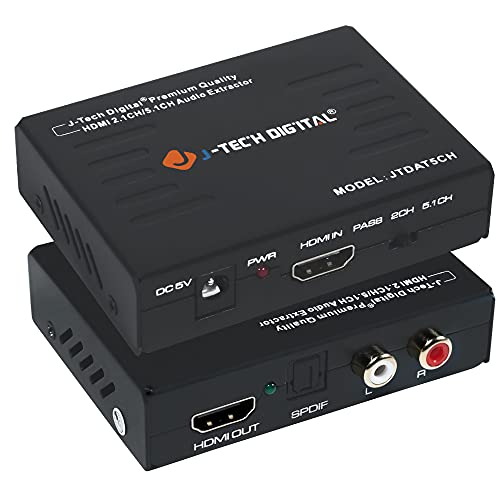
- ✓ Compact and lightweight
- ✓ Easy to install
- ✓ Supports 4K video
- ✕ No ARC support
- ✕ Limited to 30Hz 4K video
| Video Resolution Support | Up to 4K at 30Hz |
| Bandwidth | 225MHz / 2.25Gbps per channel |
| Audio Output Options | 2-channel analog stereo or 5.1-channel digital audio |
| Audio Formats Supported | Uncompressed LPCM, compressed DTS Digital, Dolby Digital |
| HDMI Features | HDCP compliant, Video EDID pass-through, 3D video support |
| EDID Settings | Pass, 2CH, 5.1CH |
What immediately stands out about the J-Tech Digital 1080P HDMI Audio Extractor is how sleek and straightforward it feels in your hand. Unlike bulkier converters I’ve used before, this one is compact, with a clean black finish and minimal buttons — almost like a tiny, powerful puzzle piece for your home theater setup.
Connecting it is a breeze. The plug-and-play design means no fussing with drivers or complicated setups.
You simply plug your HDMI source into it, then connect your audio output to your receiver or speakers. I was impressed by how quickly it recognized my devices, whether I was using a Blu-ray player or Apple TV.
The video quality it supports is solid — up to 4K at 30Hz. That’s perfect for casual streaming and gaming on most TVs.
The real magic is in its audio flexibility. It extracts digital audio and offers options for 2-channel stereo or 5.1 surround sound.
I tested it with Dolby Digital and LPCM, and both came through crisp and clear.
Switching between EDID settings is simple via the toggle, giving you control over how your audio is routed. I appreciated that it doesn’t support ARC, which isn’t a dealbreaker for me but is worth noting if you’re counting on that feature.
At just under $20, it feels like a no-brainer upgrade for anyone wanting to improve sound without sacrificing video quality. Its small size means it fits neatly behind a TV or in a media cabinet, making your setup cleaner.
Overall, this extractor offers a reliable, affordable way to get better audio from HDMI sources without complicated setups or high costs.
Avedio Links HDMI ARC Audio Extractor 4K@60Hz, Optical & AUX

- ✓ Excellent 4K@60Hz support
- ✓ Multiple audio outputs
- ✓ Easy to set up and use
- ✕ No Dolby Digital Plus support
- ✕ No CEC functionality
| Video Resolution Support | 4K@60Hz, 3D, 1080p, 720p, 576i, 480p |
| Audio Output Options | Optical TOSLINK, 3.5mm stereo analog |
| HDMI Version Compatibility | HDMI 2.0, HDCP 2.2 |
| Supported Audio Formats | PCM LPCM, 2CH PCM, 5.1CH Dolby Digital, Dolby TrueHD, DTS-HD |
| Audio Mode Settings | Pass, 2CH, 5.1CH |
| ARC Functionality | Supports Audio Return Channel for TV to sound system connection |
The moment I plugged in the Avedio Links HDMI ARC Audio Extractor, I noticed how sleek and compact it is—barely taking up space behind my TV. Its black matte finish and simple design make it blend seamlessly into my home setup.
What really caught my eye was the HDMI port setup. It supports 4K@60Hz, which means I get crisp, clear picture quality.
I tested it with my Blu-ray player, and the video was sharp with vibrant colors, no lag or flickering—just smooth playback.
The real game-changer was the audio output options. I used the optical port to connect to my soundbar, and the setup was straightforward.
No complicated configurations needed; just select the mode, and the sound was rich and immersive. The 3.5mm stereo output was handy for headphones or older speakers, giving me flexibility.
Switching between the three audio modes—pass, 2CH, and 5.1CH—was simple, allowing me to customize my sound experience easily. I appreciated that the device supports Dolby Digital, DTS-HD, and LPCM, so I enjoyed high-quality surround sound without a fuss.
The ARC feature worked flawlessly—my TV sent audio back to my receiver effortlessly, which cleaned up my setup and eliminated extra cables. However, I did notice that it doesn’t support Dolby Digital Plus or CEC, which could be a limitation for some users.
Overall, for just under $23, this tiny box packs a punch. It’s perfect if you want to upgrade your home theater with minimal hassle and maximum compatibility.
It’s a versatile, reliable converter that makes your audio and video setup smarter and simpler.
What is a Digital Converter Box and How Does It Work with HDMI?
A digital converter box is a device that converts digital television signals into analog signals, allowing older televisions that do not have built-in digital tuners to receive and display digital broadcasts. These boxes are particularly useful for households transitioning from analog to digital broadcasting, ensuring compatibility with the latest TV signal formats.
According to the Federal Communications Commission (FCC), the transition from analog to digital broadcasting in the United States was completed in 2009, which prompted many consumers to purchase digital converter boxes to continue receiving television signals on non-digital TVs.
Key aspects of a digital converter box include its ability to decode digital signals, offering features such as on-screen program guides, parental controls, and recording capabilities when connected to external storage devices. Many modern digital converter boxes also support high-definition (HD) output via HDMI connections, which is essential for achieving superior picture quality on compatible televisions.
The introduction of HDMI (High-Definition Multimedia Interface) has enhanced the functionality of digital converter boxes, allowing for the transmission of high-quality audio and video through a single cable. This not only simplifies the setup process by reducing cable clutter but also ensures that users can enjoy higher resolution content without signal degradation. For instance, when paired with a home theater system, a digital converter box can deliver a crisp, clear image and immersive sound experience, making it an essential component for media consumption.
The impact of digital converter boxes is significant, particularly for individuals or families with older television sets. With the right converter box, users can access a wide range of channels, including local broadcasts, news, sports, and entertainment, without needing to invest in a new television. Additionally, an estimated 10 million households in the U.S. still rely on over-the-air television signals, highlighting the ongoing relevance of these devices.
Benefits of using digital converter boxes include cost-effectiveness and accessibility. They provide a budget-friendly option for upgrading viewing capabilities without the need for an expensive new television. Moreover, many converter boxes are equipped with features that enhance the viewing experience, such as the ability to pause live TV or record programs for later viewing.
Best practices for selecting a digital converter box for HDMI home theater setups involve considering factors such as compatibility with existing equipment, ease of installation, and user-friendly features like remote controls and programmable options. Consumers should also look for models that support the latest broadcast standards and have good reviews regarding signal quality and reliability. It is advisable to check the specifications to ensure that the converter box can deliver the desired resolution and audio quality for a home theater environment.
What Features Should You Consider When Choosing a Digital Converter Box for Your Home Theater?
Additional features such as parental controls help manage content viewing, while closed captioning can assist those who are hearing impaired. An electronic program guide provides information on upcoming shows, making it easier to plan your viewing schedule.
How Important is HDMI Compatibility for Your Home Theater Setup?
HDMI not only transmits video but also supports multi-channel audio formats, making it essential for home theaters that aim to deliver immersive sound experiences. This capability is particularly beneficial for setups using surround sound systems that require high-bandwidth audio signals.
The convenience of a single cable solution means fewer cables to manage, which is especially beneficial in complex setups where multiple devices are connected. This simplicity can lead to easier troubleshooting and less visual clutter.
Given the widespread adoption of HDMI across a variety of devices, it simplifies the process of connecting different components within your home theater. This compatibility ensures that you can mix and match devices without worrying about connection issues.
Investing in HDMI-compatible components also helps future-proof your home theater system, as newer standards often introduce features that enhance performance, such as support for higher resolutions like 4K and 8K, or improved refresh rates for a smoother visual experience. This is particularly important as content continues to evolve and demand higher quality outputs.
What Types of Audio and Video Quality Can You Expect from Different Converter Boxes?
The types of audio and video quality you can expect from different converter boxes vary significantly based on their specifications and capabilities:
- Standard Definition (SD): This type provides a resolution of 480p or lower, delivering basic video quality suitable for older televisions.
- High Definition (HD): Offers resolutions of 720p or 1080p, providing much clearer and more detailed images, making it ideal for modern TVs.
- Full HD (FHD): With a resolution of 1080p, FHD enhances the viewing experience with sharper images and better color accuracy, perfect for home theater systems.
- Ultra High Definition (UHD or 4K): Delivers resolutions of 3840 x 2160 pixels, offering an exceptional level of detail that is beneficial for large screens and immersive viewing.
- Dolby Digital Surround Sound: Provides multi-channel audio output, enhancing the sound experience with spatial audio, making it suitable for home theater setups.
- Pass-Through Audio Formats: Supports various audio formats like DTS and PCM, allowing for high-quality sound reproduction without downsampling.
Standard Definition (SD) converter boxes are usually more affordable and work well with older TVs, providing basic viewing experiences without the need for high-resolution content. However, as content quality advances, SD can feel lacking in detail and clarity.
High Definition (HD) converter boxes allow viewers to enjoy significantly clearer images and vibrant colors, making them a popular choice for those upgrading from standard definition. These boxes are compatible with most modern televisions and enhance the viewing experience with better picture quality.
Full HD (FHD) converter boxes take this a step further by providing 1080p resolution, which is ideal for home theaters, as they support high-quality streaming and gaming. The clarity and detail offered by FHD make it a preferred choice for cinematic experiences.
Ultra High Definition (UHD or 4K) converter boxes offer the highest level of detail available, making them suitable for large screens where viewers can appreciate the enhanced picture quality. This resolution is particularly beneficial for watching movies and TV shows that are produced in 4K.
Dolby Digital Surround Sound capabilities in converter boxes enhance the audio experience, as they provide immersive sound that pulls viewers into the action. This feature is especially important for home theater setups, where sound quality is just as crucial as video quality.
Pass-Through Audio Formats ensure that the audio output maintains its original quality without compression, allowing users to enjoy high-fidelity sound. This is essential for audiophiles and those who want the best audio experience in their home theater systems.
Which Digital Converter Boxes Are Highly Rated for HDMI Home Theaters?
The best digital converter boxes for HDMI home theaters offer high-quality video and audio output while providing excellent features for user convenience.
- RCA DTA-800B1: This converter box is known for its reliability and ease of use.
- Mediasonic HW-150PVR: This option stands out for its PVR functionality and robust features.
Amico Digital Converter Box: This model is praised for its versatile connections and user-friendly interface. - ViewTV AT-263: This converter box earns high marks for its performance and affordability.
The RCA DTA-800B1 offers a straightforward setup with an intuitive remote control, making it ideal for users who prefer simplicity. It supports 1080p output and comes with a built-in digital tuner, ensuring compatibility with over-the-air broadcasts.
The Mediasonic HW-150PVR is notable for its ability to record live TV, thanks to its USB PVR feature. It supports various video formats and includes an Electronic Program Guide (EPG), enhancing the viewing experience with additional information about upcoming shows.
The Amico Digital Converter Box is versatile, featuring multiple output options including HDMI, coaxial, and RCA. Its on-screen menu is designed for easy navigation, and it also supports closed captioning, making it accessible for all users.
ViewTV AT-263 offers a cost-effective solution without compromising on quality. It supports full HD 1080p output and comes with a robust remote control, providing convenient access to features such as channel scanning and parental controls.
How Do You Properly Set Up a Digital Converter Box with Your Home Theater System?
To properly set up a digital converter box with your home theater system, follow these essential steps:
- Choose the Right Digital Converter Box: Select a digital converter box that supports HDMI output and is compatible with your home theater system.
- Connect the Antenna: Attach a digital antenna to the converter box to receive over-the-air TV signals from local broadcast stations.
- Connect to the TV: Use an HDMI cable to connect the converter box to your television for optimal video and audio quality.
- Power Up the Devices: Plug in the converter box and television, ensuring they are properly powered on before proceeding with setup.
- Scan for Channels: Use the converter box’s menu to scan for available channels and save them for easy access.
- Adjust Settings: Customize the display settings on the converter box to match your home theater preferences, including resolution and aspect ratio.
Choose the Right Digital Converter Box: Selecting a digital converter box that supports HDMI output is crucial for high-definition viewing. Look for features such as built-in tuners, recording capabilities, and additional ports for enhanced connectivity, ensuring that it meets your specific home theater needs.
Connect the Antenna: Attaching a digital antenna to your converter box allows you to receive free over-the-air broadcasts. Make sure to position the antenna in a location with good reception, as this will improve the quality of the signals received by the converter box.
Connect to the TV: Using an HDMI cable to link the converter box to your television provides the best quality for both sound and video. Ensure that the HDMI input on your TV is selected to view the content from the converter box properly.
Power Up the Devices: Once everything is connected, plug in both the converter box and the TV to a power source. It’s important that both devices are turned on, which will allow you to access the converter box’s settings and features.
Scan for Channels: After powering on the converter box, navigate to the settings menu and perform a channel scan. This process will allow the converter box to identify and store all the available broadcast channels, making it easy for you to switch between them later.
Adjust Settings: Finally, access the settings menu on the converter box to customize display options such as resolution and aspect ratio. Tailoring these settings to your specific home theater setup will enhance your viewing experience and ensure that content is displayed correctly on your television.
What Common Issues Might You Encounter with Digital Converter Boxes and How Can You Troubleshoot Them?
Common issues with digital converter boxes can affect your viewing experience, but many can be troubleshot effectively.
- No Signal: This issue occurs when the converter box cannot pick up any broadcast signals, leading to a blank screen.
- Picture or Sound Distortion: Distorted images or sound can arise from poor connections, signal interference, or improper settings.
- Remote Control Malfunction: Sometimes, the remote may not work due to dead batteries or interference from other devices.
- Incompatibility with HDMI Devices: Some converter boxes might not fully support HDMI connections, leading to compatibility issues with your home theater system.
- Channel Scanning Problems: Difficulty in scanning for available channels can prevent you from accessing content, often due to incorrect settings or poor antenna placement.
No Signal issues often stem from a weak antenna signal or incorrect input settings. To troubleshoot, ensure that the antenna is well-positioned and connected, check the input source on your TV, and verify that the converter box is powered on.
Picture or Sound Distortion can be caused by a loose connection or incompatible cables. Check that all cables are securely connected, consider using higher-quality cables, and adjust the settings on your converter box to optimize the output resolution.
If the remote control is malfunctioning, first replace the batteries and ensure there are no obstructions between the remote and the converter box. If problems persist, try resetting the box or checking for any interference from other electronic devices.
Incompatibility with HDMI devices can result in a lack of video output or poor quality. To address this, ensure you are using the correct HDMI cable and consult the user manual to confirm that the converter box’s output settings match your home theater system’s requirements.
Channel scanning problems might be due to incorrect settings or a poorly positioned antenna. Make sure to consult the converter box’s manual for the correct scanning procedure, and adjust the antenna’s location to improve reception before attempting to scan for channels again.
What Are the Key Benefits of Integrating a Digital Converter Box into Your Home Theater Experience?
The key benefits of integrating a digital converter box into your home theater experience include enhanced picture quality, expanded channel access, improved audio options, and greater device compatibility.
- Enhanced Picture Quality: A digital converter box can significantly improve the visual experience by converting standard definition signals into high definition formats. This upgrade allows for clearer, sharper images with better color accuracy, making your viewing experience more enjoyable.
- Expanded Channel Access: By integrating a digital converter box, you can access a wider variety of channels, including those that are transmitted over-the-air. This means you can enjoy local broadcasts and additional programming that may not be available through your cable service, providing more entertainment options.
- Improved Audio Options: Many digital converter boxes come equipped with advanced audio features, such as Dolby Digital sound. This enhancement allows you to experience richer and more immersive audio, which complements the high-quality visuals for a more engaging home theater experience.
- Greater Device Compatibility: A digital converter box typically offers multiple output options, including HDMI, component, and composite connections. This versatility enables you to connect various devices seamlessly, such as older TVs or projectors, ensuring that your home theater setup is flexible and future-proof.